Thursday, September 13, 2012

Pope Benedict on the "Dark Passages" of Scripture

By Jimmy Akin, (NCR) There are certain Bible passages, particularly in the Old Testament, that are disturbing. The question of how these are to be interpreted has been with us for a long time, and apologists and Bible scholars--not to mention Church Fathers and theologians--have made many suggestions.

Recently Pope Benedict provided some guidance. Here's what he had to say . . .

Verbum Domini

The document in which he made his remarks is titled Verbum Domini, which is Latin for "The Word of the Lord."

It was prepared as an exhortation following the 2008 meeting of the Synod of Bishops, a select group of Catholic bishops from all over the world who meet periodically to discuss particular issues.

In 2008 their topic was the word of God in the life and mission of the Church, and as is customary following such synods, the pope prepared a concluding document offering his perspective on the results of the meeting and how it can benefit the Church.

God's Plan Unfolds in Stages

In referring to the "dark passages" of Scripture, he began by saying:

42. In discussing the relationship between the Old and the New Testaments, the Synod also considered those passages in the Bible which, due to the violence and immorality they occasionally contain, prove obscure and difficult.

Here it must be remembered first and foremost that biblical revelation is deeply rooted in history.

God’s plan is manifested progressively and it is accomplished slowly, in successive stages and despite human resistance.

In other words, when reading the Bible we must bear in mind the particular stage of God's plan that a passage deals with. We cannot simply take a passage at random and claim that it is a direct expression of God's will for all ages or for our own.

This is what Pope Benedict means when he stresses (the italics are in the original) that biblical revelation "is deeply rooted in history" and that God's plan "is manifested progressively . . . in successive stages."

Man Resists God's Plan

Pope Benedict also notes that God's plan is accomplished "despite human resistance."

In other words, men resist God's plan, and this has left traces in Scripture as well. Therefore, if we read a passage in the Bible that is disturbing, it may be a result of man's resistance to God, not an expression of God's ultimate will.

As we will see in coming posts, there were a variety of practices in the Old Testament that we would regard today with horror, and the Law that God gives the Israelites is meant to regulate and mitigate these practices--to limit their harmful effects.

They aren't what God ultimately wants, but for the moment he is willing to try to regulate and limit the damage men are doing.

Why would he do this?

God's Plan in Outline

The reason concerns the basic outline of God's plan. Pope Benedict explains:

God chose a people and patiently worked to guide and educate them.

In other words, he chose the Hebrew people at a particular stage in their cultural and moral development and met them where they were at.

He did not demand of them instant conformity to the fullness of his will. He didn't ask them to be perfect overnight.

Instead, he was willing to tolerate some of the things they were determined to do, though the hardness of their hearts, and over the course of time educate them to a higher level of understanding and acceptance of his will.

At first, he was trying to simply limit the damage done by some of their practices.

Jesus Gives an Example

Jesus himself gives us an example of this in the Gospels, when he is asked about divorce.

At the time, Jewish Law permitted a man to give his wife a written bill of divorce, send her off (i.e., "put her away"), and then he could marry someone else. Here is what happened:

Mark 10
[2] And Pharisees came up and in order to test him asked, "Is it lawful for a man to divorce his wife?"
[3] He answered them, "What did Moses command you?"
[4] They said, "Moses allowed a man to write a certificate of divorce, and to put her away."
[5] But Jesus said to them, "For your hardness of heart he wrote you this commandment.
[6] But from the beginning of creation, `God made them male and female.'
[7] `For this reason a man shall leave his father and mother and be joined to his wife,
[8] and the two shall become one flesh.' So they are no longer two but one flesh.
[9] What therefore God has joined together, let not man put asunder."

Jesus thus teaches that lifelong monogamy was God's intention for marriage. Nevertheless, because of the hardness of the Israelites' hearts--the fact that they were determined to divorce their wives and marry other women--God was willing to tolerate this practice for a time.

But he regulated it. He insisted that a man arrange for his wife to have a written bill of divorce. This meant that a simple, verbal repudiation of one's spouse did not constitute a divorce.

There were not to be offhanded remarks--or ambiguous offhanded remarks--that would be read as legal divorces. What a nightmare that would result in!

If divorce was to happen at all, there was to be proof of the divorce: an unambiguous, written statement.

And since many people were illiterate at the time, that would mean going to a scrivener and paying him to write out the document.

Having to write out the document would give the man a chance to think twice about the divorce, and even moreso if he had to pay a scrivener for his services.

The net effect of all this was to make women less at-the-mercy of their husbands. They could not simply be cast off in the instantaneous, casual manner that is permitted in some societies (including under Muslim law).

Eventually, though, even this practice was disallowed, and Jesus now proclaims the permanence of marriage for his followers despite what Moses said.

(And, it's worth noting, that even though civil divorce is permitted today for adequate reasons, remarriage is not. A valid, consummated, sacramental marriage cannot be dissolved by anything but the death of one of the parties. It is a lifelong union.)

Pope Benedict Offers Examples

Although he did not stop to dwell on particular passages, as we just have, Pope Benedict went on to illustrate the kinds of "dark" passages and how they must be understood:

Revelation is suited to the cultural and moral level of distant times and thus describes facts and customs, such as cheating and trickery, and acts of violence and massacre, without explicitly denouncing the immorality of such things.

This can be explained by the historical context, yet it can cause the modern reader to be taken aback, especially if he or she fails to take account of the many “dark” deeds carried out down the centuries, and also in our own day.

Here Pope Benedict points out that the Bible is written according to the cultural and moral level of the periods it deals with. It records what people did in these periods but "without explicitly denouncing the immorality of such things."

There are two important points here: First, as we have already noted, the progressive nature of God's plan may mean that the time had not yet come for an explicit denunciation of the acts. If you were living between the time of Moses and Jesus, when divorce followed by remarriage was tolerated, the time for the explicit denunciation that Jesus provided had not yet come.

But secondly, Pope Benedict notes that there is not an explicit denunciation of the acts. Sometimes, if you are sensitive to the way the text is written, there is and implicit denunciation of them.

This is clear, for example, in the book of Judges, where the judges of Israel are presented as very flawed figures. God may have worked through them to help protect Israel, but they are not presented as paragons of virtue and there is an implicit denunciation of some of their actions.

Historical Comparisons

Pope Benedict also notes that a modern reader may be taken aback if he "fails to take account of the many 'dark' deeds carried out down the centuries, and also in our own day."

In other words, all ages of history contain dark deeds, including violence and massacre. Even our own day does, with the many slaughters that we hear about in the news (or that we don't hear about because the news media isn't interested in them).

And the ancient world was even worse (with the exception of abortion, which has become refined to a high-tech, industrial process in our own day).

By accurately reflecting the violence and crime of the ancient world--by honestly recording what people in biblical times did--the Bible holds passages that can cause us to be taken aback--particularly if we forget the violence and crime that occur in all ages, including our own.

But this is honesty on the biblical authors' part about the ages in which they lived.

Stage Two

The majority of the "dark passages" that people are taken aback by are in the Old Testament, and the majority of those are found early in the Old Testament--either in the Law of Moses (at the nation's founding) or during or very early after Israel's entrance into the Promised Land (Joshua, Judges).

They thus represent "stage one" of God's dealing with the Israelites, when he had not yet led them far down the path of understanding the fullness of his will.

But he did not leave them there. As Pope Benedict explains:

In the Old Testament, the preaching of the prophets vigorously challenged every kind of injustice and violence, whether collective or individual, and thus became God’s way of training his people in preparation for the Gospel.

Pope Benedict thus names "stage two" of God's process--the period of the prophets, in which God sent messengers to denounce injustice and violence and further educate his people in his ways.

A classic example of this is in the book of Jonah, when God sends the prophet to the pagan city of Nineveh (now Mosul, in modern Iraq) to preach against it. When the people repent, God spares the city, and Jonah pouts. But God tells him: "And should not I pity Nineveh, that great city, in which there are more than a hundred and twenty thousand persons?" (Jonah 4:11)

This represents a dramatic broadening of horizons for one brought up in the Ancient Near East, where the system of tribal loyalties led to bitter group rivalries.

The thought that God would care about--and spare--the enemies of his chosen people, the ones who had conquered his people--this was a dramatic thought!

And it was a further broadening of the moral horizons of God's people.

But the matter did not stop there . . .

Stage Three

Pope Benedict notes that the prophets did their work as "God’s way of training his people in preparation for the Gospel.

The Gospel announced by Christ thus represents the end point of God's program of revelation. As the book of Hebrews tells us:

Hebrews 1
[1] In many and various ways God spoke of old to our fathers by the prophets;
[2] but in these last days he has spoken to us by a Son, whom he appointed the heir of all things, through whom also he created the world.
[3] He reflects the glory of God and bears the very stamp of his nature, upholding the universe by his word of power.

Jesus Christ, the Son of God, thus represents the definitive revelation of God's will, and so Jude refers to the faith as having been "once for all delivered to the saints" (Jude 3).

There are now no more moral principles to be revealed to mankind.

Throughout the Church age, God has led his people to reflect more deeply on the moral principles embedded in human nature and revealed to us through the public revelation he has given us, but the principles themselves are complete and are meant to guide us until the Second Coming.

Pope Benedict's Conclusion

Pope Benedict finishes his remarks on the "dark passages" of Scripture by saying:

So it would be a mistake to neglect those passages of Scripture that strike us as problematic.

Rather, we should be aware that the correct interpretation of these passages requires a degree of expertise, acquired through a training that interprets the texts in their historical-literary context and within the Christian perspective which has as its ultimate hermeneutical key “the Gospel and the new commandment of Jesus Christ brought about in the paschal mystery”.

I encourage scholars and pastors to help all the faithful to approach these passages through an interpretation which enables their meaning to emerge in the light of the mystery of Christ.

More on the "Dark Passages"

Given the nature of the document he was writing, Pope Benedict could not do more than sketch some of the principles involved in understanding the "dark passages" of Scripture, and he could not deal with individual passages and how they should be interpreted.

The principles he articulated don't deal with all the kinds of "dark passages" that there are to be found, but they provide important guidance on how to approach the issue in general.

In coming blog posts, we're going to take a look at some of the problematic passages and see what we can make of them.

I can't promise to get to all of them (that would require a book), but we'll look at some representative cases.

Incidentally, the reason I decided to do a series of posts on this topic was that a young mother who is a member of the Secret Information Club wrote and said that she was experiencing a crisis of faith after having encountered an atheist group's presentation of some of these passages.

If you're not familiar with it, the Secret Information Club is a free service that I operate by email.

I send out information on a variety of fascinating topics connected with the Catholic faith.

The very first thing you’ll get if you sign up is an “interview” I did with Pope Benedict on the book of Revelation. What I did was compose questions about the book of Revelation and take the answers from his writings.

He has a lot of interesting things to say!

Chaput: Justice, Terrance Williams and the death penalty

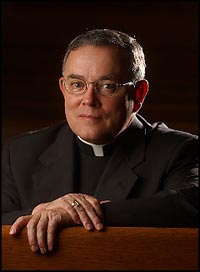
By Archbishop Charles Chaput


Even when a defendant is well defended, properly tried and justly found guilty, experience shows that capital punishment simply doesn’t work as a deterrent. Nor does it heal or redress any wounds, because only forgiveness can do that.  It does succeed though in answering violence with violence — a violence wrapped in the piety of state approval, which implicates all of us as citizens in the taking of more lives.

Turning away from capital punishment does not diminish our support for the families of murder victims. They bear a terrible burden of grief, and they rightly demand justice. Real murderers deserve punishment; but even properly tried and justly convicted murderers — men and women who are found guilty of heinous crimes — retain their God-given dignity as human beings. When we take a murderer’s life we only add to the violence in an already violent culture, and we demean our own dignity in the process.

Both Scripture and Catholic tradition support the legitimacy of the death penalty under certain limited conditions. But the Church has repeatedly called us to a higher road over the past five decades. We don’t need to kill people to protect society or punish the guilty. And we should never be eager to take anyone’s life. As a result, except in the most extreme circumstances, capital punishment cannot be justified. In developed countries like our own, it should have no place in our public life.

Last month here in Pennsylvania, execution warrants were signed for four men. A judge stayed one of the execution warrants, but the three remaining warrants could potentially result in the first execution in our state in 13 years. One of the cases in which appeals seem to be exhausted involves Terrance Williams.

In October, Williams is scheduled to die by lethal injection for the murder of Amos Norwood in 1984, a crime committed when he was 18 and a college freshman.  Williams is indisputably guilty of the crime. He’s also mentally competent. His defense attorneys argue that he was repeatedly sexually abused as a youth, including five years of abuse at the hands of the man he murdered, and that this helped motivate his violence. The state counters that all of Williams’ claims — including claims of sexual abuse — have had proper judicial review and been rejected.

Terrance Williams deserves punishment. No one disputes that. But he doesn’t need to die to satisfy justice. We should think very carefully in the coming days about the kind of justice we want to witness to our young people.

Most American Catholics, like many of their fellow citizens, support the death penalty. That doesn’t make it right. But it does ensure that the wrong-headed lesson of violence “fixing” the violent among us will be taught to another generation.

As children of God, we’re better than this, and we need to start acting like it. We need to end the death penalty now.

***

The Archbishop strongly encourages readers to contact the Pennsylvania Board of Pardons, urging them to recommend commutation of Williams’ sentence to life in prison. Please also contact the Office of the Governor and urge the Governor to accept a clemency recommendation from the board, or, in its absence, to order a temporary reprieve. Use the Catholic Advocacy Network at www.pacatholic.org to send an email to the Board of Pardons and the Governor. Or call or write them at:

Pennsylvania Board of Pardons, 333 Market Street, 15th Floor, Harrisburg, PA 17126; phone: 717.787.2596.

The Honorable Tom Corbett, Governor of Pennsylvania, The Capitol, Harrisburg, PA 17120; phone: 717.787.2500.

Cardinal Dolan decries worldwide persecution of Christians, comments on events in Libya


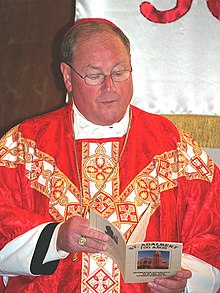
(CWN) Addressing the topic of international religious freedom during a symposium at Catholic University of America, Cardinal Timothy Dolan of New York offered brief comments on the killing of the US ambassador to Libya and recent protests in Egypt.

“Yesterday's events in Libya and Egypt point to what is at stake,” he said. “We need to be respectful of other religious traditions at the same time that we unequivocally proclaim that violence in the name of religion is wrong.”

“150,000 Christians are killed for their faith every year, meaning we have seventeen new martyrs every hour of every day,” he continued. “Can any of us, brother bishops, forget the lumps in our throats and moisture in our eyes last June 13 at our meeting in Atlanta, when Bishop Shleman Warduni of Iraq implored us not to forget our Christians in his homeland? ‘We beg you to help. We want only peace, security, freedom … please no more death, no more explosions, no more injustice.’”

Cardinal Dolan went on to discuss the persecution of Christians in Nigeria, the Middle East (“the epicenter of violence against Christians”), Vietnam, China, and elsewhere. “This animosity against Christians is so rampant that it now has a name: Christophobia.”

Other speakers at the symposium included Archbishop John Onaiyekan of Abuja, who analyzed the state of religious freedom in Nigeria; leading Vatican diplomat Archbishop Silvano Tomasi, who delivered a keynote address on the Church and religious freedom; and Thomas Farr of Georgetown University.

Yemeni protesters storm U.S. embassy compound in Sanaa


(Reuters) - Hundreds of Yemeni demonstrators stormed the U.S. embassy compound in Sanaa on Thursday in protest at a film they consider blasphemous to Islam, and clashes with security forces killed at least one person and injured 15 others.

Young protesters, shouting "We sacrifice ourselves for you, Messenger of God", smashed windows of the security offices outside the embassy with stones and burned at least five cars as they broke through the main gate of the heavily fortified compound in eastern Sanaa, the witnesses said.

"We can see a fire inside the compound and security forces are firing in the air. The demonstrators are fleeing and then charging back," one witness told Reuters.

Witnesses said embassy guards fired in the air to keep the protesters at bay. Riot control forces later used tear gas and water cannon to disperse the demonstrators.

A local hospital official said the body of one person had been brought in from the scene of the clashes and medics were trying to determine the cause of death. A security source said at least 15 people were wounded, some from bullets and 12 people were arrested.

"All embassy personnel are safe and accounted for," an embassy spokesman told Reuters by telephone.

The protest followed Tuesday night's storming of the United States Consulate and a safe house in Benghazi, where the U.S. ambassador to Libya and three other staff were killed. President Barack Obama said the perpetrators would be tracked down and ordered two destroyers to the Libyan coast.

Protesters also attacked the U.S. embassy in Egypt and there were fears demonstrations would spread to other countries in the Muslim world.

Demonstrators blamed the United States for the film, posted on YouTube under several titles, including "Innocence of Muslims". The film depicted the Prophet Mohammad in terms seen as blasphemous by Muslims and was condemned by Washington.

The film briefly united Houthi Shi'ite Muslim rebels based in northern Yemen with their traditional rivals, Sunni Muslim Salafists, at the protest.

Witnesses said security forces in Yemen made no effort to stop the demonstrators when they first began marching towards the embassy compound holding banners declaring 'God is Greatest'. Some scaled the embassy gate as tires blazed outside.

The protesters threw stones and some smashed light bulbs and signs before attacking the security offices and the compound. Yemen state television showed protesters using a forklift truck to remove a vehicle, while one of them battered it with a stick.

REPEATED ATTACKS

President Abd-Rabbu Mansour Hadi offered "a personal apology" to President Barack Obama over the incident and ordered a swift investigation.

Hadi blamed "mob-like groups" bent on harming Yemeni-U.S. relations for the attack and promised to ensure they are properly punished, state news agency Saba said.

A Yemeni security source said Interior Minister Abdul Qader Qahtan personally oversaw the deployment of riot control forces to the area, to clear the protesters from inside the compound.

Dozens of youths later regrouped and tried to break into the compound from the back, but the Yemeni government pushed extra armored forces to the area, ringing the whole district where the U.S. embassy, the British embassy and a hotel often used by foreign diplomats is located.

Yemen, a key U.S. ally, is struggling against multiple challenges since mass protests forced long-serving President Ali Abdullah Saleh to step down last year.

The United States, eager to help Yemen recover from the upheaval that put the state on the verge of collapse, has said it would provide $345 million in security, humanitarian and development assistance this year, over double last year's aid.

Yemen is home of Al Qaeda in the Arabian Peninsula (AQAP), which is viewed by Washington as the most dangerous branch of the militant network established by Osama bin Laden.

Hobby Lobby Sues over HHS Mandate

Faithful to its Biblical founding, store demands relief from providing “morning after” and “week after” pill

Image: Hobby Lobby Sues over HHS MandateWASHINGTON, DC – Today, Hobby Lobby Stores, Inc., a privately held retail chain with more than 500 arts and crafts stores in 41 states, filed a lawsuit in the US District Court for the Western District of Oklahoma, opposing the Health and Human Services “preventive services” mandate, which forces the Christian-owned-and-operated business to provide, without co-pay, the “morning after pill” and “week after pill” in their health insurance plan, or face crippling fines up to 1.3 million dollars per day.

“By being required to make a choice between sacrificing our faith or paying millions of dollars in fines, we essentially must choose which poison pill to swallow,” said David Green, Hobby Lobby CEO and founder. “We simply cannot abandon our religious beliefs to comply with this mandate.”
Hobby Lobby is the largest and only non-Catholic-owned business to file a lawsuit against the HHS mandate, focusing sharp criticism on the administration’s regulation that forces all companies, regardless of religious conviction, to cover abortion-inducing drugs.
“Washington politicians cannot force families to abandon their faith just to earn a living,” said Lori Windham, Senior Counsel, Becket Fund for Religious Liberty. “Every American, including family business owners like the Greens, should be free to live and do business according to their religious beliefs.”
Founded in an Oklahoma City garage in 1972, the Green family has grown Hobby Lobby from one 300-square-foot retail space into more than 500 stores in 41 states.
“It is by God’s grace and provision that Hobby Lobby has endured,” said Green. “Therefore we seek to honor God by operating the company in a manner consistent with Biblical principles. The conflict for me is that our family is being forced to choose between following the laws of the country that we love or maintaining the religious beliefs that have made our business successful and have supported our family and thousands of our employees and their families.”
The business’s lawsuit acts to preserve its right to carry out its mission free from government coercion.
There are now 28 separate lawsuits challenging the HHS mandate, which is a regulation under the Affordable Care Act (aka “Obamacare”). These HHS challenges were not affected by the Supreme Court’s June 28th ruling on the constitutionality of the “individual mandate.”
The Becket Fund led the charge against the unconstitutional HHS mandate, and along with Hobby Lobby represents: Wheaton College, Belmont Abbey College, Colorado Christian University, the Eternal Word Television Network, and Ave Maria University.

The Becket Fund for Religious Liberty is a non-profit, public-interest law firm dedicated to protecting the free expression of all religious traditions—from Anglicans to Zoroastrians. For 18 years its attorneys are recognized as experts in the field of church-state law, and they recently won a 9-0 victory in Hosanna-Tabor v. EEOC, which The Wall Street Journal called one of “the most important religious liberty cases in a half century.”
For more information, or to arrange an interview with one of the attorneys, please contact Emily Hardman, Communications Director, at ehardman@becketfund.org or call 202.349.7224.


Additional Information:
Complaint (September 12, 2012)
Request for Preliminary Injunction (September 12, 2012)
Hobby Lobby Case Page (legal documents, video, images, FAQ, Media Information Sheet, and other resources)
HHS Information Central (all 28 HHS mandate cases, legal documents, resources, and interactive map)
David Green’s Press Statement (September 12, 2012)
Recording of Press Call (September 12, 2012, 11:30am EST with David Green and Kyle Duncan)

Franciscan University’s Sociology Course Description Comes Under Fire

An unofficial alumni group says a textbook’s assessment of homosexuality as ‘deviant behavior’ shows bias.

09/12/2012
National Catholic Register
 
STEUBENVILLE, Ohio — Franciscan University of Steubenville (FUS) has come under criticism by members of an unofficial alumni group for a course description in the school’s social-work program.
Members of the Franciscan Gay Alumni and Allies Facebook group — a 106-member group that has no official connection to the university — were offended by the course description for a social-work class. They not only asked the university to change the description, but alerted the country’s only social work accrediting agency of their concerns.
The course description being questioned is for “Social Work 314,” a class on deviant behavior.
“Deviant behavior focuses on the sociological theories of deviant behavior, such as strain theory, differential association theory, labeling theory and phenomenological theory,” states the course description. “The behaviors that are primarily examined are murder, rape, robbery, prostitution, homosexuality, mental illness and drug use. The course focuses on structural conditions in society that potentially play a role in influencing deviant behavior.”
Members of the Facebook group said that they were offended by the description and that they tried to contact university officials just before school began.
“There was an uncoordinated effort to try to contact the university,” explained Gregory Gronbacher, a 1990 graduate of FUS and member of the Facebook group. “I reached out via email, but didn’t hear back. All of the emails bounced back.”
A Franciscan computer technician said that the university employs a content filtering system that prevents emails containing certain words from being delivered.
“We’re asking them to look at and change the course description,” said Elizabeth Vermilyea, a 1991 FUS graduate and founder of the Facebook alumni group. “It lists both homosexuality and mental illness in the same class as deviant behaviors. We felt it was really inappropriate. It’s incredibly marginalizing. It’s an improper characterization of the course, the book and these two conditions.”
According to Gronbacher, the day after they attempted to email the university, he and Vermilyea released a press release, sending it to the Council on Social Work Education, an accrediting agency. National Public Radio (NPR) reported on the story, suggesting that the accreditation for the school’s social-work program could be threatened.
“We found the course description offensive. We were not asking for an apology or for the university to teach anything other than what the Church teaches,” said Gronbacher. “We just want to be sure they’re teaching proper social science and not offering biased science.”
Gronbacher and Vermilyea took exception with the term “deviant.” The press release referred to the course as “pseudoscience.”
“This should be put in a theology class, not a sociology class,” said Vermilyea.
Up until 1973, the American Psychiatric Association classified homosexuality in the Diagnostic and Statistical Manual of Mental Disorders (DSM) as a mental disorder.
“It strikes me that the gay alumni group, as so often happens, are overreacting to the word ‘deviant,’” said Phil Sutton, a psychologist and psychotherapist in South Bend, Ind., who launched Franciscan University’s master’s degree program in counseling 23 years ago. “Whereas in psychology we talk about ‘abnormal’ or ‘dysfunctional’ behavior, sociologists talk about ‘deviant’ behavior, meaning self-defeating behavior that is outside the norm. Franciscan’s use of the word is consistent with sociology, and, in that sense, they are not wrong to use it.”
“The research shows that same-sex behavior is medically, psychologically and relationally harmful,” added Sutton. “So there is nothing in the ‘deviant’ definition that is unrealistic. There is no doubt that you can talk about those who engage in that behavior as psychologically distressed, and there is no doubt that, in a secondary sense, it’s harmful to those who participate in it.”

Franciscan Responds
“We checked with academics, public relations and the alumni offices, and no one in any of those offices received any emails or phone calls from the group,” said Tom Sofio, associate director of public relations for the university. “We had no contact from them before their press release went out.”
Sofio acknowledged that after the group’s press release was made public, an official from the university reached out to the group.
“The course description for this class, to which some are taking issue, is little more than abbreviated chapter headings from the primary course textbook,” the university stated in its official press release.
That textbook, Sociology of Deviant Behavior, the statement also noted, is “used in more than a dozen public universities and uses the term ‘deviant’ in the sociological sense, simply meaning different from the norm.”
In fact, homosexuality is the topic of one of the textbook’s chapters, as are the other words listed in the course description.
“Changing standard sociological definitions is beyond the scope of our work,” said the university’s release. “So, too, is changing the teachings of the Catholic Church.”
Noting the Catechism of the Catholic Church, the university’s statement said that it “bases its educational mission on the teaching of Christ, as proclaimed in sacred Scripture and Tradition and authoritatively interpreted by the magisterium of the Catholic Church.”
“Accordingly, Franciscan University follows Catholic Church teaching in regard to homosexuality and treats homosexual persons with ‘respect, compassion and sensitivity’ (2358), while holding homosexual acts as ‘intrinsically disordered’” (2357).
“This is an example of what the future holds for any faithful Catholic institution. The attacks on religious liberty are coming from all fronts, and Franciscan University of Steubenville certainly did not invite this sort of attack,” said Patrick Reilly, president of the Manassas, Va.-based Cardinal Newman Society. “Whereas Franciscan’s course was in no way an infringement on anyone’s rights, the complaint is a radical infringement on the rights of Catholic institutions to operate within Catholic teaching, or even within the bounds of reason.”

Accreditation Not at Risk
“Unfortunately, I used the term ‘red flag’ in my conversation with NPR,” said Stephen Holloway, director of the office of social-work accreditation with the Council on Social Work Education. “It would be completely inaccurate to say that a course description which may connote a pejorative interpretation of homosexuality because it’s listed with other terms is sufficient to put the accreditation in jeopardy.”
Accreditation, said Holloway, is determined by a 25-member commission that meets three times each year. Holloway said that he has contacted the university seeking additional information about the course, the content and how diversity is handled in the program.
“We do have a standard on diversity, which speaks to some of these issues,” explained Holloway. “Our standard speaks to a curriculum and learning environment that emphasize respect for, and acknowledgment of, all the variables that go to make up human diversity. There is a list with 20 categories, and homosexuality is one of them.”
In response to the concerns, the university plans to review the course description.
“They’re convening a group of academics to consider changing the description,” said Gronbacher of the Facebook group.
Holloway noted that faith-based universities with social-work programs tend to manage the diversity issue well.
“Even the really conservative Protestant ones do a good job with this standard,” said Holloway. “I suspect that’s what we’ll find out [with Franciscan].”
Tim Drake is the Register’s senior writer.

Court: Women Have the Right to Engage in Self-Abortion, Sort Of

by Walter Weber | Washington, DC | LifeNews.com | 9/12/12 4:48 PM

The Ninth Circuit has broken new constitutional ground in its Sept. 11 decision in McCormack v. Hiedeman. According to the court, women have a constitutional right to engage in self-abortion – sort of.
Jennie McCormack, mother of three born children and pregnant with her fourth, reportedly obtained abortion pills over the Internet and self-aborted. Police found out about the abortion from a tip, came to her residence and, according to an Los Angeles Times article, “McCormack eventually took them out to her back porch, where the remains of her fetus were on the barbecue, wrapped up in a plastic bag and a cardboard box. ‘My baby is in the box,’ McCormack said.” The news account added that “[o]fficers uncovered the frozen remains of a 5-month-old fetus [that] had fully formed facial features, tiny fingernails, hair.”
McCormack was prosecuted for an illegal abortion, but a state court dismissed the charges, while leaving open the possibility of charges being refiled. McCormack then sued in federal court, challenging the Idaho law, Idaho Code § 18-606, making it a crime for a woman to submit to an illegal abortion.
The federal district court granted a preliminary injunction against the enforcement of 18-606, and the local prosecutor appealed. The Ninth Circuit issued a decision affirming in part and reversing in part.
The opinion is in some ways a goodie bag for the pro-abortion movement. Judge Pregerson, writing for the three-judge panel, goes out of his way to plug favorite arguments of the abortion apologists. For example, he declares that abortion regulations have historically been adopted to protect women, the unspoken implication being that since abortions are so safe nowadays, there is no reason to prohibit them (p. 10924-25). This account is badly incomplete, as it ignores the legitimate societal concern with protecting the unborn, a motivation that Roe v. Wade itself acknowledged,(pp. 141-142), and which the Supreme Court has repeatedly reaffirmed. Pregerson also laments the “anguish” of a woman contemplating abortion, while pointedly dismissing any notion that a woman could have mental trauma as a result of the abortion (p. 10934 & n.8). He goes on at length reciting the many reasons why abortion should be available, and the difficulty a pregnant woman may encounter in trying to abort her baby (p. 10934-36), while not breathing a word about the documented shoddy practices and deceptive tactics of abortion facilities. Pregerson rules that McCormack cannot validly challenge Idaho’s Pain-Capable Unborn Child Protection Act, which was not even in effect when McCormack self-aborted, yet he nevertheless takes gratuitous swipes at that statute (p. 10945 & n.13) and expressly notes that other persons may well challenge that law in a different case (p. 10950 n. 14).
But at the heart of the McCormack decision is the question whether women have a constitutional right to self-abort. On that question, the Ninth Circuit opinion lays the groundwork for a “yes” answer, but does not quite get there.
First, as noted above, the court says abortion laws are there to protect women from unsafe abortions, and that virtually every abortion law exempts women from prosecution, implying that it would be nonsensical ever to treat a woman as an offender. Of course, that states properly recognize women as a second victim of abortion does not mean she has a constitutional right to use coat hanger or a drug cocktail or a gun to self-abort, even if done safely (if that is possible). (For an illustration of this scenario, consider the case of the woman who shot herself to induce an abortion. A court ruled that the abortion law did not apply to the mother herself.)
Second, the court declares irrelevant the Supreme Court decisions upholding a ban on non-physician abortions, since those cases did not involve the prosecution of women for self-aborting (pp. 10928-30).
Third and most importantly, the court interprets the Idaho law as making a woman guilty of a felony if the abortionist violates the law. To get this curious meaning, the court adopts the following syllogism: A woman who submits to an illegal abortion commits a felony; if the abortionist breaks the law, then the abortion is illegal; therefore, the woman is criminally liable if the abortionist makes a legal misstep.
This bizarre interpretation of the Idaho law is decisive for the court: the Idaho law, says the court, “puts an undue burden on women seeking abortions by requiring them to police their provider’s compliance with Idaho’s regulations.” (p. 10932).
If that’s really what Idaho’s law means, then it certainly is a strange law. But in fact the Idaho statute says, “Except as permitted by this act: . . . Every woman who knowingly submits to an abortion . . . or who purposely terminates her own pregnancy otherwise than by a live birth” etc. The normal rule is that statutes should be interpreted in a way that avoids unconstitutionality. Here, it would seem permissible to read the law only to apply to (1) knowingly submitting to an illegal abortion by a third party or (2) purposely committing an illegal self-abortion. And if that is the correct reading of the statute, then the woman is not guilty just because the abortionist broke some law or another, so long as she did not know the abortionist was breaking the law.
Be that as it may, if the Ninth Circuit is right that Idaho law has this weird meaning, then the decision in McCormack v. Hiedeman is not much of a precedent after all. Surely there are few, if any, states that make a woman criminally liable if she does not police the regulatory compliance of the abortion provider. And since the concern with women having to police third parties only applies where third parties in fact do or prescribe the abortion, the McCormack decision does not stand for a broader right to self-abort. Indeed, the Ninth Circuit emphasizes that this case deals with the situation “when a pregnant woman receives physician-prescribed medication to terminate her pregnancy.” (p. 10928). (That factual premise is dubious. McCormack’s complaint did not say in so many words that a physician prescribed the pills to McCormack. Instead it says, it much more squirrely fashion, that McCormack ingested “one or more medications she reasonably believed to have been prescribed by a health care provider practicing outside Bannock County, Idaho” (p. 10938). Prescribed by whom? To whom?)

The pro-life movement looks out for the interests of both expectant mothers and their babies, while the pro-abortion movement drives a wedge between the two. Both sides should agree, however, that it is in no one’s interest to have women engaging in destructive self-help medicine, essentially do-it-yourself back alley abortions. The Ninth Circuit unfortunately has laid the groundwork for invention of a constitutional right to self-abort. And sad to say, there are those seem to think this would be a good thing.

LifeNews Note: Walter M. Weber is Senior Litigation Counsel for the ACLJ in the Washington, D.C. office. A highly regarded legal writer, Weber received his bachelor’s degree from Princeton University and his law degree from Yale Law School. Weber emphasizes First Amendment law and has written briefs in many landmark cases at the Supreme Court including NOW v. Scheidler, Lamb’s Chapel v. Center Moriches School District and Bray v. Alexandria Women’s Health Clinic. Weber has argued more than a dozen times in appeals before federal and state courts. Prior to joining the ACLJ, Weber served as a staff attorney with the Catholic League for Religious and Civil Rights.

If Muslims Rioted Over the HHS Mandate, Obama Would Apologize

by Jill Stanek | Washington, DC | LifeNews.com | 9/12/12 3:55 PM

Muslim radicals chose yesterday, September 11, to storm, torch, and loot the American embassies in Egypt and Libya, killing the U.S. Ambassador to Libya, Christopher Stevens, and three staff members in the process. This is not only a tragedy but an international crisis.
The riots were apparently instigated by a (strange and really bad) film depicting Muhammad as a religious fanatic, rapist, philanderer, pedophile, homosexual, torturer, and “murderous thug.”
Before the attack, the U.S. Embassy in Cairo issued this statement, not condemning but apologizing for the free speech that went on to trigger the attack of its own embassy. One wonders if the apology bolstered the mob. I’m surprised the link is still live. Here’s a screen shot in case it is removed. Click to enlarge…

The Obama administration later disavowed that apology (then why is it still up?), stating, “The statement by Embassy Cairo was not cleared by Washington and does not reflect the views of the United States government.”
But the Embassy doubled down on its “condemnation” of the exercise of free speech, releasing this defiant tweet (which has now been deleted) after it had been mobbed, standing by its statement:

Obviously the sensibilities of at least some in the Obama administration are to think the worst of America first, which is no surprise. The apples don’t fall from from the tree.
Yet that same administration is blind to comparable attacks against Christians via the movie industry in its own country.
All of that was to get to this salient point, by Erick Erickson at RedState.com (who I also give credit to the title of this post):
Oh if only Islamic radicals would riot over the HHS contraception mandate* and gay marriage. If they did, the Administration would fall all over themselves to apologize….
I guess now Barack Obama will abandon calls for gay marriage and Democrats everywhere will stop calling Christians “bigots” for standing up for their religion. After all, it appears now to be American policy to apologize for offending religious sensibilities.
No, only if the religion is anything but Jew or Christian.
*and abortion surcharge
LifeNews.com Note: Jill Stanek fought to stop “live birth abortions” after witnessing one as an RN at Christ Hospital in Oak Lawn, Illinois. That led to the Born Alive Infants Protection Act legislation, signed by President Bush, that would ensure that proper medical care be given to unborn children who survive botched abortion attempts.

Vatican laments US deaths in Libya, disrespect against religions

Written by Carol Glatz | Catholic News Service 
Wednesday, 12 September 2012 13:49

Protests arose over U.S.-made amateur film

VATICAN CITY — In the wake of the deaths of a U.S. ambassador and three staff members in Libya and the unrest triggered by a U.S.-made amateur film hostile to Islam, the Vatican decried disrespect toward all religions and deplored all violence as unacceptable.
"Profound respect for the beliefs, texts, outstanding figures and symbols of the various religions are an essential precondition for the peaceful coexistence of peoples," said Jesuit Fr. Federico Lombardi, the Vatican spokesman.
"The serious consequences of unjustified offense and provocations against the sensibilities of Muslim believers are once again evident in these days, as we see the reactions they arouse, sometimes with tragic results, which in turn nourish tension and hatred, unleashing unacceptable violence," he said Sept. 12 in a written statement that was also translated into Arabic.
He told journalists that Pope Benedict XVI's Sept 14-16 trip to Lebanon would continue despite the fresh wave of unrest in the region because the pope's journey is a testament of "peace, understanding and dialogue that's completely opposed to this kind of tension that has been and is being created," he told reporters.
1229cns-USConsulate-web2
The U.S. Consulate in Benghazi, Libya, is seen in flames during a Sept. 11 protest by an armed group said to oppose a film produced in the United States. An assault on the consulate left four dead including U.S. Ambassador J. Christopher Stevens. (CNS photo | Esam Al-Fetori, Reuters)
"The message of dialogue and respect for all believers of different religions, which the Holy Father is preparing to carry with him on his forthcoming trip to Lebanon, indicates the path that everyone should follow in order to construct shared and peaceful coexistence of religions and peoples," the spokesman wrote.

The Vatican statement comes after the U.S. ambassador to Libya, J. Christopher Stevens, and three staff members were killed during a mob attack against the U.S. consulate in Benghazi Sept. 11.
The violence was triggered by angry reaction to the trailer of a film mocking the prophet Mohammed. Though the trailer was released online in July, it was recently dubbed into Arabic and grabbed Arab media attention.
Tensions spread the same day as thousands of unarmed demonstrators gathered outside the United States Embassy in Cairo and some later breached the compound's walls and destroyed a flag found inside.
Libya's interim president, Mohammed Magarief, offered his condolences and apologized for the attack, describing it as "cowardly," according to the Associated Press.
1229cns-Libya_ambassador-web2
U.S. Ambassador to Libya Christopher Stevens in an undated U.S. State Department photo. (CNS photo | US State Department handout via Reuters)
U.S. President Barack Obama condemned the killings and praised Stevens' selfless service to the United States and the Libyan people.
"While the United States rejects efforts to denigrate the religious beliefs of others, we must all unequivocally oppose the kind of senseless violence that took the lives of these public servants," Obama said in a statement.
Meanwhile, the Vatican's representative in Libya lamented the violence while pleading for greater respect for religious beliefs.
Referring to the officials' deaths, Italian Bishop Giovanni Martinelli, Apostolic Vicar of Tripoli, told the Vatican's missionary news agency Fides, "What has happened is terrible, but we need to avoid offending the people's religious sensibility."
"One has to respect the sensitivity of the Muslim population. The Arab countries are already in the throes of momentous upheaval; pouring gasoline on religious outrage is really dangerous," he said in a Sept. 12 interview.

Wednesday, September 12, 2012

Today on "Kresta in the Afternoon" - September 12, 2012

Talking about the "things that matter most" on Sept. 12

4:00 – A Former Altar Boy on Death Row
Ron Keine refused to become one of those people who find religion in prison on the way to death row. No, he decided, repenting is for the ones who are here for a reason. I have done nothing wrong. Ron felt the justice system was a joke. "Justice was only a word that the court system was using to put four innocent men, myself among them, to death in New Mexico for a murder we did not commit," he said. As the days drew closer to his execution, his faith in God withered. "You did this to me, God!" Ron cried out. "I’m not gonna get on my knees and beg, because I don’t want your help! I am an innocent man!"Ron joins us to tell his story and his path back to God.

4:40 – Kresta Comments: My Evolution of Thought on the Death Penalty

5:00 – Will Many Be Saved?: What Vatican II Actually Teaches and Its Implications for the New Evangelization
The question of whether and how people who have not had the chance to hear the gospel can be saved goes back to the beginnings of Christian reflection. It has also become a much-debated topic in current theology. Ralph Martin is here to discuss it and focus primarily on the history of debate and the development of responses to this question within the Roman Catholic Church, but much of Martin's discussion is also relevant to the wider debate happening in many churches around the world.

CARDINAL DOLAN: WE CANNOT IGNORE OUR CONSCIENCES

WASHINGTON, D.C., SEPT. 11, 2012 (Zenit.org) — On Monday, Cardinal Timothy Dolan, Archbishop of New York and President of the United States Conference of Catholic Bishops (USCCB) delivered the Fall Lecture for the The John Carroll Society, an organization within the Archdiocese of Washington, D.C., that “promotes the enhancement of spiritual, intellectual and social fellowship among its members."

Speaking on the theme of “Let Religious Freedom Ring”, Cardinal Dolan noted that “freedom of religion has been the driving force of almost every enlightened, un-shackling, noble cause in American history.”

“Thus, the defense of religious freedom is not some evangelical Christian polemic, or wiley strategy of discredited Catholic bishops, but the quintessential American cause, the first line in the defense of and protection of human rights,” he said. 

The archbishop of New York went on to discuss various events of American history that underlined the value of religious freedom. He cited each event as “exhibits” in his case to prove that “religious freedom in American history has hardly been the cause of chilling, repressive, retrograde movements, but of the most liberating, ennobling ones.”

Drawing upon examples of heroism on the part of religious leaders during the American Revolution, as well as, several notable abolitionists whose stance against slavery came from a conscience formed by faith, Cardinal Dolan went onto explain how the religious convictions of notable persons within history supported, and directly caused progressive changes within the United States. Citing historical scholar Dan McKanan, the cardinal explained that as a result of women's role during the abolitionist movement, “the slow-but-steady advancement of women’s equality, was also a religiously animated reform movement.”

“This is good reminder, since, today, those who criticize the churches’ mobilization in defense of religious freedom often slyly muddy it with 'war on women’ slogans,” he said. 

Other historical events the cardinal said were influenced by religious freedom were the Reform Movement of the 19th century, the Civil Rights Movement, and the Peace Movement of the '60s. 

Cardinal Dolan went on to speak of the HHS mandate as a direct threat to religious freedom. The Health and Human Services (HHS) federal mandate in question would require employers of religious institutions to pay for insurance that provides abortion-inducing drugs, contraception, and sterilization procedures to employees. 

“Thus, to say it again, the wide ecumenical and inter-religious outrage over the HHS mandate is not about its coverage of chemical contraceptives and abortion-inducing drugs -- in spite of the well-oiled mantra from our opponents -- but upon the raw presumption of a bureau of the federal government to define a church’s minister, ministry, message, and meaning,” he said.

The president of the USCCB also had strong words for Democratic minority leader, Nancy Pelosi. The former speaker of the House, who is also Catholic, stated last year that the Catholic Church needed “to get over their conscience thing” regarding abortion and contraception. 

“No, we don’t; no, we can’t; as believers, as Americans,” he exclaimed. 

Cardinal Dolan concluded his lecture, reiterating that the only freedom that the Church desires is “the freedom to carry the convictions of a faith-formed conscience into our public lives.”

Tuesday, September 11, 2012

How nuns have become soldiers in the battle for the White House

September 9, 2012, Detroit Free Press

Their black-and-white habits stood out in the backdrop of faces seated behind Mitt Romney and Paul Ryan when the Republican presidential ticket campaigned in suburban Detroit recently. The three Catholic nuns, members of an Ann Arbor-based conservative congregation, could be seen on video applauding Romney.
It was a Catholic nun in modern dress who roused Democratic National Convention delegates Wednesday, describing the struggling Americans she encountered during a Nuns on the Bus tour that opposed GOP plans to cut federal aid to poor people. Sister Simone Campbell, who leads the Catholic social justice lobby NETWORK, defended President Barack Obama's health care plan, too.
As the Nov. 6 election looms, these nuns have come to represent the divide among American Catholics, both in the pews and in the voting booth. Both Obama and Romney are battling for the Catholic vote, a crucial slice of the electorate that represents about 1 out of 4 voters nationwide.
"The Obama campaign is going after Catholics who love nuns, who are social justice Catholics, who are concerned about the poor," said the Rev. Thomas Reese, a Georgetown University Jesuit priest and Catholic commentator, referring to Campbell's appearance.
Republicans are targeting Catholics who are anti-abortion rights, anti-gay marriage and more conservative, said Reese, so nuns dressed in old-fashioned habits convey those values.
"Catholic Republicans are kind of country-club Republicans," Reese said. "They live in the suburbs. They're professionals and managers in corporations. Romney is one of their neighbors or reminds them of their boss, so they're very comfortable for them," Reese said, and they don't just vote on Catholic values, but on their pocketbooks. That's why such Catholics helped Romney, a Mormon, defeat former U.S. Sen. Rick Santorum of Pennsylvania, a conservative Catholic, in the Michigan primary and others.
Romney has invoked the image of the late Pope John Paul II in an ad criticizing Obama's health care plan as infringing on freedom of religion. "When religious freedom is threatened, who do you want to stand with?' intones the announcer.
Catholics -- who were once counted as reliable Democrats -- are now a key swing bloc. In Michigan, Catholics usually constitute 25%-28% of voters, said Bernie Porn of the Lansing-based polling firm EPIC-MRA. In southeastern Michigan, Catholics are concentrated in Macomb County, Downriver and western Wayne County, Porn said.
In the last 10 presidential elections, Catholics have sided with the popular-vote winner every time, even when the top vote-getter -- Al Gore in 2000 -- didn't win the race, according to exit polls compiled by Georgetown University's Center for Applied Research in the Apostolate.
In 2004, even with U.S. Sen. John Kerry of Massachusetts, a Catholic Democrat, atop the ticket, Republican President George W. Bush won the Catholic vote, 52%-47%. In 2008, Catholics went for Obama, 54%-45%.
Catholics are the single largest religious denomination in the U.S., said Robert Jones, CEO and founder of the Washington-based Public Religion Research Institute.
The Catholic vote also is more visible and relevant this campaign season because both vice presidential nominees -- Vice President Joe Biden and GOP challenger Ryan, a Wisconsin congressman -- are Catholic.
"There are at least two Catholic votes. There's a difference between white Catholic voters and Latino voters," Jones said. "If you look underneath the 2008 vote, the Latino Catholic vote was 73% for Obama. The white Catholic vote was won by McCain, 53%-47%."
Campaigns target Catholics in many ways. This season, Catholic nuns are part of the marketing strategy.

Since modernization efforts in the Catholic church in the 1960s, Jones said a "tug of war" has ensued between one wing of the church -- emphasizing social justice issues -- and the other wing -- stressing anti-abortion rights, anti-birth control and anti-gay marriage issues.
"One of the reasons the nuns have become a lightning rod is ... they gave a face to this kind of social teaching in the church, with the bishops weighing in on the other side," Jones said.
That's especially true this year in the wake of the Vatican issuing a report lambasting the Leadership Conference of Women Religious (LCWR), which represents about 80% of U.S. nuns. The Vatican attacked the LCWR for not doing enough to promote Catholic doctrine against abortion rights and gay marriage, and criticized the NETWORK lobby. The nuns who attended the Romney rally were members of the Dominican Sisters of Mary, Mother of the Eucharist in Ann Arbor. They do not belong to the LCWR.
The Vatican critique generated an outpouring of support for the nuns under attack.
When campaigns can deploy nuns on their behalf, said Jones, it resonates with "a lot of rank-and-file Catholics, who rarely have interactions with their bishops, but have interactions with nuns at schools or hospitals."
Mike Bernacchi, marketing professor at the University of Detroit Mercy, put it this way: "Nuns are popular. ... Nuns are the ones who carry the load. They are the pack mules of Catholicism."
New York Cardinal Timothy Dolan, the leader of U.S. Conference of Catholic Bishops who has led the church's fight against Obama's health care reforms, delivered the closing prayer at both conventions. When he accepted the GOP's invitation, Dolan was criticized for favoring one candidate over the other. Dolan said he was nonpartisan and made the same offer to the Democrats and didn't want his benediction to be considered an endorsement.
Dolan conveyed similar sentiments at both conventions, but with a few twists. Before Democrats, who support abortion rights, Dolan prayed for "those waiting to be born, that they may be welcomed and protected," reflecting the church's anti-abortion-rights stance. Before the GOP, which opposes abortion rights, Dolan prayed for the "sacred and inalienable gift of life" without mentioning a need for protection.
Marlene Pierce of Grosse Pointe Park, a mother of a young son, voted for Obama four years ago. Her Catholic faith, she said, factors into how she evaluates candidates, but doesn't necessarily dictate how she votes.
This year, she's leaning toward Romney because she'd like to see government spending cut. But she's also angry about the Obama administration's mandate that religious employers offer health insurance coverage for birth control.
"It's influencing me, and I definitely feel insulted ... and it goes against the grain of what this country was based upon," Pierce said. "Forcing Catholic employers to provide birth control is not the right way. It crosses the line of religion and state."
Joe Coraci, 43, a Catholic who went to Catholic schools and is now a middle-school teacher from White Lake Township, said he's backing Obama.
"I certainly consider what the church has to say, and I have to vote what I know is right," Coraci said. "It doesn't make me any less Catholic. I don't buy all the dogma. You still have to go with your conscience when it comes to the voting booth."

Yemen: Airstrike Kills a Top Leader of Al Qaeda

(AP) An airstrike killed Saeed al-Shihri, a top leader of Al Qaeda’s branch in Yemen along with six others traveling with him in one car on Monday, American and Yemeni officials said. The leader, a Saudi citizen who fought in Afghanistan and spent six years in the American military prison at Guantánamo Bay before being released in 2007, was killed by a missile after leaving a house in the southern province of Hadramawt, according to Yemeni military officials. They said the missile was probably fired by an American-operated, unmanned drone aircraft. Two senior American officials confirmed Mr. Shihri’s death, but not any American involvement in the airstrike. The United States has used drones to go after Qaeda members and their affiliates in Yemen.

Suspect in Michigan officer's killing found dead


(AP) — A recently divorced executive accused of mishandling employees' insurance funds fired on police at his home in a wealthy Detroit suburb, killing one officer and precipitating a 20-hour armed standoff that ended with the suspect dead in a weapons-strewn bedroom.

"It's been a very long night, a very long day," West Bloomfield Township Supervisor Michele Economou Ureste said Monday evening after the discovery of 50-year-old Ricky Coley's body.

Police had been surrounding Coley's home since Sunday night, when Officer Pat O'Rourke was shot to death while responding to a report of a possible suicide attempt or medical emergency at Coley's home.

Police used construction equipment to tear a hole in a second-floor wall of the home on Monday afternoon, then sent in a robot that found Coley's body on a bed surrounded by knives and other weapons, Ureste said.

It was not immediately clear if Coley had killed himself, said police Lt. Tim Diamond.

During the standoff, police and Coley exchanged hundreds of rounds of gunfire, Ureste said. About 15 families were evacuated from nearby homes.

Police sent a team about 10 p.m. Sunday after receiving a 911 call alerting them that Coley had tried to kill himself or needed medical attention, Diamond said. Officers called Coley's name as they climbed the stairs to the second floor and were met by gunshots, Diamond said.

O'Rourke, 39, was among four or five officers in that team. He was killed when shots were fired through a bedroom door and wall, police said.

Coley was alone in the house Monday afternoon and the Oakland County Sheriff's Department had tried "to persuade this guy into a peaceful resolution," Diamond said.

Records show Coley headed a private equity company, CNC Holdings.

The U.S. Labor Department recently filed a lawsuit accusing Coley of mishandling money that was supposed to cover employee insurance at a Bad Axe, Mich., trucking company, Translogic Auto Carriers, which has been controlled by CNC since 2008.

The lawsuit says Coley also transferred $342,000 from Translogic to himself or his affiliates. Creditors forced Translogic into bankruptcy court in 2010.

Diamond said relatives called 911 and fled Coley's home Sunday after hearing shots.

O'Rourke, a West Bloomfield officer for 12 years, was married and had four children. In a memo to fellow officers, Lt. Curt Lawson said a "scene can turn in unexpected ways," despite the best training and preparation.

A vigil for the officer is scheduled for 7:45 p.m. Tuesday, the township supervisor said. West Bloomfield is a high-income community of 65,000, about 15 miles northwest of Detroit.

America remembers Sept. 11 attacks 11 years later


(CBS/AP) NEW YORK - Americans marked the 11th anniversary of the Sept. 11, 2001, terror attacks Tuesday in familiar but subdued ceremonies that put grieving families ahead of politicians and suggested it's time to move on after a decade of remembrance.

As in past years, thousands gathered at the World Trade Center site in New York, the Pentagon and Shanksville, Pa., to read the names of nearly 3,000 victims killed in the worst terror attack in U.S. history.

But many felt that last year's 10th anniversary was an emotional turning point for public mourning of the attacks. For the first time, elected officials weren't speaking at the ceremony, which often allowed them a solemn turn in the spotlight, but raised questions about the public and private Sept. 11. Fewer families attended the ceremonies this year, and some cities canceled their remembrances altogether.

"I feel much more relaxed" this year, said Jane Pollicino, who came to ground zero Tuesday morning to mourn her husband, who was killed at the trade center. "After the ninth anniversary, that next day, you started building up to the 10th year. This feels a lot different, in that regard. It's another anniversary that we can commemorate in a calmer way, without that 10-year pressure."

Meanwhile, Marisol Torres clutched a photo of her cousin, New York firefighter Manuel DelValle Jr., as she walked into the memorial plaza in lower Manhattan for the somber ceremony. Torres told CBS New York station WCBS-TV the ceremony is as tough as it was after the first year.

"I wish I could say it gets easier, but it doesn't," said Torres. "I think you learn to live with your grief so in some sense it gets easier but you sort of learn to carry that around with you."

DelValle was 32 years old when he was killed in the collapse of the World Trade Center.

As bagpipes played at the year-old Sept. 11 memorial in New York, family clutching balloons, flowers and photos of their loved ones bowed their heads in silence at 8:46 a.m., the moment that the first hijacked jetliner crashed into the trade center's north tower. Bells tolled to mark the moments that planes crashed into the second tower, the Pentagon and a Pennsylvania field, and the moments that each tower collapsed.

President Obama and first lady Michelle Obama observed the moment in a ceremony on the White House's south lawn, and then laid a white floral wreath at the Pentagon, above a concrete slab that said "Sept. 11, 2001 — 937 am." He later recalled the horror of the attacks, declaring, "Our country is safer and our people are resilient."