Thursday, May 3, 2012

Syrian bishops support UN, as it criticizes regime and rebels

(EWTN) Syria's Catholic bishops have expressed support for the monitoring mission of the United Nations, which accused both rebels and government forces of violating a cease-fire on May 1.


“Violence has gone beyond all limits,” the Assembly of the Catholic Hierarchy in Syria said in a communique released in an English translation on April 30. “We can only appeal strongly and emphatically to all people of conscience to return to their senses and abjure anything destructive of human and national life.”


“We strongly condemn all kinds of violence from whatever quarter,” said the assembly, which was led by Melkite Greek Catholic Patriarch Gregorios III and included Syrian Catholic Patriarch Ignatius Joseph III and apostolic nuncio Archbishop Mario Zenari. Its traditional spring meeting took place at the Maronite Archbishopric of Aleppo on April 25.


The assembly expressed support for the mission of U.N. Special Envoy Kofi Annan, especially in its effort to have heavy weapons withdrawn from civilian areas. The bishops called for “reconciliation and dialogue between the State and all elements in the country,” to rebuild “trust, openness to others and respect for differing political, religious and intellectual affiliations and opinions.”


On May 1, however, the effort to reconcile Syrians seemed imperiled by the actions of rebels and the regime of President Bashar al-Assad. Around 30 deaths were reported, including 12 soldiers and at least 10 civilians.


Herve Ladsous, the U.N. Undersecretary General for Peacekeeping Operations, said in a May 1 news conference that “the level of violence in Syria has been appalling.” The U.N. has accused the government of killing 9,000 Syrians over the past year, while the government says the opposition has killed 2,600 police and soldiers.


“I think the violations that are observed come from both sides,” said Ladsous, who said he would “not establish a ratio” between acts of the regime and its opponents. “The important fact is that violations do come from both sides.”


In their statement, Syria's Catholic bishops also expressed “solidarity with the pain and suffering of all citizens, whether civilian or military, affected by the events and the painful cycle of violence in different parts of the country for the past thirteen months.”


Many Christians, they noted, “have been obliged to leave their homes and towns or villages” to escape the violence. “Sometimes they have been used as human shields and their districts as battlefields.”


Some observers fear that the sudden collapse of the Assad regime could lead to an Iraq-like power struggle in Syria, and a resulting Christian exodus. The head of the Damascus-based Melkite Greek Catholic Church has told Western governments not to support Arab revolutions, but to encourage responsible transitions toward greater freedom.


The assembly of bishops under his leadership said they stood “shoulder to shoulder” with Syrians who are looking for “a dignified life” and seeking an “effective reform process.” 


“The State has called for dialogue and we invite all national parties at home and abroad to build a new multi-party democratic Syria,” they announced, encouraging “everyone to participate fully in free and fair elections for the National Assembly” on May 7.


The bishops ended their message by reminding Syrian Christians of Jesus' triumph over death, celebrated throughout the Easter season.


“We wish them, in the joy of the celebration of the Resurrection of our Lord Jesus Christ, to be strengthened by resurrection in their hearts and for them to be witnesses of this Resurrection.”

Mormons surge, Catholics decline in US; half of Americans are nonadherents


(Catholic Culture) The number of Mormons in the United States increased by nearly 50% between 2000 and 2010, while the number of “active members” of the Catholic Church declined by 5%, according to the latest decennial religious census published by the Association of Religion Data Archives.


The census--which allows readers to search for data at the state and county levels--found that only 48.8% of Americans are religious adherents, while 158.1 million Americans are “unclaimed.” The census estimates the number of Catholics in 2010 at 58.9 million; the latest edition of The Official Catholic Directory, using figures provided by dioceses, puts the number at 68.3 million.


The census also estimates that there were 50.0 million evangelical Protestants, 22.7 million mainline Protestants (a decline of 13% over ten years), 4.9 million black Protestants, and 1.1 million Orthodox in the US in 2010. The 13.1 million who belong to other religious bodies include 6.1 million Mormons, 2.6 million Muslims, 2.3 million Jews, 990,000 Buddhists, and 640,000 Hindus.

Pope visits the Gemelli Hospital, talks about faith and reason

Today on "Kresta in the Afternoon" - May 3, 2012

Talking about the "things that matter most" on May 3

4:00 – Merchants of Despair: Radical Environmentalists, Criminal Pseudo-Scientists, and the Fatal Cult of Antihumanism
There was a time when humanity looked in the mirror and saw something precious, worth protecting and fighting for—indeed, worth liberating. But now, we are beset on all sides by propaganda promoting a radically different viewpoint. According to this idea, human beings are a cancer upon the Earth, a horde of vermin whose aspirations and appetites are endangering the natural order. This is the core of antihumanism. We talk to Dr. Robert Zubrin about the “fatal cult” of antihumanism.

5:00 – Heresy: Ten Lies They Spread About Christianity
In his latest book, Michael Coren explores why and how Christians and Christian ideas are caricatured in popular media as well as in sophisticated society. He takes on, and debunks, ten great myths about Christianity: that it supports slavery, is racist, sexist, homophobic, anti-intellectual, anti-Semitic, provokes war, resists progress, and is repressive and irrelevant. In a climate that is increasingly as ignorant of Christianity as it is good at condemning it, Coren gives historical background, provides examples of how these attacks are made, and explains the reality of the Christian response, outlining authentic Christian beliefs.

Wednesday, May 2, 2012

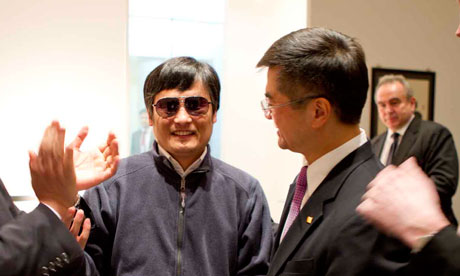
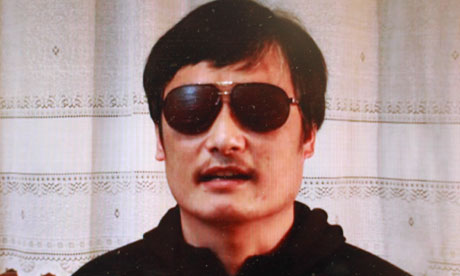
Reports: fearful China dissident wants to leave country


BEIJING, May 2 (Reuters) - Blind Chinese dissident Chen Guangcheng told journalists he feared for his life and wanted to leave China on Wednesday, throwing into chaos an agreement between the United States and China under which he would have remained in the country.


Guangcheng earlier left the U.S. Embassy in Beijing after a six-day stay after securing guarantees that, according to U.S. officials, would have allowed him to relocate within the country in safety with his family and pursue his studies.


Accepting that outcome, which was excruciatingly negotiated between the United States and China, entailed some risk that the Chinese authorities might not live up to the guarantees, and the dissident appeared to have a change of heart about his chances.


Within hours of his release to a Beijing hospital and being reunited with his family, Chen gave interviews saying he feared for his life after he learned of the way his wife had been treated.


"He wants to leave and he wants to leave as soon as possible," a CNN reporter said on air, saying he spoke to Chen for 15 to 20 minutes by telephone and the activist, who opposed forced abortions in China, felt "let down" by the United States.


The CNN reporter said Chen told him that while he was at the U.S. Embassy he was not given the full story. He had since spoken to his wife who told him she was mistreated by Chinese authorities and they now feared for their safety.


"He wants to leave China. If he stays here he says he will not live," the reporter said of Chen, a self-schooled legal advocate who campaigned against forced abortions under China's 'one child' policy." He escaped 19 months of house arrest, during which he and his family faced beatings and threats, in rural Shandong province on April 22.


CHINA DEMANDS APOLOGY


Earlier, U.S. officials and Chinese officials said Chen left the embassy of his own free will after days of negotiations between the two governments. U.S. officials said that Chen wanted to remain in China and that he never asked for asylum.


Chen's dramatic escape from house arrest last week and his flight to the U.S. Embassy have made him a symbol of resistance to China's shackles on dissent, and the deal struck by Beijing and Washington would have kept him an international test case of how tight or loose those restrictions remain.


Now, however, his apparent change of heart throws not only his own future into doubt but also raises questions about the wider U.S.-China relationship as the U.S. secretaries of state and treasury arrived in Beijing for security and economic talks.


It could also prove politically costly for U.S. President Barack Obama, who has already been accused of being soft on China by Republican presidential candidate Mitt Romney and who could now face further criticism over Chen's case.


What initially appeared to be a foreign policy success for the Obama administration -- defusing a problem that could have harmed ties between the world's two largest economies -- could quickly turn into a liability.


U.S. Secretary of State Hillary Clinton, who had arrived in Beijing for long-scheduled, high-level economic and security talks hours before Chen's departure from the U.S. Embassy, earlier hailed the agreement.


"I am pleased that we were able to facilitate Chen Guangcheng's stay and departure from the U.S. Embassy in a way that reflected his choices and our values," Clinton said.


"(Chen) has a number of understandings with the Chinese government about his future, including the opportunity to pursue higher education in a safe environment. Making these commitments a reality is the next crucial task. The United States government and the American people are committed to remaining engaged with Mr. Chen and his family in the days, weeks and years ahead."


But China angrily accused the United States of meddling and demanded an apology for the way U.S. diplomats handled the case.


Bob Fu, the president of Texas-based religious and human rights group, ChinaAid, said Chen agreed to leave the embassy only because "serious threats to his immediate family members were made by Chinese government" if he refused the government's offer. Dissident Hu Jia said his wife Zeng Jinyan had spoken to Chen's wife, who also spoke of threats from the government.


Fu of ChinaAid, which has been a key source of information about Chen since his escape, said the group was very concerned about reports from what he called "reliable sources" that Chen's departure from the embassy was involuntary. "Relevant reports show unfortunately the U.S. side 'has abandoned Mr Chen,'" Fu said in a statement.


U.S. officials denied that they had discussed any threats to Chen's family, saying Chinese officials had not discussed any threats with them, and said they had acted to secure his wish to remain in China and continue his work.


The drama over Chen threatens to overshadow this week's U.S.-China talks.


Quite apart from the importance of developing ties between the world's two largest economies, both governments are aware of the impact the case could have on their domestic politics.


Later this year, U.S. President Barack Obama will seek a second term, knowing that his Republican foes are already accusing him of being too soft on China. They may now criticise him for not doing enough to ensure the activist's safety.


Also later this year, China's ruling Communist Party will bring in a new set of leaders, a normally well choreographed process that has been wrong-footed by a scandal enveloping senior leader Bo Xilai. That too was triggered after a senior Bo aide sought refuge in a U.S. diplomatic mission.


Some analysts said that issue appears to have divided the top leadership and may have upset hardliners who want to keep a firm lid on any thing they see as undermining party rule.


CHINESE PUBLIC ANGER


The Chinese Foreign Ministry's first public reaction to Chen's was anger. "The U.S. method was interference in Chinese domestic affairs, and this is totally unacceptable to China. China demands that the United States apologise over this, thoroughly investigate this incident, punish those who are responsible, and give assurances that such incidents will not recur," ministry spokesman Weimin said in a statement.


Censors were still blocking searches for Chen's name on China's wildly popular Twitter-like service Weibo, but many people were able to skirt restrictions by simply calling him "the blind lawyer."


"I've beaten the censors to find out about this great event - respect to the blind lawyer," wrote one user.


"The blind lawyer has broken out from the stockade to freedom. So gratifying," added another.

Newt Gingrich suspends presidential campaign


(CBS News) -- With millions of dollars in campaign debt and just two Republican primary victories under his belt, former House Speaker Newt Gingrich finally called it quits Wednesday, suspending his campaign for the presidency so he could go back to being an "active citizen."


"Today I am suspending the campaign, but suspending the campaign does not mean suspending citizenship," Gingrich said in lengthy remarks to a bank of television cameras. Gingrich told reporters last week he would make his departure official this week.


Gingrich deemed the campaign "a truly wild ride" during the appearance in Arlington, Virginia, saying, "I could never have predicted either the low points or the high points."


Quoting an observer who suggested that his best days may be ahead, Gingrich vowed to focus on balancing the budget, advocating for "religious liberty" and social security savings accounts and working for American energy independence. He also said he would work to "reemphasize the work ethic" in America, advocate for his national security positions and press for increased brain research.  


Gingrich also stood behind his campaign push for a moon colony, though he acknowledged that it was "probably not my most clever comment in this campaign." He said that despite having providing fodder for "Saturday Night Live" by pushing for the moon colony, he believed that the proposal was sound, arguing that Americans should seek to "go out and pursue great adventure." 


Throughout the campaign, Gingrich complained bitterly that Mitt Romney and the super PAC backing Romney were using their massive fundraising advantage to essentially buy the election. 


It was one of many harsh criticisms Gingrich made of the presumptive GOP nominee. Gingrich called Romney a liar adept only at "managing the decay" who "looted companies" during his business career, "leaving behind broken families and broken neighborhoods." 


Gingrich, who said during the campaign that Romney was not a true conservative, said Wednesday that Romney should be considered conservative in comparison to President Obama. 


"This is not a choice between Mitt Romney and Ronald Reagan, this is a choice between Mitt Romney and the most radical leftist president in American history," he said. Gingrich pointed to the judges that would be appointed by each candidate in arguing -- relatively tepidly -- for his former bitter rival.  


Gingrich did not endorse Romney on Wednesday, but his spokesman, R.C. Hammond, said he planned to do so at a joint appearance with Romney in the future.


In a statement, Romney said Gingrich "has brought creativity and intellectual vitality to American political life."


"During the course of this campaign, Newt demonstrated both eloquence and fearlessness in advancing conservative ideas," he said. "Although he long ago created an enduring place for himself in American history, I am confident that he will continue to make important contributions to our party and to the life of the nation. Ann and I are proud to call Newt and Callista friends and we look forward to working with them in the months and years ahead as we fight to restore America's promise."


Gingrich's criticisms of Romney are already finding their way into attack ads from the Obama campaign, which put out a video Wednesday morning featuring a number of the former House speaker's attacks on Romney. On Tuesday, the Obama campaign released a television ad that followed Gingrich in spotlighting Romney's "Swiss bank account."  


Gingrich stumbled out of the gate in his presidential run last May, taking heat from many in his party for deeming Paul Ryan's controversial House budget "right-wing social engineering." In June, his staffers resigned en masse, complaining of a lack of direction and seriousness on the part of the candidate.  


But driven by a string of strong debate performances featuring attacks on the media, Gingrich rose to the top of the polls in November. After again being written off following disappointing finishes in the early states, he scored a convincing January 21 victory in South Carolina, a state that has traditionally picked GOP nominees. It was the first of Gingrich's two victories, the other coming in his home state of Georgia. 


Gingrich then faltered in the debates after South Carolina, however, and Romney beat him soundly in Florida on January 31. Gingrich was unable to recapture his momentum following that loss, and many in the GOP feel he stayed in the race far longer than he should have, potentially damaging his brand and earning power. In addition to his campaign activities and issue advocacy, he is expected to go back to writing books, giving paid speeches and possibly rebuild his consulting businesses in the coming months. 


By suspending his campaign, Gingrich can continue to raise money to pay down the millions of dollars he has accrued in campaign debt. The former House speaker has indicated that Romney has agreed to help him retire the debt.

Catholics' Presidential Pick Differs by Ethnicity, Religiosity


PRINCETON, NJ (Gallup) — Catholic voters in the United States are evenly split in their support for Barack Obama and Mitt Romney for president, mirroring the national trend. However, Hispanic Catholics -- about 18% of the total group of Catholic voters -- are overwhelmingly likely to support Obama over Romney, while a majority of non-Hispanic white Catholics support Romney.


Obama led Romney by one percentage point, 46% to 45%, among the more than 8,000 registered voters interviewed as part of Gallup Daily tracking conducted April 11-30. Among the 1,915 Catholics interviewed during that time, support for Obama and Romney was almost the same, with 46% support for Obama and 46% for Romney.

US bishops discuss LCWR reform, visitation with Vatican officials


VATICAN CITY (CNS) -- Recent Vatican investigations of religious women have created opportunities for growth through reflection and for dialogue with their bishops, two U.S. bishops said after discussing the matter with Vatican officials.


Archbishop Michael J. Sheehan of Santa Fe, N.M., and Bishop Gerald F. Kicanas of Tucson, Ariz., told Catholic News Service May 2 that they had discussed the Vatican visitation of U.S. communities of religious women and the more recent order to reform the Leadership Conference of Women Religious earlier the same day with officials from the Congregation for Institutes of Consecrated Life and Societies of Apostolic Life.


Archbishop Sheehan said that during the meeting, attended by bishops from Colorado, New Mexico, Arizona and Wyoming, who were making their "ad limina" visits to the Vatican, "the point that was made was that although some people were unhappy with the decision to make corrections" in the LCWR, it would be "an opportunity for dialogue" between the religious and the bishops.


The archbishop said he told Cardinal Joao Braz de Aviz, congregation prefect, "that if this would have happened some years earlier, it might have been better. But, anyway, it's going on now and I think it will be the occasion for some dialogue."


It also should help "some of the orders to pull back a little bit from some areas they have gone that maybe they shouldn't have," he said.


Citing "serious doctrinal problems" revealed in an assessment originally ordered in April 2008, the Vatican announced April 18 a major reform of the LCWR, a group which includes about 1,500 leaders of U.S. women's communities, representing about 80 percent of the country's 57,000 religious women.


The Vatican appointed Archbishop J. Peter Sartain of Seattle to provide "review, guidance and approval, where necessary, of the work" of the LCWR and to ensure fidelity in conference programs and meetings to Catholic teaching in areas including abortion, euthanasia, women's ordination and homosexuality.


Religious women in the United States also are awaiting the results of an apostolic visitation of their communities; the congregation for religious ordered the visitation in 2008, particularly in light of the steep decline in the number of religious women in the country. The visitation's final report was submitted in December but has not been made public.


Bishop Kicanas said that during the May 2 meeting, congregation officials made clear "the profound respect they have for the work our religious women, and I certainly share that. Our religious women in the diocese are doing a phenomenal job in our prisons, in our hospitals, in our schools, in our religious education programs, in our parishes, in our retirement homes. I don't know what we would do without our religious women."


"It was good to hear the congregation for religious be so positive about the work religious women are doing and I hope that the publication of the visitation reports will be beneficial," he said. Review processes like the visitation, he said, are helpful because they give "an idea of what you can do better to accomplish what you are trying to do."


The bishops of the region began their day by celebrating an early morning Mass at the tomb of St. Peter in St. Peter's Basilica.


Archbishop Sheehan was the principal celebrant and homilist and told his fellow bishops that the gift of the unity and universality of the Catholic Church sometimes requires that people accept decisions -- like the new translation of the Mass or the reform of the LCWR -- they may be uncomfortable with or not understand.


"There are small prices to pay" for the unity and universality of the church, he said.


"Some Catholics dislike this decision of Peter and his successor (the pope) or that decision, whether it is in the area of translations or texts or whether dealing with the issue of the LCWR in the United States," he said.


Differences are "part of the reality of being a human being," but accepting the pope's authority "is a small price to pay for our unity with our mother church," Archbishop Sheehan said.


St. Peter's Basilica, he said, offers people a concrete experience of the reality of Catholic Church: it was built on the rock of St. Peter, who is buried under the main altar; the church has been strengthened by the blood of the martyrs; it is universal and its members come from every language, race and nation; and "the church is one in the Eucharist that is celebrated throughout the entire world, one in the sacraments, one in the official teachings, one under the guidance of Peter's successor, Benedict XVI."


"The church is one and this basilica shouts it out," the archbishop said.

Catholic teaching does not espouse world government, says pontifical academy head

CWNews.com

The president of the Pontifical Academy for Social Sciences, which is hosting a conference on Blessed John XXIII’s 1963 encyclical Pacem in Terris, has told Vatican Radio that “there is nothing in Catholic social thought that espouses a world government.”

Asked whether it is “possible to get to a global governance, or is it just an ideal which is not something we can realize in the real world,” Mary Ann Glendon, a law professor at Harvard University, distinguished between “world government” on the one hand and “transnational approaches” that are in accord with the principle of subsidiarity on the other hand:
"I think the great contribution of Catholic social thought on that point is that which we refer to as subsidiarity that there are certain things best done closest to the people affected by the decisions. So one has to be rather careful in speaking about global governance to keep in mind that we need to develop international approaches or transnational approaches to those kinds of problems that can’t be handled at a lower level of responsibility. There is nothing in Catholic social thought that espouses a world government."

In Pacem in Terris, Blessed John XXIII spoke of the need for a “general authority equipped with world-wide power”:
"Today the universal common good presents us with problems which are world-wide in their dimensions; problems, therefore, which cannot be solved except by a public authority with power, organization and means co-extensive with these problems, and with a world-wide sphere of activity. Consequently the moral order itself demands the establishment of some such general form of public authority.

But this general authority equipped with world-wide power and adequate means for achieving the universal common good cannot be imposed by force. It must be set up with the consent of all nations. If its work is to be effective, it must operate with fairness, absolute impartiality, and with dedication to the common good of all peoples. The forcible imposition by the more powerful nations of a universal authority of this kind would inevitably arouse fears of its being used as an instrument to serve the interests of the few or to take the side of a single nation, and thus the influence and effectiveness of its activity would be undermined. For even though nations may differ widely in material progress and military strength, they are very sensitive as regards their juridical equality and the excellence of their own way of life. They are right, therefore, in their reluctance to submit to an authority imposed by force, established without their co-operation, or not accepted of their own accord."

Citing Pacem in Terris, Pope Benedict likewise spoke in his 2009 encyclical Caritas in Veritate of an 
"urgent need of a true world political authority, as my predecessor Blessed John XXIII indicated some years ago. Such an authority would need to be regulated by law, to observe consistently the principles of subsidiarity and solidarity, to seek to establish the common good, and to make a commitment to securing authentic integral human development inspired by the values of charity in truth. Furthermore, such an authority would need to be universally recognized and to be vested with the effective power to ensure security for all, regard for justice, and respect for rights. Obviously it would have to have the authority to ensure compliance with its decisions from all parties, and also with the coordinated measures adopted in various international forums."

Contradictions Temper Optimism in Deal on Chinese Lawyer

New York Times

By ANDREW JACOBS


Did Chen Guangcheng, the blind self-taught lawyer who spent the past six days holed up in the American Embassy in Beijing, make China’s leaders blink? Or will American diplomats come to regret the agreement they helped negotiate on his behalf?

In the hours after he left the embassy on Wednesday with a deal that American officials said includes security guarantees for him and his family, there were competing narratives among Chinese rights advocates and elected officials in Washington over whether the arrangement, negotiated by Beijing and Washington, represented an unalloyed victory for Mr. Chen or an expedient and foolhardy concession to China’s authoritarian government.

And Mr. Chen himself seemed to be developing second thoughts about whether he could trust Chinese assurances that he and his family would remain safe inside China.

American diplomats and friends of Mr. Chen say that because he was not seeking political asylum in the United States but wanted to stay in China to continue his legal advocacy work, the agreement was the best denouement for a tense diplomatic drama that threatened to upstage a set of meetings this week, the United States-China Strategic and Economic Dialogue, and bruise a relationship increasingly vital to both sides.

“I am pleased that we were able to facilitate Chen Guangcheng’s stay and departure from the U.S. embassy in a way that reflected his choices and our values,” Secretary of State Hillary Rodham Clinton said in a statement after speaking to Mr. Chen by phone as he was transported to a Beijing hospital for medical treatment.

But that optimism, shared by a number of human rights advocates both in China and abroad, began to fray later in the day after Mr. Chen began telling friends and foreign news outlets that he had changed his mind and was now seeking to leave China with his family.

Mr. Chen on Wednesday night told supporters that he had accepted the deal only after Chinese officials threatened to beat his wife to death. That account, while denied by American officials, could turn what had at first appeared to be a diplomatic triumph for the United States into a darker, more ambiguous tale.

Teng Biao, a lawyer who has provided legal help to Mr. Chen in the past, said Mr. Chen changed his mind after arriving at the hospital and talking to his wife and supporters. Speaking by phone from the hospital on Wednesday, Mr. Teng said that Mr. Chen grew especially concerned by the sight of so many plain-clothed police officers and by the realization that American officials had left the hospital for the evening. “The Chinese government has a habit of failing to keep their promises,” said Mr. Teng, who said he warned Mr. Chen of the potential risks if he stayed in China.

The British television program Channel 4 News also interviewed Mr. Chen, who reportedly said: “My biggest wish is to leave the country with my family and rest for a while. I haven’t had a rest day in seven years.”

Renee Xia, international director of Chinese Human Rights Defenders, said the Obama administration was naïve for accepting Beijing’s assurances that it would give Mr. Chen the freedom to continue his work — and his criticism of China’s failure to carry out long-stalled legal overhauls.

“The Chinese promise of Chen’s safety and freedom is unenforceable,” she said. “The government has no credibility — the record speaks volumes to the contrary — and I think this agreement will come back to haunt the Obama administration.”

Bob Fu, president of China Aid, an American Christian advocacy group in Texas, said he was worried that Mr. Chen had been pressured by both sides to agree to a deal before the start of the meetings, which begin Thursday. “I was a little surprised that he accepted the offer so quickly,” said Mr. Fu, an exiled Chinese dissident who wields considerable influence in Washington. “I don’t think he’s in a normal state of mind after seven years of trauma and these six roller-coaster days.”

But many human rights advocates said Beijing’s agreement to even discuss the terms of Mr. Chen’s release was significant, given that Communist Party leaders are loath to accede to pressure from foreign governments or individual dissidents. They noted that although Mr. Chen’s extralegal detention was carried out by provincial officials in Shandong, Politburo members were fully aware of his predicament and could have intervened.

They added that Mr. Chen’s case has been raised by numerous diplomats over the years, including Mrs. Clinton, and it was public security agents in Beijing who had abducted Mr. Chen and his family from the capital in 2006. After they were returned to Shandong more than 300 miles to away, Mr. Chen was tried and then sentenced to more than four years in prison on charges that Chinese legal scholars called spurious.

Jerome Cohen, an expert on Chinese law at New York University, acknowledged that the road ahead would be bumpy, but said the deal was significant because it freed Mr. Chen from the local authorities responsible for his continued persecution. Mr. Cohen said he thought it was unlikely that the Chinese side would renege on its word because the consequences to relations with the United States could be enormous.

“There still needs to be flesh put on these bare bones, but it could be new way forward for human rights lawyers,” said Mr. Cohen, a longtime champion of Mr. Chen who helped provide him with a custom-made laptop for the visually impaired that was later confiscated by public security agents. “The question is how much support will he get from the U.S. government and from the Chinese government, because they do have an interest in making this work.”

In the end, advocates say, Mr. Chen played his hand well by gaining entry to the American Embassy, but also by recording a video, posted on the Internet last week, that pleaded with the central government to intervene on his behalf. The video, in the form of an appeal to Prime Minister Wen Jiabao, blamed only local officials for his persecution and for wantonly trampling on Chinese law.

That gambit, analysts say, provided Beijing an opportunity to come off looking righteous.

Many rights campaigners on Wednesday said they were still amazed that the deal, as presented by American officials, provided so much of what Mr. Chen was seeking. The potential political costs to China’s top leaders, they said, were not insignificant.

“I’m astonished that Beijing bowed to the demands of Chen Guangcheng in such a public manner,” said Nicholas Bequelin, a senior researcher at Human Rights Watch in Hong Kong. “The key question is whether the Chinese government can be trusted to keep its promise over the long term. But still, for now, they’re handing a significant victory to activists and to one of the most respected activists in China.”

Judge Lifts Temporary Injunction on Pro-Life Texas Law

National Right to Life News

Less than a day after U.S. District Judge Lee Yeakel issued a preliminary injunction to keep Texas from enforcing rules that disqualify abortion business affiliates from participating in the Women’s Health Program, Fifth Circuit Appeals Judge Jerry Smith granted Texas an emergency stay lifting Yeakel’s order.

“At this point, Planned Parenthood is not an eligible provider in the Women’s Health Program,” said Stephanie Goodman, a spokeswoman for the Texas Health and Human Services Commission.

In response to Yeakel’s decision yesterday, attorneys for the state of Texas wrote in papers filed with the court, “Although Planned Parenthood shares some of the program’s goals — such as promoting women’s health and reducing unwanted pregnancies — it also contravenes the very purpose of the program by actively promoting elective abortion.” They added, “Planned Parenthood and its affiliates have every right to hold that belief and advocate for elective abortion, but they are not entitled to receive taxpayer subsidies from a government program that is designed to encourage preventative birth control and discourage abortion.”

Planned Parenthood has dodged the ban on abortion providers or their affiliates participating in the Women’s Health Program (WHP) that has existed since 2005. The Texas Health and Human Services Commission was unsure of the rule’s constitutionality and failed to enforce it.

However last year Texas Attorney General Greg Abbott issued an opinion that found that it violated no federal law or the U.S. Constitution to bar these organizations from participating.

In February, the state again adopted rules. They goal was to enforce the rule that would bar Planned Parenthood health clinics that do not perform abortions from participating in the WHP because they are affiliated with Planned Parenthood Federation of America which does provide abortions and advocates to keep abortion legal.

However, Judge Yeakel concluded the rule violated Planned Parenthood’s rights of free speech and association.

“By requiring plaintiffs to certify that they do not ‘promote’ elective abortions and that they do not ‘affiliate’ with entities that perform or promote elective abortions … Texas is reaching beyond the scope of the government program and penalizing plaintiffs for their protected conduct,” Yeakel wrote in his order.

The court battle has overlapped with the fight between the state and the Obama Administration. Last December, the Obama Administration’s Centers for Medicare & Medicaid Services (CMS) refused to renew $40 million in funding for Texas’ Women’s Health Program on the grounds that the ban did in fact violated federal law.

The U.S. Health and Human Services Department ordered Texas to begin phasing out the program, which would no longer receive federal money. Texas AG Abbott has filed a federal lawsuit challenging the action. Meanwhile, Pro-life Gov. Rick Perry responded by vowing to find other sources of funding to continue the program.

Elizabeth Graham, the director of Texas Right to Life, agrees with Judge Smith’s analysis. “By launching this politically-motivated lawsuit against the state of Texas, Planned Parenthood has shown that they are not the champion of women’s health they say they are,” she told NRL News Today. “They are clearly willing to throw women’s health under the bus to maintain their government funding and further their abortion agenda. As far as Planned Parenthood is concerned, if they can’t have the money, then nobody can.”

Georgia Becomes 6th State to Protect Pain-Capable Unborn Children

National Right to Life News

Georgia Governor Nathan Deal today signed into law the Pain-Capable Unborn Child Protection Act, making Georgia the sixth state to enact this legislation which is based on a model bill initiated by National Right to Life and first enacted in Nebraska in 2010.

Georgia’s HB 954, sponsored by Rep. Doug McKillip, passed the legislature last month with strong support from Georgia Right to Life and the Georgia Catholic Conference.

The law protects unborn children from 20 weeks fetal age (about the start of the sixth month, in layperson’s terminology), based on legislative findings that there is compelling evidence that an unborn child by that point (if not earlier) is capable of experiencing excruciating pain during the process of dismemberment or other abortion procedures.

“We commend Governor Deal and the Georgia legislature for taking the steps necessary to ensure the protection of unborn children who are capable of feeling pain during an abortion procedure,” said Mary Spaulding Balch, J.D., Director of state legislation for National Right to Life. “As Georgia joins other states around the country in passing this life-saving legislation, we look ahead to a day when all children are protected from brutal death by abortion.”

“In a world where most animals have more rights than unborn members of the human family, we are thankful Georgia has recognized their vested interest in protecting the lives of the most vulnerable,” Balch said.

In enacting the law, Georgia joins Kansas, Idaho, Oklahoma, Alabama, and Nebraska.

Earlier this year, the Pain-Capable Unborn Protection Act was also introduced in Congress, to apply to the District of Columbia, which the Constitution places under the sole authority of Congress and the president. The bill (H.R. 3803 / S. 2103) currently has 183 co-sponsors in the House, and 21 in the Senate.

“Many members of Congress have been shocked to learn that, in the nation’s capital, unborn babies now can be brutally killed up to the very moment of birth,” said Douglas Johnson, federal legislation director for NRLC.

ELMHURST COLLEGE WELCOMES BIGOT


On April 29, gay activist Dan Savage apologized for belittling students at an April 13 conference of high school journalists; he did not apologize for his vulgar anti-Christian remarks. That same day he spoke before a crowd at Elmhurst College in Illinois. Here is what he said about Pope Benedict XVI’s rejection of gay marriage

• “What the pope is saying is that the only thing that stands between my d**k and Brad Pitt’s mouth is a piece of paper.”

• “What the pope is saying, once we’re all gay married, we’re going to go extinct in a generation. Because once we’re all gay married, we’re going to forget which hole s**ts babies.”

Catholic League president Bill Donohue comments as follows:

They had to have known about Dan Savage’s history of offering obscene anti-Catholic rants when they asked him to speak at the campus chapel. The president of Elmhurst College must have known—he was certainly there to welcome him. S. Alan Ray, a former Roman Catholic seminarian, has issued no apology for Savage’s vulgar attack on the pope. Maybe he agrees with Savage.

We’re going to send this news release to the Elmhurst media, the college’s board of trustees, local government officials, and every Catholic high school principal in the Archdiocese of Chicago. They should know how this college, which boasts of its commitment to diversity and tolerance, treats Catholics.

Had a Catholic speaker, invited to talk about bullying Catholics, taken the opportunity to bully homosexuals, the president would have been forced to resign. It is also ironic to note that Dr. Ray is a citizen of the Cherokee Nation; he can no doubt speak for hours about the horrors of anti-Native American prejudice. Too bad he couldn’t spare Catholics a minute to apologize for Savage’s assault. But maybe he agrees with Savage.

Tuesday, May 1, 2012

Boycott Prompts Pepsi to Change Policy on Aborted Fetal Cell Lines

Children of God for Life announced today the stunning news that PepsiCo will not use aborted fetal cell line HEK-293 (human embryonic kidney) in their contractual agreement with Senomyx to develop flavor enhancers for their beverages.

Children of God for Life’s Executive Director, Debi Vinnedge, hailed PepsiCo’s decision as a major breakthrough and achievement by thousands of concerned consumers who have been writing and boycotting PepsiCo beverages since last May.

In a letter to Children of God for Life, PepsiCo’s VP of Global Public Policy, Paul Boykas stated that “Senomyx will not use HEK cells or any other tissues or cell lines derived from human embryos or fetuses for research performed on behalf of PepsiCo.”

“We are absolutely thrilled with PepsiCo’s decision,” stated Mrs. Vinnedge. “They have listened to their customers and have made both a wise and profound statement of corporate integrity that deserves the utmost respect, admiration and support of the public.”

In speaking with Mr. Boykas, Vinnedge noted that the company had conducted internal discussions, recognizing it was a highly sensitive and controversial subject that quite frankly, was not in the best interests of PepsiCo.

“We took the matter very seriously,” stated Mr. Boykas. “We have an official Statement on Responsible Research and we intend to live by that policy.”

That policy precludes any research by PepsiCo - or third parties they fund – from using human tissue or cell lines derived from embryos or fetuses. (See: http://www.pepsico.com/Company/Corporate-Governance/Policies.html and click on Responsible Research)

The decision means an immediate end to the boycott that began in May 2011- welcome news to both PepsiCo and their customers who have abstained from their favorite beverages in protest.

“We are grateful to PepsiCo and especially to all those who sent a loud and clear message to the management of this company. It’s incumbent upon us to closely monitor the situation to be sure that PepsiCo remains true to their word,” said Brad Mattes, Executive Director of Life Issues Institute, one of thirty five prolife organizations that joined Children of God for Life in the boycott. “There are moral cell lines Senomyx can and should be using – not just for PepsiCo research but for all their customers.”

Senomyx receives royalties for products sold using their ingredients. If they do not use aborted fetal cell lines, they offend no one; if they do, they most certainly offend at least half of US consumers who are prolife. But Children of God for Life also heard from a number of women who stated they were pro choice yet this use of aborted fetal cell lines, crossed the line and angered them as well.

"If for no other reason, it only makes financial sense for both Senomyx and their collaborators to avoid a substantial loss of potential market,” Vinnedge said. “Senomyx needs to stop using the aborted fetal cell lines entirely and we will continue to pressure them to do so.”

Vinnedge is strongly encouraging the public to take one more important step: write to PepsiCo and thank them – and then go buy your favorite Pepsi products to celebrate!

“Too often we seem to focus on the negatives and forget to take the time to let others know we appreciate their efforts”, stated Vinnedge. “It is our sincere hope that the public will once again rise to the occasion en masse as they did in the boycott – but this time in appreciation and support of PepsiCo.”

To read the previous articles and efforts in our boycott: www.cogforlife.org/pepsiboycotthistory.htm
Write to thank Pepsi on their website at: http://cr.pepsi.com/usen/pepsiusen.cfm?time=5189878

Or Via US Mail to
Albert P. Carey, CEO PepsiCo Beverages
700 Anderson Hill Road
Purchase, NY 10577
Phone: (914) 253-2000

Today on "Kresta in the Afternoon" - May 1, 2012

Talking about the "things that matter most" on May 1

4:00 – Former Escaped Chinese Dissident Comments on Chen Guangcheng Case
Chen Guangcheng, the blind lawyer known for his outspoken opposition to China’s forced abortion and sterilization policies, has escaped from house arrest and has reportedly sought U.S. diplomatic protection, potentially casting the United States in an awkward position on the eve of high-level talks between the nations. We talk with Chai Ling,a student leader in the 1989 Tiananmen Square movement who was on the run in China for ten months while being hunted by the authorities.

4:20 – California Bill Would Outlaw Reparative Therapy for Homosexuality for Minors – and it Gets Worse
A California state senator--Sen. Ted Lieu, a Catholic--has introduced a bill that would prohibit psychologists from offering minors reparative therapy for homosexuality. The bill would also compel adults who choose to undergo such therapy to sign a consent form stating that “having a lesbian, gay, or bisexual sexual orientation is not a mental disorder. There is no scientific evidence that any types of therapies are effective in changing a person's sexual orientation. Sexual orientation change efforts can be harmful. The risks include, but are not limited to, depression, anxiety, and self-destructive behavior.” David Pickup is a Licensed Marriage and Family Therapist who was there to monitor the hearings on SB 1172. He joins us.

4:40 – Kresta Comments

5:00 – Sex au Naturel: What It Is and Why It's Good for Your Marriage
Sex Au Naturel: What It Is and Why It s Good For Your Marriage by Catholic Answers host Patrick Coffin is a bracing ride across the landscape of the Catholic sexual ethic. If you re looking for intellectual ammo with which to defend and explain the teaching of Humanae Vitae, or if you reject it altogether, you’ll agree that Coffin approaches the topic from a wide array of new and persuasive angles. Patrick joins us.

Bishop Jenky's defenders dismiss call for board resignation

(EWTN) Faculty members at the University of Notre Dame say that attacks on Bishop Daniel R. Jenky of Peoria over remarks about Hitler and Stalin in a recent homily have taken his words out of context.


“Bishop Jenky properly drew attention to the impending dangers to religious and personal freedom,” said Notre Dame law professor emeritus Charles Rice.


He argued in an April 24 statement that the bishop’s critics “misread” his comments, which presented a “simple truth” about history.


On April 14, Bishop Jenky delivered a homily at an annual men’s Mass at St. Mary’s Cathedral in Peoria. He urged courageous action in the face of modern-day threats to religious freedom in America.


“Remember that in past history other governments have tried to force Christians to huddle and hide only within the confines of their churches like the first disciples locked up in the Upper Room,” said Bishop Jenky.

He pointed to attempts by Otto von Bismarck and Georges Clemenceau to close down every Catholic school, hospital, convent and monastery in Imperial Germany and France, respectively.


“Hitler and Stalin, at their better moments, would just barely tolerate some churches remaining open, but would not tolerate any competition with the state in education, social services, and health care,” he said.
“In clear violation of our First Amendment rights, Barack Obama, with his radical, pro-abortion and extreme secularist agenda, now seems intent on following a similar path.”


By April 20, a letter protesting the bishop’s remarks had been signed by 49 members of the Notre Dame faculty, including sociology professor Ann Marie R. Power, who wrote a February opinion article in the student newspaper, The Observer, calling for the Church to reconsider its view on “the responsible use of contraception.”


Also among the signatories was art history professor Robert Coleman, who, according to The Observer, is an openly homosexual professor. He has previously voiced his objections to the university’s handling of gay and transgender student groups seeking official school approval.


The faculty letter asserted that the comparisons used by the bishop “demonstrate ignorance of history, insensitivity to victims of genocide and absence of judgment.”


The signatories said that they found it “profoundly offensive” that the bishop would “compare the president’s actions with those whose genocidal policies murdered tens of millions of people.”


They called on Bishop Jenky to resign from the university’s Board of Fellows “if he is unwilling to renounce loudly and publicly this destructive analogy.”


However, several other faculty members have spoken out in defense of the bishop, pointing to the actual text of the homily and observing that it refers specifically to instances of religious intolerance.


Theology professor David Fagerberg told EWTN News on April 27 that he did not interpret the bishop’s comments in the same way that the signers of the letter had.


“I understood Bishop Jenky to compare our current administration’s restriction of religion to several other instances in the past when one government or another (he mentions four) restricted religion to private worship,” Fagerberg said.


Rice echoed this sentiment, explaining that the context of the statement clearly shows that the bishop was referring to the way in which Obama, like the other figures, will not allow religious organizations to compete “with the state in education, social services, and health care.”


The “limited and appropriate reference to Hitler and Stalin” was used to present an undisputable historical fact, he said. 


Religious tolerance has been an issue of critical concern for the U.S. bishops since the Obama administration issued a mandate that will require employers to offer health insurance plans that cover contraception, sterilization and abortion-causing drugs, even if doing so violates their consciences.


In an April 19 statement responding to the outcry, Patricia Gibson, chancellor of the Diocese of Peoria, called it “unfortunate” that Bishop Jenky’s comments had been “taken out of context.”


She explained that the bishop is concerned about threats to religious freedom that could prevent Catholic institutions from continuing in their ministry.


In his homily, she said, Bishop Jenky gave historical examples of religious groups being persecuted for their beliefs.


“We certainly have not reached the same level of persecution,” Gibson said. “However, history teaches us to be cautious once we start down the path of limiting religious liberty.”

U.S., China launch high-stakes economic, security talks despite diplomatic tension


(Washington Post) Secretary of State Hillary Rodham Clinton and Treasury Secretary Timothy F. Geithner are en route to Beijing for high-level economic and security talks, hoping for progress on key issues despite pending political transitions in both countries and thorny diplomatic questions about the status of blind activist Chen Guangcheng.


This is likely the last annual Security and Economic Dialogue summit for both Geithner and Clinton, who each have said they will not continue in their roles if President Obama wins re-election this fall. China’s Community Party, meanwhile, is planning a leadership transition later this year.


As negotiators tackle big topics like trade, North Korea, and currency, which lie at the heart of the sometimes tense U.S.-China relationship, observers are waiting to see whether Geithner’s four years of close dialogue with Beijing will pay off.


Geithner, citing important gains made in earlier discussions, has said he will press for long-sought changes to China's financial system. Chief among the bright spots, say Geithner and many observers: progress toward closing the yawning trade deficit gap between the two countries. U.S. exports to China have almost doubled since the beginning of Obama’s term.


Even the issue of getting China to stop pegging its currency to the dollar – a huge source of tension a few years ago – has quieted somewhat, as China’s exchange rate has moderately increased against the U.S. dollar.


Geithner has “kind of lowered the volume on the currency [issue] and used less inflammatory language, and yet he’s been firm,” said Nicholas R. Lardy, the Anthony M. Solomon Senior Fellow at the Peterson Institute for International Economics. “He’s managed the issue in a difficult environment.”


U.S. business leaders view this round of talks as a prime opportunity. Reform advocates within the Chinese government are speaking up, they said, and the mood is positive following the recent visit to the United States of future leader Xi Jinping.


“No other country presents China’s particular mix of opportunities and challenges,” Geithner said last week in a speech to the Commonwealth Club in San Francisco. The Obama administration, he said, has made “significant progress” on its goals.


U.S.-China Business Council president John Frisbie said American companies are hoping the Chinese will agree to open discussions on a bilateral investment treaty that would allow foreign investors to take full ownership of Chinese firms.


As it stands, there are dozens of types of companies where ownership is limited, forcing auto makers into joint ventures where they can only own 50 percent, for example, and capping securities firms at 33 percent ownership.


"There is positive momentum in terms of the overall tenor and tone of the conversation," said Frisbie. "We want to see if they are serious about putting ownership limits on the table."


On security issues, the United States is continuing to press the Chinese for help in discouraging Iran and North Korea from developing nuclear weapons – and there have been signs the Chinese are listening.


The Chinese signed on to a United Nations statement condemning a recent nuclear test. And they have also cut back on their oil purchases from Iran.


But it is hard to predict whether the momentum from earlier talks can be maintained in like of Chen’s escape from house arrest last week. He is believed to be receiving shelter and protection from U.S. diplomats in the Chinese capital, highlighting U.S. concern over China’s human rights record--concern that often puts China on the defensive. Frisbie said there was concern that sensitive diplomatic issue could preoccupy officials on both sides.


"The Chen situation could overwhelm all of it," he said. "This is a bit of a test of the relationship's maturity, to see how they will handle this."


According to a confidant of Chen’s, U.S. diplomats are trying to work out a deal with Chinese officials in which Chen might be able to leave China for the United States. Officials remained silent on Chen’s situation as Clinton traveled to China overnight Monday and Tuesday. But Obama urged China’s leadership to improve its human rights record, saying: “China will be that much more prosperous and strong as you see improvements on human rights issues in that country.”


Chen’s status “is going to be a complication, but we shouldn’t forget that the [U.S.-China] relationship is built around critical security and economic issues,” said Jeffrey Bader, the John C. Whitehead senior fellow in international diplomacy at the Brookings Institution.


Even before Chen’s dramatic flight from his village, the political situation in China has turned shaky in recent weeks, since a scandal engulfed regional Communist Party Chief Bo Xilai, whose wife has been named a suspect in the murder of a British businessman.


Clinton is unlikely to bring up Bo’s name in the talks, analysts say. But the reports trickling out alleging corruption in Bo’s inner circle have already embarrassed the Chinese. The apparent details about Bo’s operation undermine the image the Communist Party likes to project of a political leadership that moves flawlessly in lock-step.

Romney to Obama: Stop playing politics with bin Laden killing


(CSM) Presumptive Republican presidential nominee Mitt Romney is calling on President Barack Obama to not let the killing of Osama bin Laden become a "politically divisive event."


Romney says Obama can rightfully take credit for bin Laden's downfall. But he says it was "very disappointing for the president to try to make this a political item" by suggesting he wouldn't have ordered the raid, saying, "Of course I would have."


Romney tells "CBS This Morning" Tuesday that he and Obama have plenty of issues to fight over without parting company on anti-terrorism strategy.


Without mentioning Romney's name, Obama suggested the former Massachusetts governor had waffled on whether he would have taken out bin Laden.


Romney says, "I think trying to attack me on that basis is inappropriate and the wrong course."


The president's re-election campaign has raised questions about Romney's willingness to assassinate the mastermind of the 9/11 attacks on New York and Washington. Obama authorized the U.S. military raid in Pakistan that ended with bin Laden's death after a decade in hiding one year ago this week.


Romney pushed back Monday, saying "of course" he would have made the same decision.


"Even Jimmy Carter would have given that order," Romney said, referencing the former president in his answer to a reporter's question after a campaign appearance in New Hampshire.


Romney was scheduled to appear Tuesday in New York City with firefighters and former Mayor Rudy Giuliani to help mark Wednesday's anniversary of bin Laden's death. Obama and his national security team will be featured in a NBC prime-time special Wednesday night that reconstructs the operation from inside the White House Situation Room.


Obama said Monday that the anniversary is a time for reflection, not celebration.


"I hardly think you've seen any excessive celebration taking place here," he said at a White House news conference. "I think that people, the American people, rightly remember what we as a country accomplished in bringing to justice somebody who killed over 3,000 of our citizens."

Holy See condemns church attacks in Africa


(Vatican Radio) The head of the Holy Press Office, Father Federico Lombardi, SJ, condemned Sunday’s church attacks in Nigeria and Kenya.


The first attack in Nigeria targeted a section of Bayero University's campus in the city of Kano where churches hold Sunday services, with gunmen killing at least 16 people and wounding at least 22 others. Later, gunmen open fire at a Church of Christ chapel, killing five people.


The attacks are blamed on the Islamic terrorist group Boko Haram, which wants to introduce strict Sharia law in the country. 


Meanwhile, Al-Qaida-linked al-Shabab militants from Somalia are blamed for a grenade attack on a church in Nairobi, Kenya. One person died and 15 people were wounded.


Father Lombardi called the terrorist attacks “horrific” and “dispicable”. He also called on the local population not to yield to the temptations of hate. He expressed the Holy See’s closeness to the communities suffering from what he called “hideous violence”, which they experience as they “peacefully celebrate a faith which proclaims love and peace for all.”

Santorum wants promises from Romney before backing


WASHINGTON (AP) —Rick Santorum wants to ensure the GOP's policy platform represents conservatives' interests. Newt Gingrich wants help retiring his campaign debt and repairing his reputation.


Both Republicans are expected to endorse their former rival Mitt Romney -- and signal to their backers to fall in line behind the party's presumptive nominee -- but each wants assurances that Romney will deliver for them. Neither is rushing toward the task.


Meanwhile, it doesn't appear that Rep. Ron Paul of Texas is going to go that way. Paul is still in the race and hasn't yet recognized Romney as the party's nominee. The tea party favorite and former Libertarian presidential nominee seems unlikely to endorse given deep differences with Romney on economic and foreign policy issues.


Romney plans to meet Santorum on Friday and Gingrich plans to endorse him this week, an end-of-primary dance that happens every four years once the party settles on a nominee.


Santorum, a former Pennsylvania senator, quit the race April 10 but has stopped short of publicly embracing Romney as the GOP's standard bearer after a bitter primary season that featured Santorum calling Romney "the worst Republican in the country" to run against Obama.


Not long after, Santorum was telling CNN's Piers Morgan about Romney, "It's very clear that he's going to be the Republican nominee and I'm going to be for the Republican nominee and we're going to do everything we can to defeat Barack Obama." Morgan could not goad him into a proper endorsement.


Gingrich all but bowed out last week, saying: "It's clear Romney is the nominee and the focus should be on defeating Obama. We should not focus on defeating ourselves."


He plans to officially end his campaign in the coming days and endorse Romney.


Romney, for his part, has been working to bring the party together after a bruising primary season, and nods from Santorum and Gingrich could help mend those wounds. Both Santorum and Gingrich have fervent followings among conservatives who make up the base of the party and who generally view Romney skeptically because of his positions on a host of issues.


Romney has changed his position on bedrock issues such as abortion and gay rights. He supported the 2008 Wall Street bailout that angered conservatives and paved the way for the rise of the tea party. And he signed a health care overhaul as governor that provided the groundwork for Democrats' national law that requires all Americans to buy insurance or face a fine. Romney's health care overhaul in Massachusetts required health care coverage.


That's the primary issue Santorum plans to discuss Friday when he meets privately with Romney.


"We want to make sure he doesn't replace it with any kind of mandate," Santorum adviser Hogan Gidley said. He added, "Rick just wants to have a candid, open conversation about making sure the folks in the 11 states that voted for him, and the conservative movement, have a voice in the Romney campaign."