
Wednesday, November 30, 2011
Excommunicated bishop attends ordination in China
View Larger Map
BEIJING (AFP) — A Chinese bishop excommunicated by the Vatican attended an ordination ceremony on Wednesday, a move likely to anger the Holy See, which had asked that no "illegitimate" clergy take part in the rite.
The ordination of Luo Xuegang in Yibin in the southwest province of Sichuan was approved by both China's official church and the Vatican, which has been locked in a bitter struggle with Beijing over control of China's Catholics. But the attendance of Lei Shiyin, the bishop of neighbouring Leshan who was excommunicated in June after he was ordained without papal approval, is likely to anger the Vatican.
"The ordination started at nine this morning and lasted around two and a half hours," a priest from the Leshan diocese surnamed Tong told AFP.
"Bishop Lei Shiyin attended the ceremony," he said, adding Lei was only present in the congregation and did not take part in any religious rituals for Luo's ordination.
The Vatican has been angered by several ordinations carried out by the state-run Chinese Patriotic Catholic Association (CPCA), the official church, over the past year without papal approval.
The forced participation of a number of bishops at assemblies organised by the CPCA has strained tensions further. China's Catholics are increasingly caught between showing allegiance to the CPCA or to the pope as part of an "underground" Church considered illegal by Beijing. While official statistics put the number of Catholics in China at 5.7 million, independent sources say it is closer to 12 million.
In May, the pope called on all bishops to "refuse to take the path of separation" in spite of "pressure" from China's communist authorities.
But Beijing has ignored these appeals. In June, it announced that it would try to ordain at least 40 bishops "without delay". The Vatican has not had formal diplomatic ties with Beijing since 1951.


Pope praises groups for efforts to ban death penalty

VATICAN CITY (CNS) -- Pope Benedict XVI gave a special greeting of encouragement to delegations meeting in Rome -- including a group from Illinois -- to promote the abolition of the death penalty.
During his weekly audience Nov. 30 at the Vatican, Pope Benedict said he hoped the work of the delegations would "encourage political and legislative initiatives being promoted in a number of countries to eliminate the death penalty" and promote progress in penal law that speaks equally to "the human dignity of prisoners and the effective maintenance of public order."
The 12-person Illinois group, members of the Illinois Coalition to Abolish the Death Penalty, was led by state Rep. Karen Yarbrough. Under Gov. Pat Quinn, Illinois became the 16th state to abolish the death penalty in March.
Following the audience, Yarbrough told Catholic News Service that the papal audience represented a capstone to an intense year of efforts that paid off with legislation banning capital punishment in Illinois.
The Nov. 29-30 Rome meeting, sponsored by the Sant'Egidio Community, encouraged people in cities around the world to join a public demonstration of opposition to the death penalty. In Rome, for example, the Colosseum was to be lit up Nov. 30 to show the city's adherence to the initiative.
Yarbrough said that "lighting the Colosseum, once a place of death, means a lot."
The main part of the pope's audience talk dealt with the significance of prayer in the life of Jesus Christ and in his relationship with God, a continuation of his series of reflections on prayer.
The pope said that Jesus, by his own example, "most fully reveals the mystery of Christian prayer." He said this was particularly evident with the prayer Jesus said after his baptism in the River Jordan by St. John the Baptist. The pope said this prayer "reflects his complete, filial obedience to the Father's will, an obedience which would lead him to death on the cross for the redemption of our sins."
Through prayer with God, the pope said, Jesus "received the confirmation of his mission" among men.
Jesus learned to pray from his very devout mother and the Jewish tradition, but the real source of his prayer was his "eternal communion with the Father."
Pope Benedict said Jesus teaches today's Christians that prayer must be constant, profound and characterized by "self-surrender and complete openness to God."
Tuesday, November 29, 2011
Vatican office stresses need to review papal documents before release

The release of all documents bearing the Pope’s signature must follow certain procedures to defend the integrity of papal teaching, says a new memo from the Vatican Secretariat of State to the cardinals and archbishops who head the Roman curia’s congregations, tribunals, pontifical councils and offices.
Archbishop Angelo Maria Becciu, the present head of the secretariat’s First Section, said in the Nov. 4 memo that the circulation of unrevised or improperly released texts could harm the integrity of papal teaching.
When a document signed by the Pope is published, the document must be sent in printed form and with an electronic backup to the Secretariat of State with a reasonable estimate of the expected publication date. After “careful review” of its contents, the secretariat will distribute it to the Holy See’s various media outlets.
Veteran Vatican reporter Sandro Magister published the memo on the Italian newspaper L’Espresso’s religious affairs website Chiesa.
He noted that the memo applies only to texts that bear the Pope’s signature. It cannot, “strictly speaking,” refer to the Oct. 24 document from the Pontifical Council for Justice and Peace on global financial reform, which drew much attention and controversy but was not a papal document.
Citing Catholic News Service, Magister said the memo is a likely response to the treatment of Pope Benedict XVI’s message for the 98th World Day of Migrants and Refugees, which was presented on Oct. 25. Large sections of the document had been released by the Vatican Information Service five days before its publication date.
However, a Nov. 4 summit at the Secretariat of State to address such incidents also discussed the Justice and Peace document. At the summit, Cardinal Tarcisio Bertone said he did not know about the document until the last minute and only after the media had been informed about its launch.
Vatican insiders told CNA that the Justice and Peace document seemed to lack the expected degree of consultation and approval with the Secretariat of State and the Congregation for the Doctrine of the Faith, the two main curial departments.
Giving pregnant students a better choice

(WNS)--Faced with an unplanned pregnancy, college students often feel like choosing to keep their babies will force them to drop out of school and condemn them to a lifetime of struggle. Few colleges, including Christian institutions, make it easy for single mothers to stay in class. But one small school in Charlotte, N.C., is partnering with a nearby pro-life organization to embrace its pregnant students, offering them support and encouraging them to continue their studies.
In June, Room at the Inn, a Catholic, non-profit organization, broke ground on a college-based maternity and residential facility - the first of its kind in the nation - on the outskirts of Belmont Abbey College. The new building will house pregnant women and young mothers, providing the resources and emotional assistance they need to continue their education while caring for their children.
“College women are the most abortion vulnerable population that we have,” Jeannie Wray, Room at the Inn’s executive director said. According to the report “An Overview of Abortion in the United States,” as many as 71 percent of women surveyed said they chose abortion because of the effect a child would have on their education or career.
In the process of formulating a long-term plan to equip single mothers to finish their education, Room at the Inn conducted a survey that revealed none of the colleges or universities in the greater Charlotte area offered housing or on-campus daycare for students with children. Room at the Inn’s new facility will provide both.
“We believe that a woman should not have to choose between her child and her education,” Assistant Director Debbie Capen said. “Women are well-equipped to have both, if they have the support they need.”
For years, Room at the Inn has provided counseling and material assistance through their pre-natal services and aftercare outreach program to young mothers in Charlotte. But the organization could only support four women at a time in its residential program. One of the girls, whom administrators declined to name to protect her privacy, came to Room at the Inn after losing her job and her housing when she found herself pregnant for a second time. Because she was caring for a toddler and an infant, she also dropped out of school. Room at the Inn set her up with an apartment, subsidized daycare and financial guidance. She soon found a full-time job and enrolled in school to earn her bachelor’s degree. The support equipped her to break a destructive cycle of poverty and become a self-sufficient single mother.
The new facility, built on land donated by the Benedictine Monastery at Belmont Abbey, will have space for as many as 15 women and their children. The $3 million project, funded by a community of individuals and foundations passionate about Room at the Inn’s mission, only needs $500,000 more to be completely funded. Construction should be complete by spring.
“We will provide everything that they need in regards to home and board, Wray said. “They will just have to provide for their schooling.” With a location so near Belmont Abbey College, the women will have a campus-based community environment. They can attend classes at Belmont Abbey or commute to another college in the area.
Wray hopes other schools and pro-life organizations will partner on similar projects all across the nation. Once Room at the Inn announced its plans for the new residential facility, several national pro-life figures called Wray to discuss the details.
Aside from the physical and emotional resources provided by Room at the Inn, leaders of the organization are passionate about imparting faith to their clients. They require the young women to attend weekly Bible studies and a church of their choice.
“A lot of the girls come from a faith-based background and are usually excited to rekindle their faith,” Capen said.
Catholic Church vs Obana Showdown
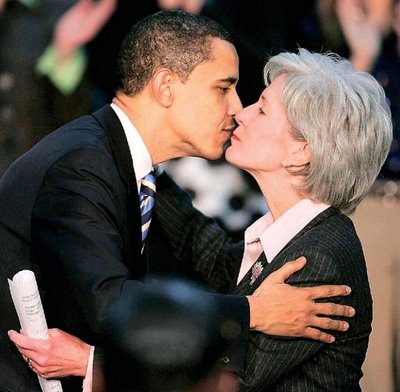
On December 1, the House Committee on Oversight & Government Reform will hold a hearing titled, "HHS and the Catholic Church: Examining the Politicization of Grants." At issue is the decision by the Obama administration to deny a grant that the Catholic Church routinely receives providing for relief to the victims of human trafficking; the ruling was made despite an independent review board's finding that gave high scores to the Church's program.
The Church was denied the grant because it refuses to offer abortion referrals. Many Catholics, including the Catholic League, believe that the politicized nature of the decision to defund the program demands a hearing, and on Thursday we will get it. Since 2006, the Church has helped more than 2,700 trafficking victims, most of whom are women and children.
Although the issue of abortion referral is on the table, the real issue is something more sinister: the pro-abortion community, which is supporting the Obama administration's push to mandate that private healthcare plans provide coverage for sterilization and contraceptive services, has its real sights set on mandated abortion coverage. That's why there has been an editorial and op-ed explosion in recent weeks calling for Obama to stand up to the bishops. Everyone knows that even minimum-wage earners can afford contraceptives, so this issue hardly explains the heated rhetoric. What mandated contraceptive services accomplishes is that it greases the slide towards abortion coverage.
Those who do not ascribe to the vision of sexuality entertained by "progressives," but are nonetheless not terribly bothered by the push for contraceptive services in healthcare plans, need to wake up and smell the odor before the "progressives" start racing for home. We're at the top of the stretch right now, which is why this hearing is critical.
Cardinal Burke reflects on his first year in the Sacred College

Cardinal Raymond Leo Burke, one of the Catholic Church's top U.S.-born clerics, is marking the first anniversary of his November 2010 elevation to the Sacred College of Cardinals.
"Well, it’s been a very fast-moving year," Cardinal Burke told CNA in his Roman apartment just yards from the Vatican, where he serves as head of the Church's highest court.
"But, it’s been a very good year, I'd have to say. And I’ve certainly come to understand more fully what it is to give this service to the Holy Father and hope that I am doing it better."
The College of Cardinals consists of the men considered the Pope’s closest aides, giving counsel and assistance to the pontiff when needed. It currently has under 200 members, with only 115, those under age 80, eligible to elect a future Pope.
Cardinal Burke, 63, has had a remarkable journey from America's rural Midwest—where he grew up as the youngest of six children—to his current post as Prefect of the Supreme Tribunal of the Apostolic Signatura.
"I never dreamed of it, to be honest with you," he said, reflecting on God's guidance of his path to the Vatican.
"I grew up, thanks be to God, in a very good Catholic home," he recalled. "We were small dairy farmers in Wisconsin, which was a very common situation in that part of the world. But I see how God has been at work all along, and I marvel at it."
While much has changed since those days, his life as a cardinal is "not unrelated to what my parents were trying to teach me from the time I was little."
"And, the truth of the matter is that the older I get, the more I appreciate those first lessons that were taught to me, that early formation in the faith."
After 14 years leading dioceses in Wisconsin and Missouri, Cardinal Burke was chosen in 2008 to head the Supreme Tribunal of the Apostolic Signatura, often called the "Supreme Court" of the Catholic Church.
"Whenever I've done whatever's been asked of me," he said, "I’ve always found a happiness in my work as a priest, and I continue to find that today."
A patriot with an obvious love for the United States, the Rome-based cardinal remains invested in the struggle for his country's culture.
"It is a war," he stated, describing the battle lines between "a culture of secularization which is quite strong in our nation," and "the Christian culture which has marked the life of the United States strongly during the first 200 years of its history."
He says it is "critical at this time that Christians stand up for the natural moral law," especially in defense of life and the family.
"If Christians do not stand strong, give a strong witness and insist on what is right and good for us both as and individuals and society," he warned, "this secularization will in fact predominate and it will destroy us."
Cardinal Burke favors realism over pessimism, and believes "things are getting better" in America, particularly among the young.
"I think that sometimes the young people understand much better the bankruptcy of a totally secularized culture because they’ve grown up with it," he observed.
Many youth "have seen their families broken" and "have been exposed to all the evils of pornography," leading them to conclude that the secularization project "is going nowhere and that it will destroy them" if left unchecked.
But the cardinal also thinks persecution may be looming for the U.S. Church.
"Yes, I think we’re well on the way to it," he said, pointing to areas of social outreach - such as adoption and foster care - where the Church has had to withdraw rather than compromise its principles.
This trend could reach a point where the Church, "even by announcing her own teaching," is accused of "engaging in illegal activity, for instance, in its teaching on human sexuality."
Asked if he could envision U.S. Catholics ever being arrested for preaching their faith, he replied: "I can see it happening, yes."
The Vatican's top judge takes a dim view of self-professed Catholic politicians who oppose the Church on key moral issues.
Among them is U.S. Health and Human Services Secretary Kathleen Sebelius, currently seeking to force most of the country's employers, including Catholic institutions, to cover contraception and sterilization in employee health plans.
"To the degree to which (Sebelius) proclaims herself to be a practicing Catholic, she is very wrong," said Cardinal Burke. He sees it as "simply incomprehensible" for a Catholic to "support the kind of measures that she is supporting."
The cardinal says America’s 2012 election will be "very significant."
Catholics, he said, "have a serious duty to vote and to try and find the best candidate to elect." And some "good and solid, right-thinking individuals" may even be called to run for public office themselves.
Above all, the cardinal hopes for a "new evangelization" of the United States - starting with faithful families, strong religious education, and reverent liturgical worship.
The family, he noted, is where a child "first learns the truths of the faith, first prayers, first practices his or her life in Christ." But the Mass itself is the "source of our solid teaching, of our solid witness," and also "the most beautiful and fullest expression we give to that teaching."
Cardinal Burke is also responsible for overseeing the Church's liturgy as a member of the Vatican's Congregation for Divine Worship.
He is grateful to Blessed John Paul II and Pope Benedict XVI for giving the Church "a font of solid direction" regarding worship, based on the Second Vatican Council's vision of a "God-centered liturgy and not a man-centered liturgy."
That intention was not always realized, he said, since the council's call for liturgical reform coincided with a "cultural revolution."
Read more here...

Today on Kresta in the Afternoon - November 29, 2011
Talking about the "things that matter most" on Nov. 29
4:00 – Has Newt Changed?
Questions about the past: Did Bill Clinton and Newt Gingrich have secret meetings prior to Clinton’s impeachment hearings? How wide was the knowledge of Gingrich’s extramarital affairs? Did Clinton know? Did Clinton’s knowledge affect Gingrich’s actions? The question for the present: What does Gingrich’s conduct then, and the way he has dealt with it, tell us about him today? Marvin Olasky analyzes the rise of Gingrich and we take your calls on Newt and the GOP primary.
5:00 – Catholic University of America: Single-Sex Dorms, Muslims, Lawsuits and the Idea of a Catholic University
At his inauguration as President of the Catholic University of America on Jan. 25, 2011, John Garvey delivered and address entitled “Intellect and Virtue: The Idea of a Catholic University”. It was only a few months later that he announced a return to single-sex dorms on campus and faced two lawsuits over the dorm policy and Muslim students’ “religious freedoms”. He joins us to discuss the lawsuits, the campus reaction, and his vision of Catholic higher education.
5:40 – Girls / Catholics Equal in British Throne Succession
Sons and daughters of any future UK monarch will have equal right to the throne, after Commonwealth leaders agreed to change succession laws. The leaders of the 16 Commonwealth countries where the Queen is head of state unanimously approved the changes at a summit in Perth, Australia. It means a first-born daughter of the Duke and Duchess of Cambridge would take precedence over younger brothers. The ban on the monarch being married to a Roman Catholic was also lifted. We talk with Catholic British journalist Joanna Bogle.
Conception to birth -- visualized
An astounding new video is drawing rave reviews from pro-life advocates around the world for its depiction of the fetal development of an unborn baby.
The new video on YouTube features Alexander Tsiaras, the author of From Conception to Birth: A Life Unfolds, presenting a video he helped develop which shows a visualization of the unborn child’s development from conception to birth. The video already has nearly 213,000 views even though it was only uploaded to YouTube on November 14.
The new video on YouTube features Alexander Tsiaras, the author of From Conception to Birth: A Life Unfolds, presenting a video he helped develop which shows a visualization of the unborn child’s development from conception to birth. The video already has nearly 213,000 views even though it was only uploaded to YouTube on November 14.
Congress’ approval problem in one chart
It’s no secret that people don’t like — ok, loathe — Congress.
The latest Gallup monthly survey pegged Congressional approval at just 13 percent, the second straight month it has hit that all-time low.
“The 2011 average is on track to be the lowest annual rating of Congress in Gallup’s history,” wrote Gallup’s Frank Newport in a memo on the results.
Colorado Democratic Sen. Michael Bennet, who has taken on the unpopularity of Congress as something of a pet cause, said on MSNBC’s “Daily Rundown” that “for the last year or so this town has effectively come the land of flickering lights, where the standard for success is somehow you kept the lights on for the month where the rest of the world isn’t waiting for us to figure out how we’re going to meaningfully participate in the 21st century economy.”
Bennet has also taken to the Senate floor to make his case — and he brought charts! This one chart that tells you everything you need to know about the depths of congressional unpopularity.
Notice that Hugo Chavez has the same approval rating as Congress. The US becoming Communist has 2% MORE support than Congress. And the IRS is 4X as popular as Congress.

Two Michigan Abortion Clinics Shut Down for Good
Citizens for a Pro-life Society run by Dr. Monica Miller was at the heart of a 21 month-long effort to bring legal action against the Womans Choice Abortion Clinics located in Lansing and Saginaw, Michigan. And our hardcore pro-life activism works! THESE ABORTIONS MILLS ARE SHUT DOWN!
On Nov. 21st in a hearing before Judge Calvin Osterhaven of Eaton County, Richard Remund, owner of the Womans Choice clinics entered into an agreement with the Michigan Attorney General to dissolve his clinics. Moreover, Remund is forever barred from being part of any incorporation of a Michigan medical facility. On Nov.7, Michigan Attorney General, Bill Schutte, brought a motion against Womans Choice clinics, citing the clinics for illegal incorporation.
Watch the interview with Monica below.
Patience with new translation expected to pay dividends
EWTN:

November 27 was a historic Sunday for English-speaking Roman Catholics, who began using a long-awaited and more accurate Mass translation. The change, however, involved its share of awkward moments.
“I think everybody experienced some awkwardness or stumbling,” said Father Daniel Merz, associate director of the U.S. bishops' Secretariat for Divine Worship, noting a common thread in the reactions he received from across the country.
But those who “had either received some catechesis” in advance, “or had catechized themselves and were prepared for it, seem to have had a fairly positive reaction to the changes,” he told EWTN News on Nov. 28.
Many priests, he said, were trying to take the learning process “with a good sense of humor,” while encouraging parishioners to deepen their understanding and appreciation of worship through the newly-rendered prayers.
“We're all going to be learning our way and stumbling for a little bit here, and that's okay,” Fr. Merz said.
He expects the learning process will take “a couple of months” for those who attend Mass only on Sundays. Meanwhile, priests and daily Mass attendees may learn new habits – like giving the response “and with your spirit,” or confessing their “most grievous fault” in the penitential rite – more quickly.
“After Christmas, or by Lent hopefully, we'll be in very good shape,” Fr. Merz predicted.
During the run-up to the translation's debut, the U.S. bishops' conference hailed it as a chance for Catholics “to deepen, nurture, and celebrate our faith through the renewal of our worship and the celebration of the Sacred Liturgy.”
But even Chicago's Cardinal Archbishop Francis E. George, past president of the conference, admitted that he “tripped up a couple of times,” due to the persistence of old liturgical habits. “I found myself reverting back, and therefore I was a little bit upset at myself,” Cardinal George said in a Nov. 27 homily, according to the Chicago Tribune. Many in the pews had a similar experience, even with the assistance of handouts spelling out the changes. Even Fr. Merz acknowledged being caught off guard by one major change. “The most noticeable and common change is from 'And also with you,' to 'And with your spirit,'” said the liturgical director, who has been “gearing up for this (new translation) for a long time.”
“When I participated in Sunday Mass as a concelebrant, I gave that response back. But it's a whole different feel. So it's going to take a little getting used to.” “I'm happy with that change – but nevertheless, it's a change. It'll take some adjustment.” Many companies and publishers, he noted, have produced materials explaining the changes that bring the English-language Mass more closely into line with the original Latin text. Fr. Merz also welcomes feedback on the translation, even from those who might be feeling surprise or confusion.
“The response I've been giving is, if there are specific things that you didn't understand or that disappointed you, let us know,” said the associate director for worship. “We can work together to try and come to a better understanding.” While it is not yet familiar, the new translation offers much to appreciate.
“People have said that they really appreciate the greater fidelity that the new prayers embody, and they like the more formal or 'higher' tone that it carries across. There is a sense of reverence and poetry there.”
Fr. Merz indicated that the learning process itself can be an opportunity to find out more about the faith, and grow closer to God.
“Whenever I've given workshops, it's not just been 'Here are the changes,' but 'Here are the reasons behind the changes, and here's some additional information about the meaning of this place in the Mass.'”
Several priests have told him that they intend to spent more time preaching about the meaning of Catholic worship, as a participation in Christ's death and resurrection. “It's an incredible opportunity to do that,” he pointed out. “And I think that will make a big difference for people.”
Fr. Merz said the new translation also shows the continuity of Catholic tradition before and after the Second Vatican Council. “Chuch historians have often said that it takes close to a century to fully implement an ecumenical council,” he noted. “As time goes on, we're starting to understand the Second Vatican Council more fully.”The norms guiding the translation were spelled out in the 2001 Vatican document “Liturgiam Authenticam,” which was itself inspired by the council's decree on the liturgy, “Sacrosanctum Concilium.”
“The real vision of Vatican II, for us today, is a deepening and 'interiorizing' of our experience of liturgy,” Fr. Merz reflected.
He described the new translation as one part of the larger effort to “really deepen our interior engagement in the liturgy, and our interior participation,” in keeping with the council's intentions.
The improved translation, he expects, will draw some estranged Catholics back to the Church.
“If there are people who were disappointed, or felt discouraged, that the translation before was less faithful, I think they have been encouraged to come back with this new translation,” he said.
China to ordain Vatican-approved bishop
View Larger Map
BEIJING (AP) — China plans to ordain a pope-approved bishop Wednesday, but the Vatican and the Chinese government-controlled Catholic church are fighting over the guest list.
The ordination of Peter Luo Xuegang as coadjutor bishop of Yibin diocese has the blessing of the Vatican, a recent point of agreement in its decades-long rift with the state-backed church. The source of friction this time is the possible presence of an excommunicated bishop at the ceremony. AsiaNews, the Vatican-affiliated news agency which closely covers the church in China, reported Friday that Paul Lei Shiyin was almost certain to take part because the government "will want to impress a 'patriotic' and 'independent' character on the ceremony."
Church officials from the Yibin diocese and Sichuan province, where Yibin is located, on Tuesday declined to confirm whether Lei was invited. Lei is the president of the Catholic Patriotic Association, and a diocese official said unspecified members of the association would attend the ceremony. "There were oral decisions made, but I'm not sure whether Father Lei Shiyin will attend," said the Yibin official, who only gave his surname, Yang. He said: "The Vatican has not talked to our diocese about the specifics."
The affair strikes at the heart of the dispute between the Vatican and the state-backed church since their split a half-century ago: the right to appoint bishops. The prerogative has been a key to the Vatican to ensure control and orthodoxy over far-flung communities of believers for centuries. In the same vein, China's communist government wants to make sure Catholics remain loyal to Beijing, not a foreign power.
China says about 6 million Catholics worship in official congregations across the country, although millions more are believed to worship outside the official church. Many of China's Catholics remain loyal to the pope, and on the ground many clergy minister to both officially sanctioned and unauthorized congregations. Over the last decade, Beijing and the Vatican have attempted quietly in fits and starts to work out an agreement on clerical appointments. Lei's ordination in June in defiance of the pope was a setback, and a month later the standoff deepened after China unilaterally ordained another bishop. The Vatican released a statement saying Pope Benedict XVI "once again deplores the manner in which the church in China is being treated."
China is sincere about improving relations with the Vatican and recent ordinations of bishops in China "promotes the healthy development of Chinese Catholicism," Foreign Ministry spokesman Hong Lei said Tuesday in response to a question about the planned ordination.
AsiaNews reported that with the threat of Lei's attendance, several bishops in neighboring dioceses were now afraid to participate in the ordination. At issue is not necessarily whether Lei will attend but the level of his participation, said Anthony Lam, a researcher at the Roman Catholic church-affiliated Holy Spirit Study Center in Hong Kong.
If Lei sits in the audience that would be fine, but if he actively takes part in the consecration "that would be a scandal," said Lam. It might, he said, render the ordination illegitimate. "He is forbidden according to the papal statement earlier in the year from carrying out any ministry or office so it would be a scandal if he joins as a co-consecrating bishop or a principal consecrator," he said.
The pope's spokesman, the Rev. Federico Lombardi, said that he hopes the faithful will be told that the Holy See has approved the candidate and that during the ceremony "no illegitimate bishop participates."
Lombardi said that he had not been informed about the ceremony and Rev. Luo has a papal mandate. If all goes well, "the event would be encouraging for the Catholic Community," Lombardi said.
___
Associated Press writers Christopher Bodeen in Beijing and Frances D'Emilio in Rome contributed to this report.
Legal Battle Ignites Over Jesus Statue in Montana
NYT:

DENVER — They call him Big Mountain Jesus: a six-foot statue of Christ, draped in a baby blue robe and gazing out over the majestic Flathead Valley from his perch along a ski run at the Whitefish Mountain Resort in Montana.
He has been there for more than 50 years, erected by the local Knights of Columbus chapter in honor of the soldiers from the 10th Mountain Division who told of seeing similar shrines in the mountains of Italy during World War II.
These days, though, Whitefish’s Jesus statue is at the center of an increasingly bitter battle over the legality of such symbols on federal land.
An atheist group says that because Big Mountain Jesus stands on United States Forest Service property, it is in violation of the constitutional principle separating church and state.
After receiving a complaint about the statue in the spring, the group, the Freedom From Religion Foundation, based in Wisconsin, has been urging the Forest Service not to reauthorize the Knights’ special-use permit for the memorial, which is up for renewal.
“This is a no-brainer,” said Annie Laurie Gaylor, co-president of the group. “A violation doesn’t become less egregious because it’s gone on a long time.” Ms. Gaylor said she would have no problem if the statue stood on private property.
But the statue’s supporters argue that it should be viewed as a military memorial, not as a religious shrine, and they point out that the Forest Service has renewed the permit over the years without issue.
Hiram Sasser, a lawyer for the Liberty Institute, a conservative legal advocacy group, said that because the ski resort is already leasing much of the mountain from the Forest Service, the federal government has no right to ban the statue merely because some people might not like it.
“When the government allows its property to be used for various purposes, like a ski resort, then they open it up to public expression, and they can’t exclude a memorial based on religious grounds,” said Mr. Sasser, whose group is representing the Kalispell chapter of the Knights of Columbus in the dispute.
Caught in the middle of the controversy is the Forest Service, which initially denied the Knights’ renewal application in August, on the grounds that it no longer allowed private memorials of any sort on national forestland.
But after the ensuing outcry, and a determination that the site is eligible for listing in the National Register of Historic Places, it decided to reconsider and is taking public comments on the statue.
“This is a pretty unique situation,” said Jim Peña, acting deputy chief for the national forest system. “Because of the historic and cultural significance of the statue, we’re going to have to relook at it and figure out the right way to go.”
Meanwhile, United States Representative Denny Rehberg, a Montana Republican, has hurled himself into the debate, speaking at rallies for the statue and proposing swapping the 25-foot-by-25-foot piece of land for a parcel owned by the ski resort.
“Would we take the crosses and Stars of David out of Arlington Cemetery?” Mr. Rehberg, who is running for the Senate seat held by Jon Tester, a Democrat, said in an interview. “I don’t think so.”
Riley Polumbus, a spokeswoman for the Whitefish Mountain Resort, which technically is on Big Mountain and is near the town of Whitefish, said the resort was amenable to the swap.
“In addition to this being a dedication to World War II soldiers, it’s a landmark on the mountain,” Ms. Polumbus said. “People say, ‘Meet at Jesus at 11.’ Skiers take pictures with him, wrap him up in clothing and put Mardi Gras beads on him.”
But Ms. Gaylor of the Freedom From Religion Foundation called Mr. Rehberg’s proposal “absurd,” saying the Forest Service’s parcel is owned by all Americans and should not simply be traded for the sake of a religious shrine.
She said her group had received a flood of threatening e-mails over its stance on the statue.
“It’s terribly important that the religious right not be allowed to manipulate this situation,” she said.
Both sides are vowing to go to court depending on what is decided.
A Facebook site, “Save Big Mountain Jesus Statue,” has sprung up, and an “Occupy Big Mountain” rally recently took place, with supporters hiking up to the statue in solidarity.
“We wish the people of Wisconsin would take care of their own business and leave us, and this statue, totally alone,” said Michael Shepard, commander of American Legion Post 108 in Whitefish, which has helped organize the recent rallies.
Mr. Peña said the Forest Service expects to make a decision on the statue in early 2012.
Thursday, November 24, 2011
Today on Kresta in the Afternoon - November 24, 2011
Talking about the "things that matter most" on Nov. 24
4:00 – Why Catholics Are Right
Columnist, television host, author, and Canadian Catholic Michael Coren is here to examine four main aspects of Catholicism as they are encountered, understood, and more importantly, misunderstood, today. For some Catholicism is the only permanent, absolute body of truth, while for others it is the last permanent, absolute body that has to be opposed and stopped. Coren then traces Catholic history, with a discussion of the Crusades, Inquisition, Holocaust, and Galileo. He looks at Catholics and theology, explaining what and why Catholics believe what they do — Papal infallibility, Immaculate Conception, and Tradition vs. Bible alone. Finally, Coren outlines the pro-life position and why it is so important to Catholicism. Michael draws on history, politics, and theology to present the arguments for the truth of Roman Catholicism. He is with us today.
5:00 – Fatima for Today: The Urgent Marian Message of Hope
Though the apparitions of Our Lady of Fatima took place nearly a hundred years ago, Our Lady's call to prayer and penance for the salvation of souls and peace in the world is as relevant now as when first delivered to three Portuguese peasant children in 1917. Much of what Our Lady of Fatima said was revealed soon after her appearances, but the third and final "secret", which was not a message but a prophetic vision seen by the children, was not unveiled by the Vatican until 2000. Pope John Paul II, who read the third secret while recovering from the attempt upon his life in 1981, believed the vision signified the sufferings the Church had endured in the twentieth century. Because of the prophetic nature of her messages, Our Lady of Fatima has been the subject of much controversy and speculation. Father Andrew Apostoli is here to carefully analyze the events that took place in Fatima and clears up lingering questions and doubts about their meaning. He also challenges us to hear anew the call of Our Lady to prayer and sacrifice, for the world is ever in need of generous hearts willing to make reparation for those in danger of losing their way to God.
Wednesday, November 23, 2011
Today on Kresta in the Afternoon - November 23, 2011
Talking about the "things that matter most" on Nov. 23
The Best of Kresta in the Afternoon
4:00 – Collin Raye: Catholic Convert, Country Music star, and Defender of Life
“I would just worship the ground that she walked on,” said country music legend Collin Raye, talking about his firstborn grandchild Haley Marie Bell. “Then eventually she didn’t walk. Then she couldn’t crawl. Then she couldn’t hold her hands up. She would fall over. She couldn’t control her head. She lost the ability to speak.” Haley had a neurological disorder that the best doctors in the country could not diagnose. Raye, a Catholic convert who has recorded five platinum albums sold eight million and has been nominated five times as country music’s Male Vocalist of the Year, is here to talk about his granddaughter, his faith journey and his new album of sacred music.
5:00 – The Book of Man: Readings on the Path to Manhood
Boys need heroes to embody the everlasting qualities of manhood: honor, duty, valor, and integrity. Without such role models, boys will naturally choose perpetual childhood over the rigors of becoming a man-as many women, teachers, coaches, employers, and adults in authority can quickly attest. Too many boys and men waste time in pointless and soulless activities, unmindful of their responsibilities, uncaring in their pursuits. Have we forgotten how to raise men, how to lead our boys into manhood? William Bennett joins us to answer that question.
5:40 – Animal rights group's lawsuit alleges Sea World is keeping orcas in slavery and violating their 13th Amendment rights
People for the Ethical Treatment of Animals has filed a lawsuit against Sea World for allegedly violating the 13th Amendment to the U.S. Constitution -- which bans slavery -- by keeping orcas at parks in San Diego and Orlando, Fla. Part of the lawsuit also asserts that it is illegal to artificially inseminate the females and then take away their babies. We talk to bioethicist Wesley Smith about this case and while ridiculous, why it is also very dangerous.
Tuesday, November 22, 2011
A Debate: Occupy Wall Street: Representative of Catholic Social Teaching?
Occupy Wall Street is a movement that began on September 17 in Manhattan's Financial District, and has spread to over 100 cities in the United States and actions globally. We ask if the movement has a coherent message, if it is effective, and most importantly, does the Occupy Wall Street movement have a basis in Catholic social teaching? We debate it with Dr. Max Torres and Tony Magliano.

Catholic Tastes: The Vatican Enters the World of Contemporary Art

By Stephan Faris
It wasn't the type of gift you would normally think of for an 84-year-old Pope best known for conservative theology and critiques of secular culture. And indeed, as Benedict XVI moved through the exhibition of contemporary art that had been installed in his honor — one work for each of the 60 years he has been a priest — there were times when he looked more than a little bemused: pausing, say, in front of a flat blue canvas broken by a raised geometric pattern, or staring up at a metal etching of a face with a thin tree branch sprouting from between its eyes.
And yet, the Pope was clearly pleased with the project — the first incarnation of an effort he has championed to reconnect the Catholic Church with the world of art. It was a realm the Vatican once dominated, but one in which it has had little presence for more than a century. "Make the truth shine in your works — never separate artistic creation from truth and charity," Benedict urged the assembled artists, who had joined him at the show's opening in Rome in early July. They ranged from Ghanaian sculptor El Anatsui to American painter Max Cole.
The Vatican's undertaking is by any measure ambitious. The modern church's influence in the world of art is all but non-existent — a far cry from the time when the Pope could commission Michelangelo to paint the ceiling of the papal chapel or when Cardinals could call upon Caravaggio to ornament the churches of Rome. Depending on who is talking, it's been at least a century — and maybe a couple more — since the Vatican was an important patron of the arts. Certainly, in the 20th century, the schism between the two worlds yawned larger than ever. Popular culture swerved toward the secular, modern art fled sacred spaces for the world of galleries, foyers and museums, and the church retreated into tradition.
There's little question that church grandees, left to their own devices, would prefer to tread the safe ground of figurative religious art. But there's also a recognition that if the Vatican is to reassert itself among the artistic class, it will have to learn the vocabulary of modernity. "It's another language, something completely different," says Cardinal Gianfranco Ravasi, head of the Pontifical Council for Culture, who has been leading the effort.
For the Pope's exhibition, "The Splendor of Truth, the Beauty of Charity," Ravasi and his assistants chose a broad theme and asked a selection of artists to contribute a new or previously completed piece. Benedict seemed drawn by those that made tentative steps toward common ground. He examined a score the Italian composer Ennio Morricone had drawn in the shape of a crucifix, and paused to speak with a young German photographer, Christoph Brech, who had contributed a series of photographs taken in the Vatican museum showing nested doors leading to a brightly lit wall. "He told me, 'Despite the wall, you are led toward the light,' " says Brech.
However, even if the Pope and other church officials are willing to hold out their hands, persuading the art world to accept them won't be easy. After all, much has changed since the times when an artist's patron was a King, Emperor or Pope. Today's patrons are more likely found in the boardrooms of Moscow or Hong Kong than in the decaying palaces of Europe.
Ravasi, knowing any effort by the Vatican will be greeted with suspicion — perhaps hostility — has proceeded with caution. The Vatican expressed interest in contributing a pavilion to the Venice Biennale in 2009 and '11, but then decided to aim for '13. "It takes some courage," concedes Paolo Baratta, president of the biannual event. "The choice to come to the Biennale is the choice of being within the waves of the world. It's saying, 'I want to be on a boat in the open ocean,' not 'I want to build a monument to the relationship between the church and contemporary art.' "
For the Holy See's eventual entrance into the Biennale, Ravasi would like to ratchet up the religion a step further than that conveyed in the exhibition for the Pope. He intends asking no more than 10 artists to draw their inspiration from the first 11 chapters of Genesis, which span the history of creation — from "Darkness upon the face of the deep" through the felling of the Tower of Babel. In Ravasi's view, contemporary artists have, with few exceptions, become severed from the spiritual themes that motivated their predecessors. "They've lost the great stories, the great narratives," he says.
And yet, according to Ravasi, even blasphemous works like Andres Serrano's Piss Christ, or the Austrian artist Alfred Hrdlicka's depiction of the Last Supper as a gay bacchanal, are illustrations of the enduring power of transcendental and religious themes and their place in the world of art. "It shows they have the desire to come back to the big symbols," he says. For a church looking to reconnect with artists, that would be a gift indeed.
Subscribe to:
Posts (Atom)


