Thursday, September 27, 2012

Clinton Suggests Link to Qaeda Offshoot in Deadly Libya Attack

 
Secretary of State Hillary Rodham Clinton
meeting with President Mohamed Magariaf of Libya.
Don Emmert/Agence France-Presse — Getty Images
Secretary of State Hillary Rodham Clinton on Wednesday suggested there was a link between the Qaeda franchise in North Africa and the attack at the American diplomatic mission in Benghazi, Libya, that killed the American ambassador and three others. She was the highest-ranking Obama administration official to publicly make the connection, and her comments intensified what is becoming a fiercely partisan fight over whether the attack could have been prevented. Mrs. Clinton did not offer any new evidence of a Qaeda link, and officials later said the question would be officially settled only after the F.B.I. completed a criminal inquiry, which could take months. But they said they had not ruled out the involvement of Al Qaeda in the Islamic Maghreb — an affiliate of the international terrorist group with origins in Algeria — in an attack the administration initially described as a spontaneous protest turned violent.       
Her remarks added to the administration’s evolving and at times muddled explanation of what happened on the evening of Sept. 11 and into the next morning. Republicans in Congress have accused President Obama of playing down possible terrorist involvement in the midst of a re-election campaign in which killing Osama bin Laden and crippling Al Qaeda are cited as major achievements.
Mrs. Clinton made her remarks at a special United Nations meeting on the political and security crisis in the parts of North Africa known as the Maghreb and the Sahel, particularly in northern Mali, which has been overrun by Islamic extremists since a military coup helped lead to the division of that country this year.
Al Qaeda in the Islamic Maghreb has long operated in the region, she said, and was now exploiting a haven in Mali to export extremism and terrorist violence to neighbors like Libya.
“Now with a larger safe haven and increased freedom to maneuver, terrorists are seeking to extend their reach and their networks in multiple directions,” Mrs. Clinton told leaders assembled at the meeting, including President François Hollande of France and the United Nations secretary general, Ban Ki-moon. “And they are working with other violent extremists to undermine the democratic transitions under way in North Africa, as we tragically saw in Benghazi.”
Mr. Ban called the meeting to lay the groundwork for a possible international military intervention — to be led by African troops — to help the new military government in Mali re-establish control over a part of the country that Mr. Hollande noted was the size of France and is now under the grip of Islamist extremists imposing their vision of law and order.
“We cannot stand by and allow terrorists to take over an entire territory,” Mr. Hollande said.
Top militia leaders in Benghazi have dismissed the possibility that Al Qaeda in the Islamic Maghreb played a role in the attacks or had a foothold in eastern Libya. Benghazi residents have said they believe the brigade that conducted the attack could not have managed the assault on its own, because it included more than 100 heavily armed fighters.
Mrs. Clinton’s connection of the turmoil in the Sahel with the violence in Benghazi, which killed Ambassador J. Christopher Stevens, echoed remarks made last week by Matthew G. Olsen, the director of the National Counterterrorism Center. He said that intelligence analysts were investigating ties between local Libyan militias and Al Qaeda in the Islamic Maghreb, but had not yet come to any conclusions.
A senior administration official said that Mrs. Clinton intended to underscore the rising threat that the Qaeda affiliate and other extremist organizations pose to the emerging democratic governments in countries like Tunisia and Libya, adding that the group clearly intended to make contact with extremists in Benghazi and elsewhere. The final determination of the group’s role, the official said, would await the investigation by the F.B.I.
Mrs. Clinton has also ordered a review of diplomatic security that is being led by Thomas R. Pickering, a veteran diplomat and former undersecretary of state.
It was not clear whether Mrs. Clinton’s remarks foreshadowed any possible retaliation against those who carried out the attack, whether they operated in sympathy with, or on orders from, Al Qaeda leaders. But she reiterated the administration’s vow to bring those responsible to justice, telling the conference that American intelligence and law-enforcement agencies were working not only with Libya but with other nations in the region to investigate the attack.
The cooperation with other nations beyond Libya in the investigations also seemed to indicate that the attack’s planning and execution might have crossed international borders and not simply have been a local, spontaneous eruption of violence in response to an amateurish Internet video denigrating the Prophet Muhammad.


David D. Kirkpatrick contributed reporting from Benghazi, Libya, and Michael S. Schmidt and Eric Schmitt from Washington.

40 Days for Life begins 10th campaign since 2007

40 Days for Life / Day 1: Imagine the possibilities

As we begin this 40-day journey of prayer and fasting, peaceful vigil, and community outreach, imagine what God can do through YOU … in YOUR city.
In a NEW kickoff video, David Bereit — our national director — shares a touching (and rarely told) story that shows the powerful impact one person can make.
In the video, you’ll learn about one person — who was personally affected by abortion — who helped to launch the entire 40 Days for Life worldwide movement … and you’ll hear David share an inspiring account of the baby he met this weekend whose life was spared through one person participating in 40 Days for Life ... [more]


40 Days for Life runs through November 4 in 316 locations
40 Days for Life

It's official! This 40 Days for Life campaign will be a record-setter! The campaign, from now through November 4, will be the largest and longest internationally coordinated pro-life mobilization in history ... and you can help save lives by getting involved TODAY!

Here's a quick rundown:
  • 316 locations -- the most ever!
  • 49 US states -- plus Washington, DC
  • 7 Canadian provinces
  • Australia, England, Spain and -- for the first time -- Uganda
  • Many NEW cities ... 46 first-time campaigns

The full list of locations for the 40 Days for Life campaign has just been posted. Click on the site that is closest to where you live. You will be redirected to the web page for that local 40 Days for Life campaign. On that local web page, sign up with your name and e-mail address to get involved and help save lives!
Take the leap of faith and get involved with 40 Days for Life
Have you been to pray at a 40 Days for Life vigil yet? You may ask, “What do I do?” or “What sign should I bring?” The answer is simple; the only sign you really need to bring is yourself, for you represent God’s love.
Here's a video featuring 40 Days for Life national director David Bereit and campaign director Shawn Carney, who shared some thoughts at a recent pro-life gathering in Maryland.


What 40 Days for Life has witnessed (so far!)
40 Days for Life in Glendale, California

There have now been ten coordinated 40 Days for Life campaigns since 2007, mobilizing people of faith and conscience in 440 cities across the United States and Canada, plus cities in Argentina, Armenia, Australia, Belize, Denmark, England, Georgia, Germany, Ireland, Northern Ireland, Poland, Puerto Rico and Spain.

During these unified efforts, participants witnessed countless blessings from God:
  • 1,894 individual campaigns have taken place in 440 cities
  • More than 525,000 have joined together in an historic display of unity to pray and fast for an end to abortion
  • More than 15,000 church congregations have participated in the 40 Days for Life campaigns
  • Reports document 5,928 lives that have been spared from abortion — and those are just the ones we know about
  • 69 abortion workers have quit their jobs and walked away from the abortion industry
  • 24 abortion facilities completely shut down following local 40 Days for Life campaigns
  • Hundreds of women and men have been spared from the tragic effects of abortion, including a lifetime of regrets
  • More than 2,100 news stories have been featured in newspapers, magazines, radio shows and TV programs from coast to coast ... and overseas
  • Many people with past abortion experiences have stepped forward to begin post-abortion healing and recovery

After so many years of legalized abortion, many people of faith are experiencing a renewed sense of HOPE!

Wednesday, September 26, 2012

Bishop Paprocki: Think And Pray Very Carefully About Your Vote

The Eternal Salvation of Your Own Soul is at Stake

From Bishop Thomas John Paprocki, The Catholic Times:
 
My dear brothers and sisters in Christ:

Bishop Thomas John Paprocki
Much attention was given at the Democratic National Convention held recently in Charlotte, N.C., to the fact that all references to God had been purged from the draft version of the party platform. After outcries of protest from outside as well as within the Democratic Party, the sentence with the same reference to God used in 2008 was restored to read, “We need a government that stands up for the hopes, values and interests of working people, and gives everyone willing to work hard the chance to make the most of their God-given potential.”
Before anyone relaxes and concludes that all is well now that the Democratic Party Platform contains a single passing reference to God, the way that this was done should give us pause. Convention chairman Antonio Villaraigosa had to call for the voice vote three times because each time the sound level for the “ayes” and the “nays” sounded about even, far short of the two-thirds necessary according to convention rules to amend the platform. That did not stop the convention chairman from declaring, “The ayes have it!”
What is troubling about that is the blatant disregard for the rules and for the apparent wishes of about half the delegates. The reference to God is back in the platform apparently because President Obama wanted it back in. That may be fine for now, but if a future president wants references to God taken out, apparently that can be done regardless of the wishes of the delegates if that is what The Leader wants. That does not bode well for democracy in the Democratic Party.
Even more troubling is that this whole discussion about God in the platform is a distraction from more disturbing matters that have been included in the platform. In 1992 Presidential candidate Bill Clinton famously said that abortion should be “safe, legal and rare.” That was the party’s official position until 2008. Apparently “rare” is so last century that it had to be dropped, because now the Democratic Party Platform says that abortion should be “safe and legal.” Moreover the Democratic Party Platform supports the right to abortion “regardless of the ability to pay.” Well, there are only three ways for that to happen: either taxpayers will be required to fund abortion, or insurance companies will be required to pay for them (as they are now required to pay for contraception), or hospitals will be forced to perform them for free.
Moreover, the Democratic Party Platform also supports same-sex marriage, recognizes that “gay rights are human rights,” and calls for the repeal of the Defense of Marriage Act, the federal law signed by President Clinton in 1996 that defined marriage as the legal union of one man and one woman.
Now, why am I mentioning these matters in the Democratic Party Platform? There are many positive and beneficial planks in the Democratic Party Platform, but I am pointing out those that explicitly endorse intrinsic evils. My job is not to tell you for whom you should vote. But I do have a duty to speak out on moral issues. I would be abdicating this duty if I remained silent out of fear of sounding “political” and didn’t say anything about the morality of these issues. People of faith object to these platform positions that promote serious sins. I know that the Democratic Party’s official “unequivocal” support for abortion is deeply troubling to pro-life Democrats.
So what about the Republicans? I have read the Republican Party Platform and there is nothing in it that supports or promotes an intrinsic evil or a serious sin. The Republican Party Platform does say that courts “should have the option of imposing the death penalty in capital murder cases.” But the Catechism of the Catholic Church says (in paragraph 2267), “Assuming that the guilty party’s identity and responsibility have been fully determined, the traditional teaching of the Church does not exclude recourse to the death penalty, if this is the only possible way of effectively defending human lives against the unjust aggressor. If, however, non-lethal means are sufficient to defend and protect people’s safety from the aggressor, authority will limit itself to such means, as these are more in keeping with the concrete conditions of the common good and more in conformity to the dignity of the human person. Today, in fact, as a consequence of the possibilities which the state has for effectively preventing crime, by rendering one who has committed an offense incapable of doing harm — without definitely taking away from him the possibility of redeeming himself — the cases in which the execution of the offender is an absolute necessity are very rare, if not practically nonexistent.”
One might argue for different methods in the platform to address the needs of the poor, to feed the hungry and to solve the challenges of immigration, but these are prudential judgments about the most effective means of achieving morally desirable ends, not intrinsic evils.
Certainly there are “pro-choice” Republicans who support abortion rights and “Log Cabin Republicans” who promote same-sex marriage, and they are equally as wrong as their Democratic counterparts. But these positions do not have the official support of their party.
Again, I am not telling you which party or which candidates to vote for or against, but I am saying that you need to think and pray very carefully about your vote, because a vote for a candidate who promotes actions or behaviors that are intrinsically evil and gravely sinful makes you morally complicit and places the eternal salvation of your own soul in serious jeopardy.
I pray that God will give you the wisdom and guidance to make the morally right choices.
May God give us this grace. Amen.

Ryan, Biden, and the Bishops

Newsmax.com

By Bill Donohue

The conventional wisdom holds that both vice-presidential candidates, Rep. Paul Ryan and Vice President Joe Biden, are roughly equal in terms of their Catholic standing: Ryan is good on the life issues, but weak on social justice; the reverse is said to be true of Biden. But is it a draw? Not even close: Only one of these Catholics — Biden — has been criticized, reprimanded, and sanctioned by the bishops. Make that 17 bishops.

Before detailing all the trouble Biden has gotten into with the bishops, some debunking of the conventional wisdom is in order. Sister Simone Campbell, executive director of NETWORK, a Catholic dissident organization, is responsible for much of the mythology about Ryan.

Sister Simone began her speech at the Democratic National Convention saying, “Good evening. I’m Sister Simone Campbell, and I’m one of the ‘nuns on the bus.’” She was referring to the 2,700-mile bus journey through nine states that she and “other Catholic sisters” participated in seeking to educate the public about the horrors of the Ryan budget.

The fact of the matter is there were hardly any “nuns on the bus.” Out of 57,000 nuns in the United States, a grand total of two made the entire trip. Moreover, there were never more than six on the bus at any one time (it was a luxury bus, to boot). In other words, the “nuns on the bus” story was a colossal media scam, led by Sister Simone; they could all have fit comfortably in a sedan.

Sister Simone did not start the fiction that the bishops have lined up against the Ryan budget, but she did give the story high profile. Unequivocally, she contended, “the United States Conference of Catholic Bishops stated that the Ryan budget failed a basic moral test, because it would harm families living in poverty.”

To put it politely, Sister Simone overreached. There was one bishop, Stockton Bishop Stephen Blaire, who wrote a letter on April 16 to two congressmen, Rep. Frank D. Lucas and Rep. Collin C. Peterson, leaders of the Committee on Agriculture, asking them to resist “unacceptable cuts to hunger and nutrition programs.” Nowhere in the letter is Rep. Paul Ryan’s name mentioned.

Bishop Blaire is the chairman of the Committee on Domestic Justice and Human Development of the United States Conference of Catholic Bishops (USCCB), and he did speak on their behalf. But by saying on national television that the bishops had condemned the Ryan budget, Sister Simone was, in the words of theologian George Weigel, being “either woefully ignorant or willfully malicious.”

After distorting the record, Sister Simone proclaimed, “We agree with our bishops.” What is so remarkable about this statement is that it comes from the leader of NETWORK, a group hardly known for practicing fidelity to what the bishops say. In fact, when Sister Simone was asked at the Democratic National Convention if she supports laws that ban abortion, she took a page from her hero, President Obama, and replied, “That’s beyond my pay grade. I don’t know.”

NETWORK was founded in the early 1970s by radical nuns professing a strong belief in social justice but no interest whatsoever in abortion. It is so radical and disrespectful of what the bishops say that it has butted heads many times with the Church hierarchy in the U.S., as well as in Rome.

In 1983, it took the side of a dissident nun who refused to denounce publicly funded abortions; when the nun refused, the Vatican stepped in to force her to leave her order. The very next year, Sister Marjorie Tuite, a founder of NETWORK, was herself threatened with expulsion from her order for her pro-abortion activities. I mentioned all of this to Sister Simone on a radio show earlier this year but she refused to comment on it.

In other words, it is not Rep. Ryan who has been called out by the Vatican for his dissident views — it is Sister Simone’s group.

The nonsense that Ryan’s budget was condemned by the bishops was floated by Dana Milbank in The Washington Post on April 27, just 11 days after Bishop Blaire’s letter was released. In his article, Milbank said, “the bishops sent letters to Congress” about Ryan’s budget. But the link he provides is only to Blaire’s letter.

Similarly, on August 11, Melinda Henneberger wrote in a Washington Post blog that “the U.S. Conference of Catholic Bishops took the unusual step of repudiating the deep cuts envisioned in Ryan’s budget”; the link is to Milbank’s piece.

Then on August 20, Robert P. Jones did an article for the same site saying, “the bishops sharply repudiated the Ryan budget”; predictably, he linked to Henneberger’s post.

The Washington Post earns an “A” for getting its talking points down with precision; too bad it fails the test for accuracy. Their grade is actually worse than this: Not only is it inaccurate to suggest that more than one bishop was upset with Ryan’s budget, it is intellectually dishonest not to mention those bishops who have spoken favorably about the Wisconsin congressman’s work. And unlike Bishop Blaire, Ryan’s supporters mentioned him by name.

Just before Milbank got the anti-Ryan train running, Ryan’s own bishop, Robert Morlino of the Diocese of Madison, wrote a column commending him. Bishop Morlino cited Ryan’s “accomplishments as a native son, and a brother in the faith.” In a subsequent radio interview, he said Ryan is an “excellent Catholic layman of the very highest integrity,” adding that he “understands the principles of Catholic social teaching” and applies them “very responsibly.”

More recently, Bishop Thomas J. Paprocki of Springfield, Illinois spoke in Green Bay, Wisconsin, saying, “Congressman Ryan is undoubtedly correct in asserting that the preferential option for the poor . . . does not entail ‘a preferential option for big government.’” Similarly, the president of the USCCB, Timothy Cardinal Dolan of the Archdiocese of New York, has written favorably of Ryan’s commitment to Catholicism.

When it comes to Vice President Joe Biden, it’s a different story. To put it mildly, he has incurred the wrath of the bishops, and on more than one occasion.

Biden got into big trouble with the bishops after his infamous 2008 appearance on “Meet the Press.” Tom Brokaw asked Biden if he agreed with the Catholic Church on abortion. “I’m prepared as a matter of faith to accept that life begins at conception. But that is my judgment. For me to impose that judgment on everyone else who is equally and maybe even more devout than I am seems to me is inappropriate in a pluralistic society.” He also said that in the Catholic Church there has long been a “debate” on when life begins.

Following the interview, the bishops weighed in with vigor:

Cardinal Justin F. Rigali, chairman of the USCCB’s Committee on Pro-Life Activities, and Bishop William E. Lori, chairman of the USCCB’s Committee on Doctrine, issued a joint statement “to correct the misrepresentations” of Church teachings advanced by Biden. Indeed, they argued that “the senator’s claim that the beginning of human life is a ‘personal and private’ matter of religious faith, one that cannot be ‘imposed’ on others, does not reflect the truth of the matter.”

Speaking explicitly of Biden, as well as those Catholic politicians who share his position, Bishop Samuel Aquila of Fargo, North Dakota, said, “they really should not be presenting themselves for Holy Communion because it is a scandal.”

Bishop Gregory Aymond of Austin released a statement by the bishops’ Administrative Committee, the highest authority of the USCCB outside the conference’s plenary sessions, affirming support for the position as outlined by Cardinal Rigali and Bishop Lori. “As teachers of the faith, we also point out the connectedness between the evil of abortion and political support for abortion.”

Denver Archbishop Charles Chaput said of Biden: “I certainly presume his good will and integrity and I presume that his integrity will lead him to refrain from presenting himself for Communion.”

Bishop Paul S. Coakley of Salina said, “Senator Biden confused the matter [of abortion] further by saying that he ‘knows when (life) begins for me,’ but that this is a ‘personal and private issue.’ That life begins at conception is a scientific fact, not a personal or subjective or philosophical or religious opinion.”

Denver Auxiliary Bishop James D. Conley joined with Archbishop Chaput in accusing Biden of “poor logic” and “bad facts.”

Milwaukee Archbishop Timothy Dolan accused Biden of taking it upon himself to “explain Catholic teaching on abortion to the nation — and blundered badly.”

Bishop W. Francis Malooly of Wilmington labeled Biden’s position “simply incorrect.” He said, “The Didache, probably the earliest Christian writing apart from the New Testament, explicitly condemns abortion without exception.”

When Bishop Joseph F. Martino of Scranton was asked what he would say to Biden, he restated his position that “No Catholic politician who supports the culture of death should approach Holy Communion.” He added, “I will be truly vigilant on this point.”

Bishop R. Walker Nickless of Sioux City slammed Biden for using a “false argument to justify [his] cooperation with evil.”

Boston Archbishop Sean Cardinal O’Malley complained that he finds it “disturbing when politicians and others try to dismiss us [the bishops] as people with merely an ecclesiastical or religious sectarian point of view or opinion.”

Bishop John Ricard of Pensacola-Tallahassee said Biden’s position indicated “a profound disconnection from [his] human and personal obligation to protect the weakest and most innocent among us: the child in the womb.”

Bishop Edward Slattery of Tulsa blasted Biden for his “erroneous beliefs” about the beginning of life and for creating a “division” between “privacy and social responsibility” that was “tenuous.”

Archbishop Donald Wuerl of Washington chastised Biden for not recognizing that “When life begins is not a matter of faith, but a matter of science.”

These 15 bishops are not alone.

Prior to the “Meet the Press” fiasco, Biden was banned by his own bishop from speaking in Catholic schools. In 2006, Wilmington Bishop Michael A. Saltarelli also intervened to stop a building that was to be named after Biden at the Catholic high school he attended. In 2008, he said that even if Biden were to become vice president, he would still be barred from speaking at Catholic schools.

Subsequent to his “Meet the Press” interview, Biden was told in 2010 by Bishop Emeritus Henry Gracida of Corpus Christi that he “crossed the line as a Catholic” when he lobbied for a pro-abortion law in Kenya. Referring to Biden’s two aneurysms, the bishop said, “Perhaps God, who knows whether or not Biden’s brain was permanently damaged by his brain surgery, will not judge him too harshly, but the Church, which does not have that kind of knowledge, should certainly speak out and reprimand him.”

The record is clear: There is absolutely no comparison between the Catholic standing of Rep. Paul Ryan and Vice President Joe Biden. Biden’s public defiance of Catholic teachings has gotten him into hot water with the bishops. Ryan, on the other hand, has never been punished by the bishops, and has indeed won the plaudits of many.

Dr. William Donohue is the president of and CEO of the Catholic League for Religious and Civil Rights, the nation’s largest Catholic civil rights organization. The publisher of the Catholic League journal, Catalyst, Bill is a former Bradley Resident Scholar at the Heritage Foundation and served for two decades on the board of directors of the National Association of Scholars. The author of five books, two on the ACLU, and the winner of several teaching awards and many awards from the Catholic community, Donohue has appeared on thousands of television and radio shows speaking on civil liberties and social issues.

Today on "Kresta in the Afternoon" - Sept. 26, 2012

Talking about the "things that matter most" on Sept. 26

4:00 – Islam, Jihad and the Tumultuous Middle East
After September 11, Americans agonized over why nineteen men hated the United States enough to kill three thousand civilians in an unprovoked assault. Analysts have offered a wide variety of explanations for the attack, but the one voice missing is that of the terrorists themselves. Dr. Mary Habeck is here to present the inner logic of al-Qa’ida and like-minded extremist groups by which they justify September 11 and the recent terrorist attacks across the Muslim world. Habeck explains that these extremist groups belong to a new movement—known as jihadism—with a specific ideology based on the thought of Muhammad ibn Abd al- Wahhab, Hasan al-Banna, and Sayyid Qutb. Jihadist ideology contains new definitions of the unity of God and of jihad, which allow members to call for the destruction of democracy and the United States and to murder innocent men, women, and children.

4:40 – Responding to Critics of “2016: Obama’s America”
In his memoir, Barack Obama omits the full name of his mentor, simply calling him “Frank.” Now, the truth is out: Never has a figure as deeply troubling and controversial as Frank Marshall Davis had such an impact on the development of an American president. Although other radical influences on Obama, from Jeremiah Wright to Bill Ayers, have been scrutinized, the public knows little about Davis, a card-carrying member of the Communist Party USA, cited by the Associated Press as an “important influence” on Obama, one whom he “looked to” not merely for “advice on living” but as a “father” figure. Author Paul Kengor recently published a book on Davis and Obama and was featured in Dinesh D’Souza’s breakout documentary “2016: Obama’s America.” Paul is here to respond to critics of his role in the documentary.

5:00 – “Support Israel. Defeat Jihad” Ads Go Up in NYC – Challenged in DC
As violent protests over an anti-Islamic film ridiculing the Prophet Muhammad sweep over much of the Muslim world, a group called the American Freedom Defense Initiative has an ad in the New York subway system about jihad and Israel. The ad reads, "In any war between the civilized man and the savage, support the civilized man. Support Israel. Defeat Jihad."The ad was also plastered on San Francisco city buses in recent weeks. Meanwhile in Washington DC, the transit authority is saying “no” to the ad and a district court has scheduled a hearing for October 4 to hear arguments on the case. Attorney Rob Muise who is trying this cast is here to discuss what he calls censorship by the Washington DC Transit Authority.

5:20 – Understanding the Federal Reserve
The Federal Reserve System is the central banking system of the United States. It was created on December 23, 1913, with the enactment of the Federal Reserve Act, largely in response to a series of financial panics, particularly a severe panic in 1907. Over time, the roles and responsibilities of the Federal Reserve System have expanded and its structure has evolved. The Fed is the source of much controversy and debate and holds tremendous control over the US monetary system, yet most Americans have no idea how it works. Investment manager George Schwartz is here to help us.

Tuesday, September 25, 2012

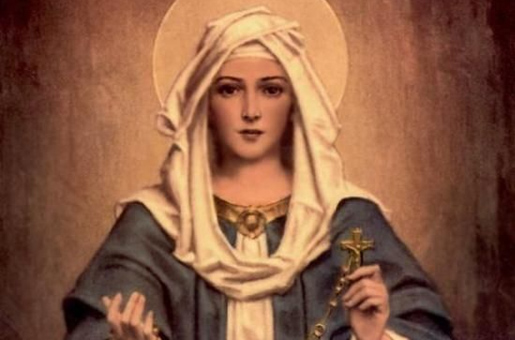
A Novena to the Mother of God for the United States

by Dan Burke Tuesday, September 18, 2012 1:07 PM, National Catholic Register

 
Dear Friends,
As many of you know, the United States is a nation facing a serious identity crisis. The upcoming election will likely determine whether or not the Catholic faith — and the faith of all of our brothers and sisters in Christ — will be more or significantly less welcome in a country whose essence was formed out of the fight for religious freedom.
Our worldwide EWTN family will soon begin a novena invoking Mary’s intercession for the Lord's special grace to be poured out upon the United States.
Please join with us and our friends around the world in prayer for a clear and unequivocal return to the devoted and hope-filled aspiration of our founding fathers: the freedom to live and worship as our conscience dictates.

The novena can be found below and will also be featured in the current issue of the National Catholic Register print edition:

Novena to the Mother of God for the Nation

Please share this with your friends and family — and ask all who claim the name of Christ to join us in this prayerful battle for our nation’s future.

Here’s more from EWTN:
"Novena to the Mother of God for the Nation"
Bishops to Lead Novena Prayers on Network
EWTN Global Catholic Network has collaborated with one of the pre-eminent Marian theologians in the U.S. on the creation of a new "Novena to the Mother of God for the Nation." Fr. Frederick Miller, Chair of the Department of Systematic Theology at Mount St. Mary's Seminary in Emmitsburg, Md., composed the meditations and prayers which invoke Mary's intercession for our nation. The Novena will be prayed publicly beginning on the Feast of the Archangels, Saturday, September 29th through Oct. 7th, the Feast of the Most Holy Rosary.

 "Catholics have always turned instinctively for help to the Mother of God in times of need," says Fr. Miller, "And so, in 2012, we turn to Our Lady for help. Many of the values that have shaped our country from the beginning seem to be at risk. Pope Benedict XVI and the American Bishops have noted the erosion of religious freedom, the first value guaranteed by the Constitution. This novena challenges all of us to a deeper conversion to Christ and a more generous life of charity. The proximity of this novena to the 2012 Presidential Election also offers an opportunity to pray for all of our government officials and to seek Divine assistance in the election."

 The Novena is available in both English and Spanish and can be downloaded for free from EWTN's Novena website at www.religiousliberties.org/novena. "This is a critical time for our nation," said Michael P. Warsaw, President and Chief Executive Officer of EWTN. "My hope is that as many people as possible will obtain a copy of this powerful Novena and join together in prayer. I also hope that people will spread the word about this important devotion to their friends and neighbors, prayer groups and parishes and in every way possible."

During the Novena, leading bishops from across the nation will be celebrating the televised Mass from Our Lady of the Angels Chapel in Irondale, Alabama at 8 a.m. ET each day. Each bishop will deliver a homily highlighting the importance of prayer in the fight for religious liberty and will lead the novena prayers for that day. Celebrants will include Most Rev. James D. Conley, Bishop-designate of Lincoln (Neb.), who will open the novena; Kansas City Archbishop Joseph F. Naumann; Mobile (Ala.) Archbishop Thomas J. Rodi; Philadelphia Archbishop Charles J. Chaput; and Birmingham (Ala.) Bishop Robert J. Baker, who will close the novena.
 

U.S. bishop slams Dem platform for endorsing ‘intrinsic evils’

by Johanna Dasteel, Co-authored with John Jalsevac
Bp. John Paprocki of Springfield
SPRINGFIELD, IL, September 25, 2012 (LifeSiteNews.com) – The bishop of Springfield, Illinois has issued a hard-hitting letter in his diocesan paper, slamming the Democratic Party platform’s support for abortion and gay ‘marriage’ and urging Catholics to bring their consciences to the ballot box.
Citing the events that transpired at the Democratic National Convention when the last remaining reference to God was removed, and then reintroduced into the party platform, Bishop John Paprocki insisted that this debacle was not the worst of the DNC platform problems, and that the platform’s pro-homosexual agenda and pro-abortion planks “explicitly endorse intrinsic evils.”
This year the Democratic party platform took the most extreme position on abortion of any of the party’s platforms, expressing support for abortion on demand with taxpayer funding. Bishop Paprocki also noted that while previous platforms had said that abortion should be “safe, legal, and rare,” the new platform removed “rare,” leaving only “safe and legal."
To those who might criticize him for speaking on a political matter, the bishop wrote: “My job is not to tell you for whom you should vote. But I do have a duty to speak out on moral issues. I would be abdicating this duty if I remained silent out of fear of sounding ‘political’ and didn’t say anything about the morality of these issues.”
Remarking on the Republican Party Platform as a contrast, Paprocki said, “there is nothing in it that supports or promotes an intrinsic evil or a serious sin.”
Preempting a frequent criticism of the Republican party’s position permitting the use of capital punishment, the bishop cited Catechism of the Catholic Church (paragraph 2267) which outlines the circumstances under which capital punishment is permissible. That paragraph states: “Assuming that the guilty party’s identity and responsibility have been fully determined, the traditional teaching of the Church does not exclude recourse to the death penalty, if this is the only possible way of effectively defending human lives against the unjust aggressor.”
Bishop Paprocki also corrected those who argue for prioritizing the preferential option for the poor over human rights for the preborn and defense of marriage in determining one’s vote: “One might argue for different methods in the platform to address the needs of the poor, to feed the hungry and to solve the challenges of immigration, but these are prudential judgments about the most effective means of achieving morally desirable ends, not intrinsic evils.”
“Again,” the bishop concluded, “I am not telling you which party or which candidates to vote for or against, but I am saying that you need to think and pray very carefully about your vote, because a vote for a candidate who promotes actions or behaviors that are intrinsically evil and gravely sinful makes you morally complicit and places the eternal salvation of your own soul in serious jeopardy.”

Egypt: Copt faces blasphemy charge for anti-Muslim film

Reuters – Mon, Sep 24, 2012
CAIRO (Reuters) - An Egyptian Copt arrested on suspicion of posting an anti-Islam video online that ignited Muslim protests around the world will stand trial next Wednesday on charges of insulting religions, the state news agency MENA said on Monday.
Computer science graduate Alber Saber, 27, was arrested at his Cairo home on September 13 after neighbors accused him of uploading sections of the film "Innocence of Muslims" and making another movie mocking all religions.
Alber Saher Blasphemy
Egyptian protesters gather around a burning vehicle in downtown Cairo, Egypt, early Saturday, Sept. 15, 2012, before police cleared the area after days of protests. Egyptian police on Saturday cleared out protesters who have been clashing with security forces for the past four days near the U.S. Embassy as most cities around the Muslim world reported calm a day after at least six people were killed in a wave of angry protests.
His case has raised concerns over freedom of expression under Islamist President Mohamed Mursi, who came to power in free elections earlier this year after the 2011 popular uprising that toppled autocrat Hosni Mubarak.
Many Christian Copts have been concerned about the political rise of Islamists since Mubarak's fall and fret about any action that could stoke tensions with their Muslim compatriots.
The crude film made in California portrayed the Prophet Mohammad as a womanizer, thug and child molester. Angry Muslim crowds stormed U.S. embassies around the Arab world. In Libya, the U.S. ambassador was killed by Islamist militants.
Human rights lawyers say Saber was arrested without a prosecutor's warrant and that he was beaten during interrogation. Security officials have refused to talk publicly about the case, but a judicial source said the police had acted on the instructions of prosecutors.
Prosecutors have accused him Alber of running Facebook pages calling for atheism, insulting Islam and Christianity and questioning religious beliefs, and have referred him to a Cairo misdemeanor court.
Saber's lawyer wasn't immediately available for comment. His mother, Kariman Ghali, said her son had done nothing wrong.
(Reporting by Tamim Elyan and Ali Abdelattai; Editing by Mark Heinrich)

Today on "Kresta in the Afternoon" - September 25, 2012

Talking about the "things that matter most" on Sept. 25

4:00 – 6:00: Direct to My Desk
Today on “Kresta in the Afternoon” we invite you to raise some of the questions, topics and news that matters most to you. In addition, we will talk about this week’s UN General Assembly where the President spoke today and where a coalition of 57 majority-Muslim nations – led by Egypt – are pressing for a worldwide ban on insults to Islam or the Prophet Mohammad. We also talk about CNN and Ambassador Chris Stevens’ journal: A matter of good journalism or personal invasion?

Suicide bomber strikes Catholic church in north Nigeria; 2 killed, 45 injured

By Associated Press, Published: September 23
BAUCHI, Nigeria — A suicide car bomber attacked a Catholic church conducting Mass in northern Nigeria on Sunday, killing two people and wounding another 45 in a region under assault by a radical Islamist sect, officials said.
An Associated Press journalist heard the explosion after 9 a.m. Sunday in the city of Bauchi, which has seen a number of bombings and shootings blamed on the sect known as Boko Haram. The blast appeared to hit a parking lot alongside the St. John’s Catholic Church in the city. 
Police and military surrounded the church and did not allow journalists inside the cordon. Later at a nearby hospital, Bauchi deputy police commissioner T. Stevens told journalists told that the bomber had been stopped at the church’s gate, where he detonated the explosives packed inside his car.
Suicide bomber kills 2, injures 45 in Nigeria
Doctors cautioned more could die from their injuries.
“The situation has been brought under control,” Stevens said. “We have our men minding all areas.”
Stevens said no group or individual had claimed responsibility for the attack, though suspicion immediately fell on Boko Haram. The sect, whose name means “Western education is sacrilege” in the Hausa language of Nigeria’s north, has been waging an increasingly bloody fight against nation’s weak central government. More than 680 people have died in drive-by killings and bombings blamed on Boko Haram this year alone, according to an AP count. The sect has demanded the release of all its captive members and has called for strict Shariah law to be implemented across the entire country.
The sect has used suicide car bombs against churches in the past, most noticeably a 2011 Christmas Day attack on a Catholic church in Madalla near Nigeria’s capital. That attack and assaults elsewhere in the country killed at least 44 people. An unclaimed car bombing on Easter in Kaduna killed at least 38 people on a busy roadway after witnesses say it was turned away from a church.
Attacks against churches by the sect have waned in recent weeks. Nigeria’s military claimed it killed the sect’s spokesman and a commander Sept. 17 outside the city of Kano, potentially shaking up a sect that has continued attacks despite a tighter military presence in northern cities.
The killing of members of the sect’s senior leadership comes as the group recently changed some of its tactics and attacked more than 30 mobile phone towers throughout northern Nigeria, disrupting communications in a nation reliant on cellular phones.
Saturday night, the military conducted door-to-door searches in the northern cities of Damaturu and Potiskum, areas now under a 24-hour curfew that have been hard-hit by the sect.
___
Associated Press writer Jon Gambrell in Lagos, Nigeria, contributed to this report.

As Occult, New Age Practices Increase, so Does Need for Exorcists

Father Gary Thomas, upon whom the book and film The Rite was based, and other exorcists discusses their unique ministry.

09/24/2012, National Catholic Register
 
Photo by Elisabeth Deffner
Father Gary Thomas, the subject of the book The Rite 
and the 2012 movie of the same name, was one of a
half dozen exorcism experts to speak at the Southern
California Renewal Communities’ Catholic
 Renewal Convention held Labor Day weekend in
Anaheim, Calif.
– Photo by Elisabeth Deffner
Evil has not fallen out of fashion. Exorcism is a rite developed — and promulgated — to meet a need that still exists, due to more people delving into New Age and occult practices.
And, yes, satanic worshippers are a reality.
“They come in the church and steal the Blessed Sacrament to use in a ‘black mass,’” explained Father Gary Thomas, pastor of Sacred Heart Church in Saratoga, Calif., and the exorcist for the Diocese of San Jose.
He has alerted his fellow priests to this danger — and trained his extraordinary ministers of holy Communion so that they note whether people receiving Communion are actually consuming it, not simply transporting it elsewhere for obscene purposes.
Father Thomas, a priest for 28 years, has even addressed people who appear not to be consuming the Eucharist.
“If I don’t know them, I’ll say, ‘Excuse me, will you please finish consuming the body of Christ in my presence?’” he said.
Father Thomas — the subject of the book The Rite and the 2012 movie of the same name — was one of a half dozen exorcism experts to speak at the Southern California Renewal Communities’ Catholic Renewal Convention held Labor Day weekend in Anaheim, Calif.
In addition to the workshops on healing, the Holy Spirit and prayer, the convention offered two tracks called “Christ Triumphant,” which focused on exorcism and deliverance ministry — a general track and a pastoral track for clergy and lay ministers.
The day preceding the convention, organizers also hosted a “mini-conference” for 175 registered priests and three bishops featuring the expert speakers (among them four active exorcists and one retired exorcist).
Which begs the question: Is exorcism simply a hot topic — or has the need for the rite grown?
It’s certainly a popular subject. The Rite was one of a handful of movies about exorcism released in the last two years, and a short-lived television series on the subject also launched. But that’s far from the point, says Father Thomas.
“There is a greater need for exorcism because there is a greater frequency of the practices of the occult, New Age and Satanism, both on the part of Catholics and other people alike,” he said. Conference speakers explained that people begin experimenting with other traditions and rituals, often simply out of curiosity. They don’t realize that they are, at the same time, losing their spiritual center and turning away from God.
That being said, exorcists are quick to state that most of the people who come to see them are not possessed.
Father Jeffrey Grob, exorcist for the Archdiocese of Chicago, declines to give numbers of people who come to see him — or people he has exorcized — but says simply, “I see far more people than I need to see.”
Like Father Thomas — who says the vast majority of people who come to see him are dealing with mental-health issues, not issues of possession — Father Grob says that most people who hope to call upon his exorcism expertise are actually dealing with psychological issues, or even with a faith life that has gotten off track.
“Spiritually speaking, they don’t need an exorcist. They need their parish priest; they need a spiritual director,” he said. “They need someone who will get them back in the practice of their faith — bring them back to reality.”
After all, he points out, even if a person is not actually possessed, a focus on darkness and evil can draw him into horrifying actions, even including satanic worship and ritualistic murder.
One example comes quickly to Father Grob’s mind: the 1980 murder of Sister Margaret Ann Pahl, a high-profile crime in Toledo, Ohio. The nun had been strangled and stabbed multiple times in the chapel of a hospital, which she was preparing for the Easter vigil Mass. When the case was reopened in 2003, the hospital chaplain — Father Gerald Robinson — was charged with her murder, and evidence of a cult of ritualistic satanic abuse was uncovered. Father Grob was called as an expert witness to answer questions about cult activity and satanic worship.
“It’s proof positive how far afoul things can go,” he says. “It’s so unbelievable — people don’t want to think about it.
“But things like this happen.”
Those attending the “Christ Triumphant” tracks of the recent convention were not hoping for sensational “Amityville Horror”-style stories. On the contrary, many said they have already experienced the presence of evil and have no need of corroborating stories from others. They simply want to learn how they can help in this important work. (Exorcists can only be priests, but laypeople can take part in the ministry by joining a prayer team or supporting the diocesan exorcist in other ways. Father Thomas, for instance, works with a medical doctor, a clinical psychiatrist and a psychologist as he discerns whether a “client” is suffering from a demonic possession or from a mental or physical disorder.)
“I want the tools to be able to pray for people I feel are being afflicted,” said Jean Cordero, a parishioner at American Martyrs Church in Manhattan Beach, Calif., who listened raptly to Father Thomas’ opening-day presentation.
Similarly, Father Art Najera — currently working in the Diocese of Sacramento, Calif. — attended the convention to gain knowledge he expects to find useful as he ministers in his parish. People sometimes call to request their houses be blessed because they are experiencing strange phenomena there, he explained.
“The reality is the devil is more active now,” he said simply.
Despite the need for exorcism and recent media attention to the rite and the priests who administer it, the number of exorcists is small. There are more than 180 dioceses in the United States, for instance, but only about 60 known exorcists, says Father Thomas.
Speakers at the recent conference noted that not all Catholics properly understand the rite, and many tend to dismiss it as unnecessary.
But one need only read the Bible to see that Jesus himself was an exorcist, casting out demons from those possessed by them.
“It is the Church’s responsibility to provide the rite of exorcism when it is needed,” said Father Grob. “Our work is to return an afflicted soul back to the body of Christ.”
Register correspondent Elisabeth Deffner writes from Orange, California.

Editing the soul out of Steubenville, Ohio

When a feature story dominates the Sunday front page of The Washington Post, you know that editors there have given the subject quite a bit of thought — to say the least. In our management-intensive era of newspapering, this means that the concept of the story survived several high-level planning meetings and, thus, the editors almost certainly considered its content more than significant — it’s symbolic.
So I was interested when I saw the recent Post news feature about an Ohio community that, in recent years, I have visited several times. We are talking about Steubenville, Ohio, which conservative Catholics will know as the home of the Franciscan University of Steubenville, a campus that once was fading away and is now a hub for new priests, nuns, brothers, etc., etc., etc. It’s the rare Christian campus that, after choosing the road toward modernism and progressive doctrine, reversed course back into orthodox doctrine and practice.
This story focuses on the deep divisions within the largely blue-collar Steubenville community when it comes to politics. The region has been hit hard by post-industrial trends and many people are struggling. There are other factors at play, as the story makes clear. Thus, readers are given this summary:
This historic city is highly contested territory in what may be the most important swing state in the presidential race. Four years ago, voters in Jefferson County, which includes Steubenville, cast nearly 36,000 ballots for president, and Obama squeaked past John McCain by 76 votes. No Ohio county was so evenly split.
Although it’s not big enough to be a major target for campaign strategists, Jefferson County is a good place to plumb the divisions in American political life. Walk down the street, and you’ll hear strong opinions about the direction of the country and the proper role of government — and the opinions will be all over the ideological map.
Of course, people were talking in recent days about Romney’s “inelegant” (his word) description of Democratic voters as slackers who don’t pay taxes and expect the government to care for them. Such words can sting in a place where, despite some recent economic improvement, the jobs are still scarce, the steel mills are hollowed out and many of the smokestacks spew nothing into a clean and clear post-industrial sky.
This place on the bank of the Ohio River is a vintage working-class community. Longtime residents have a memory of the steel mill’s whistle, of crowds on downtown sidewalks and plenty of jobs that could let a person with only a high school diploma raise a family and own a home. People here don’t think of themselves as moochers.
But interviews with several dozen county residents last week suggest that Romney’s comments haven’t altered the political calculus. Ohio may be the most iconic swing state, but it’s hard to find genuinely undecided voters who are teetering between Obama and Romney.
So what are the issues at the heart of this stark divide? Apparently, it’s all about personalities and, of course, mere politics.
It’s hard to top these quotes:
A lot of voters are lukewarm about the guy they support, but they are white hot about the guy they loathe.
“If they had Idi Amin, Saddam Hussein and Barack Obama running, Barack Obama would be my last pick,” says Ray Morrison, 70, a retired steelworker and truck driver who lives on a country road west of the city. “If you want to know the true story about Obama, you have to watch Fox a little bit. I hate him.”
Here’s Cheryl Doran, 50, a waitress at the family restaurant Naples, speaking of Romney: “I think he’s the devil. I have no use for him.”
So which party dominates this area?
Jefferson County used to be a Democratic bastion, thanks to the strong union presence, but the unions have been in decline along with the steel industry. The county is socially conservative and, like many blue-collar communities in this part of the world, has a lot of Reagan Democrats.
OK, so what issues matter the most to these people hit so hard by the recession? What, for example, might motivate that whole “socially conservative” way of thinking? Why are there people who say they will be voting for Romney, when everything about the harsh conditions in their lives would seem to point toward voting Democratic?
Are the region’s economic woes at the heart of the bitter divides in this community, in this particular electorate? What about that recent battle to take the Franciscan University cross out of the city logo? What about that 2008 dispute when about 100 voter registration forms from the campus went missing, preventing some students (there was a pro-life voter registration drive) and others from being able to vote in that tense election?
In other words, this region is known as an area in which intense religious beliefs have been known to clash with trends in the political marketplace. It’s an area in which old-fashioned Democrats — Catholic union families — now struggle to vote for their party’s social agenda.
In other words, is this A1 feature haunted? Why did the Post team decide to focus on the cracks in the political foundations of this symbolic city without mentioning the region’s unique religious make-up?
Just asking.

Monday, September 24, 2012

Today on "Kresta in the Afternoon" - September 24

Talking about the "things that matter most" on Sept. 24

4:00 – Why Do Celebrities Seem to Have More Substance Abuse Issues?
From Whitney Houston’s death last year to Rodney King’s recent death, we continue to face the reality that celebrities are very susceptible to substance abuse. This raises the question of why celebrities have a higher rate of substance abuse. Michael Vasquez of the St. Gregory Center for Drug and Alcohol Rehab is here to answer that question.

4:40 – Leading Pro-Life Democrat Speaks Out On 2012 Elections
Former Massachusetts Governor Michael S. Dukakis, in his famously blunt speaking style, labeled Mitt Romney a “fraud” as governor, said that Elizabeth Warren’s US Senate ads have been disappointing and will be changed, and declared that Raymond L. Flynn had abandoned his political past by endorsing Scott Brown. The former governor added: “The Ray Flynn that I worked with then, and I knew and respected, wouldn’t have given Scott Brown the time of day. … Tax cuts for the rich? Repealing Obamacare? Are you kidding me? Flynn? I don’t know what’s happened to him. … Change of life, I don’t know.” Former Ambassador and Boston Mayor Ray Flynn is here to respond.

5:00 – Kresta Comments

5:20 – Who's Counting Your Vote?
The 2012 election will be one of the hardest-fought in U.S. history. It is also likely to be one of the closest, a fact that brings concerns about voter fraud and bureaucratic incompetence in the conduct of elections front and center. If we don't take notice, we could see another debacle like the Bush-Gore Florida recount of 2000 in which courts and lawyers intervened in what should have involved only voters. John Fund is here to focus attention on many problems of our election system, ranging from voter fraud to a slipshod system of vote counting that noted political scientist Walter Dean Burnham calls “the most careless of the developed world.”

5:40 – What are the Options for Non-exempt Employers under “Obamacare”?
On February 15, 2012, the Department of Health and Human Services (HHS) promulgated the Final Rule concerning what is known as the contraception mandate. Employers who offer group health insurance in a business of any size must comply for all employee health plan years beginning on or after August 1, 2012. The mandate requires that all non-grandfathered group health plans (including student health insurance plans) and health insurance issuers provide the full range of U.S. Food and Drug Administration (FDA)-approved contraceptive methods, patient education, and counseling as “preventive services” for women, as specified under the Patient Protection and Affordable Care Act (PPACA). So what are the moral options for non-exempt employers? Dr. John Haas of the National Catholic Bioethics Center is here to explain it.

Friday, September 21, 2012

AMR 15 year logo.

Dear Ave Maria Radio friends....
"Faith comes by hearing and hearing by the Word of God." (Rom. 10:17)
What we have been hearing this week has definitely bolstered our faith. We are in our Fall membership drive and what a week we've been having at Ave Maria Radio. God has blessed us with many generous members of the Ave Maria Radio family making pledges this week.
We are filled with hope. But we are also facing great challenges. I'll keep it short. As I write, we still have to raise around $125,000 dollars before our drive ends tonight, Friday, at 7 pm EST. We started the day needing $198,000 so you can see the progress we have made together. This goal is not an extravagant wish list - it is our budget. It's what is necessary. It seems daunting, but with God, all things are possible. But we need YOUR help. Please call or go online and partner with us in spreading the word of Christ and His Church.
In Him,
Al Kresta
To Pledge: Call 877-288-1077 or go to

We Should Have Known - Opponents of Chick-Fil-A Misrepresent Discussions

Associated Press

(AP) ATLANTA - Chick-fil-A gave another statement about recent reports that it will stop giving money to groups that oppose gay marriage.

The company's response, its second in as many days, was posted on its website after Chicago Alderman Joe Moreno announced the alleged policy change. Moreno said the change followed extended negotiations, and as a result, he would no longer try to block a Chick-fil-A restaurant from opening in his district.

The Georgia-based company said its corporate giving had for many months been mischaracterized.

"A part of our corporate commitment is to be responsible stewards of all that God has entrusted to us. Because of this commitment, Chick-fil-A's giving heritage is focused on programs that educate youth, strengthen families and enrich marriages, and support communities. We will continue to focus our giving in those areas. Our intent is not to support political or social agendas."

The company's president, Dan Cathy, set off a furor this summer when he reaffirmed his opposition to same-sex marriage. Long lines formed outside Chick-fil-A restaurants on an "appreciation day" and opponents countered with "kiss-ins" by same-sex couples at assorted locations.

Cathy is a devout Southern Baptist whose family has always been outspoken about its faith. Cathy's comments in July were in keeping with the tradition established by his father, Truett Cathy, who started the chain in 1967 and never allowed franchises to open on Sundays.

THE CATHOLIC VOTER 2012

This article is an excerpt from Marlin's report, contained in its entirety here.

by George J. Marlin,

Author of The American Catholic Voter:

Two Hundred Years of Political Impact

Historically, Catholics have been a pivotal swing vote that has determined outcomes in numerous national, state, and local elections. In the close contest of 2012, they are likely to make the difference of who will be sworn in as president on January 24, 2013.
During the nineteenth century and the early decades of the twentieth, the Democratic Party endorsed several key Catholic social principles, simultaneously appealing to Northern urban Catholic immigrants and Southern agrarian Protestant nativists. Then in 1928, the first Catholic Democrat presidential candidate, Alfred E. Smith, brought out Catholic immigrant voters in record numbers.
Smith carried America’s those largest cities by a plurality of 38,000, whereas the 1920 and 1924 Democratic presidential candidates lost those cities by 1.6 million and 1.2 million votes respectively. Most importantly, the inner-city Catholic voters started a new shift in the balance of political power in the United States.
Franklin Delano Roosevelt recognized the importance of those votes, and they became the basis of his coalition. FDR was elected four times with the strong support of Roman Catholics, who were basically supportive of the New Deal programs. In 1948 his successor, Harry Truman, running on an anti-Communist platform, received about 80 percent of the Catholic vote and won with 49.5 percent against Dewey’s 45.2 percent overall. Catholics took great pride in their anti-Communism; it made them feel more part of the mainstream in America in fighting that battle.
In the 1960 presidential race, the nation’s second Catholic Democratic presidential nominee, John F. Kennedy, was saved by the Catholic urban vote in the rich electoral states of the Northeast and Midwest. In these regions, he carried over 80 percent of the Catholic vote.
As Michael Barone has argued, Kennedy “split the nation along religious lines, which is to say cultural lines, not along lines of economic class.” Put another way, Kennedy’s election was not a victory for liberalism. It was a victory for Catholicism.
But the Democratic Party also started to emerge as the home for ambitious social engineering. Its cultural elitism and contempt for blue-collar Catholic workers and their values engendered a new generation who approached those voters with an attitude of “noblesse oblige,” of moral self-righteousness, sometimes of outright arrogance.
As a result, in the late 1960s there was a shift in the Catholic vote. Catholics turned to Republicans who were socially conservative, supportive of the New Deal programs, but critical of the Great Society. They became known as Nixon and Reagan Democrats. And since 1972, every White House winner has carried a majority of the Catholic vote.
Bill Clinton’s 1992 campaign focused on Catholics, particularly Hispanics and Catholics living in areas hard hit by the recession. This selective strategy worked. Clinton won with a plurality of only 43 percent of the vote by carrying heavily Catholic states in the Northeast and Midwest.
Almost 3 million Catholic voters deserted Bush in 1992 – mostly nonpracticing “cafeteria” Catholics. Clinton in 1996 and Al Gore in 2000 carried cafeteria Catholics by wide margins; practicing Catholics voted for Republicans.
In 2004, President George W. Bush’s camp was willing to concede the cafeteria Catholics, but not practicing or Hispanic Catholics. To appeal to thesegroups, Bush reversed pro-abortion executive orders, proposed faith-based initiatives and limits on stem-cell research. He also signed into law a ban on partial-birth abortion.
As a result, Bush carried an outright majority of Catholics over Sen. John Kerry, a baptized Catholic.
In 2004, practicing Catholics were the decisive factor in several swing states. In Ohio, for instance, 65 percent of them voted for Bush, and in Florida the president’s support from practicing Catholics reached 66 percent. Working-class Catholics, many of whom were of Eastern European origins, stuck with the president because they agreed with him on cultural and moral issues. These issues were more important to them then their economic woes.
Even in Kerry’s home state of Massachusetts, one of America’s bluest states, there was a significant shift in the Catholic vote. In 2000, Catholics for Bush totaled 32 percent of the state’s electorate; in 2004 his total was 49 percent. In raw numbers this increase represented 166,000 additional Catholic votes for Bush in Massachusetts (622,000 versus 456,000 in 2000).
In the election of 2004, Catholics were part of a growing voting population who considered the moral and cultural issues the most important factor in their choice: 22 percent of the voting population in 2004. The power of this block explains in part the increased support for George Bush as well as the overwhelming opposition to same-sex marriages in eleven state referenda.
In 2008, Hillary Clinton’s strategy to paint Obama as an out-of-touch elitist who could not relate to the concerns of blue-collar Catholics paid off. In the Rust Belt states, she carried these voters by huge majorities – 70 percent in Pennsylvania.
In the 2008 general election, however, Barack Obama, despite being the most extreme pro-abortion presidential candidate in American history, managed to carry 55 percent of the generic Catholic vote. Pro-life Republican Senator McCain received 45 percent of the generic Catholic vote, 52 percent of church attendees, and 32 percent of the Hispanic vote.
In the rust belt states of Pennsylvania, Ohio, and Indiana, many practicing Catholics simply stayed home. The state of the economy angered many who did not support Obama, but remained unmoved by McCain. These GOP losses, among Catholics, were self-inflicted. The McCain campaign failed to paint a vivid and appealing social and economic vision for America.
Two years later, in the 2010 mid-term elections, Catholics changed direction: 53 percent voted Republican. They provided the votes needed to defeat one Congressional Democratic incumbent in Indiana, and four each in Ohio and Pennsylvania. Flipping these closely-contested seats was the sine qua non of the GOP master plan to retake the House, and Catholics provided the margins of victory.
Twenty pro-abortion Catholics did not return to the House in January 2011, including three members of the infamous Stupak Five who caved in on Obamacare: Stupak (D-Michigan), who retired, and Steve Driehaus (D-Ohio) and Kathy Dahlkemper (D-Pennsylvania), who were defeated by pro-lifers.
In the 2008 election, Barack Obama received the highest percentage of votes cast for a Democrat (52.9%) since Lyndon Johnson‘s (61.1%) victory over Barry Goldwater in 1964.
Recent polls, however, indicate that many of his vote totals, particularly in the nation’s heartland and several southern states, were an aberration – as they were in 1964. A study commissioned by the Pew Research Center and released on August 23, concluded that many white middle class and blue-collar voters, particularly Catholic ones, are trending back toward the GOP. My analysis of the toss up states with large Catholic voting populations confirms these trends.


Pew Center Poll


Party Identification with Leaners Among Registered Voters


200420082012

RDIRDIRDI
Total Catholic425083753944479
White Catholic474584149950418
Hispanic Catholic316192566928639
Political analysts agree the fall presidential race will be determined primarily by the economically-depressed rust belt states of Pennsylvania, Ohio, Michigan, Indiana, and Wisconsin, where aging Catholics are disproportionately represented. Their numbers are higher than in other states because their children and grandchildren – many of whom are non-practicing “cafeteria” Catholics – have moved to more economically prosperous regions.

Most of these working class Catholics subscribe to traditional Judeo-Christian principles, live them in their daily lives and expect the same of public officials. Their beliefs mean more than material gain and transcend economic issues.

And in a close election, these Catholic voters, who cast their ballots according to cultural standards still matter. It is they who will determine which man will be sworn in as president on January 20, 2013 – just as they have in every election since 1972.

from Complete Catholicism

Euthanasia Opponents in Boston Gird for Ballot Battle

Church leaders mobilize campaign to draw Catholics into the fight against the ballot initiative “Prescribing Medication to End Life” — which Massachusetts voters will decide this November.

09/20/2012
National Catholic Register
Shutterstock
Last April, Father Roger Landry, a priest from the Fall River, Mass., Diocese, returned to his alma mater, Harvard University, to educate students about a ballot measure — “Prescribing Medication to End Life” — which Massachusetts voters will decide this November.
The measure would legalize physician-assisted suicide in the state, and supporters say it offers a compassionate response to the pain and suffering of terminally ill patients.
But Father Landry challenged that assertion during an address that outlined long-standing moral opposition to euthanasia, explained the cultural context for recent efforts to legalize such practices, and noted the particular concerns posed by the ballot measure.
“When someone is contemplating suicide at any age … the compassionate response is never to catalyze their suicide,” he told the students gathered at the Harvard Catholic Center.
“Whether we become active in the fight against doctor-prescribed suicide may make the difference between lives being saved or tragically ended,” he added, during remarks that recalled the tragedy of several student suicides during his own undergraduate years.
As Catholic leaders throughout the state of Massachusetts gear up for an uphill battle to prevent a new beachhead for assisted suicide, Father Landry’s speech at Harvard show­­­cased the Church’s multifaceted argument for voting against “Question 2” — the shorthand term for the ballot initiative that has begun to appear in media campaigns launched by state coalitions on both sides of the issue.
Cardinal Sean O’Malley of Boston has made the defeat of the ballot measure a central mission for the local Church.
“This is an encroachment of the culture of death [philosophy, which states]: The autonomous self needs to be in control of every moment of our lives, and if we aren’t in control, the quality of life is such that we would be better off dead,” Cardinal O’Malley said during an interview.
“This sends a terrible message to people in the disability community, and they stand opposed to this with us.”
In February, a video homily by the cardinal was aired during Sunday Masses, the first step of a broad-based campaign to draw Catholics as well as the general public into the fight against the ballot initiative.
The Massachusetts Catholic Conference is a driving force in the Committee Against Physician-Assisted Suicide, a state-wide coalition that has attracted a number of religious groups, as well as organizations like the Hospice and Palliative Care Federation of Massachusetts, the American Medical Association, the American College of Physicians and the National Council on Disability.
Committee members have updated their constituencies, developed voter-education websites, and have just launched a media campaign to explain their concerns on television and radio shows. In the final stretch before the election, they will provide campaign ads showcasing their concerns.
“The focus is to help people appreciate the dangers of assisted suicide and of the bill itself,” Janet Benestad, the Boston Archdiocese’s secretary for faith formation and evangelization, told the Register.
While Benestad leads the effort to galvanize Catholics, the Committee Against Physician-Assisted Suicide will continue to reach out to other groups within the state.
“We appreciate that not everyone is with us on this, but we still want them to look at this particular bill,” she said.
In May, the archdiocese hosted the first round of parish workshops that outlined the Church’s opposition to euthanasia and provided a forum for physicians and ethicists to explain how assisted suicide posed a direct challenge to a central precept of the Hippocratic Oath, “First, do no harm,” and which also states, “To please no one will I prescribe a deadly drug nor give advice which may cause his death.”
Next month, there will be another round of parish workshops and a second video homily by Cardinal O'Malley, who has also called for a Rosary novena from Oct. 3-11.
“We are asking families and institutions throughout the (state) dioceses to pray for the defeat of a bill that does not defend life and to protect those who are terminally ill from assisted suicide,” said Benestad.
With such efforts, the Church is trying to provide a compelling and integrated defense of the dignity of human life at all stages, including the final months or weeks of life.
The Catechism of the Catholic Church teaches that dying patients may discontinue “overzealous treatment” and clarifies that “medical procedures that are burdensome, dangerous, extraordinary or disproportionate to the expected outcome can be legitimate” (2277).
But it categorically rejects all forms of euthanasia: “Thus, an act or omission which, of itself or by intention, causes death in order to eliminate suffering constitutes a murder gravely contrary to the dignity of the human person and to the respect due to the living God, his Creator” (2277).
That teaching was once widely accepted in the West and strongly reaffirmed after the Second World War, when Hitler’s policy of “mercy killings” of mentally impaired people was denounced at the Nuremberg War Crime Trials.
Yet, decades later, in the Netherlands, following a series of court cases, physicians who helped patients kill themselves escaped prosecution. In 2002, the practice was codified into law; euthanasia and assisted suicide are legal in the Netherlands under certain circumstances. Meanwhile, critics have repeatedly warned that involuntary euthanasia has become widespread.
In the United States, Oregon legalized physician-assisted suicide in 1997, and Washington legalized it in 2008.
Massachusetts could be next. While the state has a 42% Catholic population, according to 2008 statistics from the U.S. Conference of Catholic Bishops, polling of state voters in the months leading into the November election has consistently pointed to strong support for the ballot measure. This week, a Suffolk University/WHDH-TV survey released on Sept. 17 confirmed that trend.
The political coalition endorsing the ballot measure, Dignity 2012, presents itself as a group of “concerned citizens supporting the proposed Massachusetts Death With Dignity Act, leading the way to bring state-monitored physician-hastened dying for terminally ill adult residents,” but its website documents its ties to a national center and a political action fund focused on the “political defense of the Oregon law and the promotion of death-with-dignity initiatives in other states.”
In recent years, physician-assisted suicide has been presented in a sympathetic light in films like Million Dollar Baby, and Church leaders acknowledge that the strong individualistic ethos that defines American culture sees a value in practices that promise to allow patients to control the dying process.
But media coverage of this issue rarely addresses the dangers posed by legalized assisted suicide, and the Boston Archdiocese has deployed experts to share some troubling facts with parishioners.
Local Catholics have learned that legalized assisted suicide can foster acceptance of suicide as a solution for people who are not facing imminent death and even lead to involuntary euthanasia of such patients, as physicians are tempted to take control of life and death, with or without patient consent. Information about the impact of Oregon’s laws has been posted on the website of Physicians Against Suicide, a member of the coalition opposing Question Two.
Now, as the nation continues an intense debate over health-care reform and proposed cuts to Medicare and Medicaid, opponents of assisted suicide argue that the soaring costs associated with end-of-life care will only encourage such abuses.
“Once assisted suicide was legalized in Oregon, it was given a high ‘cost-effectiveness’ rating in the state's rationed Medicaid plan,” said Richard Doerflinger, the associate director of the Secretariat of Pro-Life Activities of the U.S. Conference of Catholic Bishops.
“So some patients in need of potentially life-prolonging treatments for serious illnesses have received notices that the state will not pay for the treatment they want, but will be glad to subsidize an assisted suicide. The addition of these cost-cutting measures should be a truly frightening prospect for all of us.”
At Boston parish workshops, speakers have addressed the specific limitations of the Massachusetts bill. For example, people who are terminally ill and are expected to live less than six months would be able to obtain a prescription for a lethal dose without a psychological evaluation, even though depression is a common problem, and many such patients live well beyond their physician’s expectations.
Further, family members who might materially benefit from a relative’s death could serve as witnesses. But, on the other hand, the bill also provides no mechanism for informing family members that a loved one is contemplating physician-assisted suicide.
Indeed, while advocates for assisted suicide contend that the choice should be left to the individual, the Church has repudiated the notion that such tragic decisions will have an isolated impact.
“It is a social decision: a decision that involves the person to be killed, the doctor doing the killing, and the complicity of a society that condones the killing,” read a 2000 pastoral letter on euthanasia written by then-Bishop Sean O’Malley of Fall River.
That message will be repeated at an Oct. 3 “virtual town-hall meeting” that will be broadcast on the Catholic TV network. The event will provide another opportunity for a panel of experts to make their case.
At such forums, experts have called for the expansion of palliative-care programs that provide effective pain management as an important element of a truly humane response to the suffering of the terminally ill.
In 2011, the bishops released “To Live Each Day With Dignity: A Statement on Assisted Suicide,” which acknowledged that “many people fear the dying process. They are afraid of being kept alive past life’s natural limits by burdensome medical technology. They fear experiencing intolerable pain and suffering, being abandoned or becoming a burden on others,” read the statement.
The Boston Archdiocese has sought to address such concerns, in part, by helping pastors to effectively explain the Church’s holistic view of end-of-life care and reject the false choice presented by Question 2 ’s proponents. Palliative-care options are part of that message, but the faithful are also reminded that true Christian compassion asks believers to accompany loved ones who are suffering and to offer up the pain as a means of sharing in the saving work of Jesus Christ.
On Aug. 8, Jesuit Father Myles Sheehan, the provincial of the New England Province of Jesuits, and a physician with expertise in geriatrics and palliative care, met with local priests to explain the relevant theological, moral and medical issues and urge them to take part in the fight against the ballot initiative.
The USCCB’s Richard Doerflinger reports that “the assisted-suicide movement’s efforts to write its agenda into law have generally failed. Recently, such laws were rejected in New Hampshire and Vermont and by Massachusetts’ own legislature,” he noted.
“They now hope that a heavily funded media campaign hailing ‘choice’ will have an emotional appeal for voters that makes them ignore such laws’ real-world impact on seniors and people with illnesses or disabilities, as well as depressed people generally.”
But the Committee Against Physician-Assisted Suicide is matching that effort with its own political campaign. It has raised about $900,000, with a hefty assist from the Massachusetts Catholic Conference.
Those funds have been used to hire a top campaign strategist, draw in more like-minded state groups, develop a website and fund a blitz of television and radio advertising during the final stretch before the election.
Mark Horan, a spokesman for the Committee Against Physician-Assisted Suicide and a senior vice president for Rasky Baerlein, the strategy group hired to direct the 2012 campaign, said he was confident that state voters would keep an open mind on the issue, despite the polling.
“We know that even politically attuned and sophisticated people don’t know this is on the ballot. You can also be assured that people don’t know about the flaws in the way it was written or would be implemented,” said Horan.
“We decided to spend all of our efforts over the summer on building a broad coalition. We needed people of all faiths and other walks of life that are clearly affected by this, like doctors, nurses and hospice workers, average citizens,” he said, an implicit suggestion that the Church’s stance would likely not be a deciding factor for many state voters.
“We are working on our Web presence and starting to optimize our search capacity to drive people to the content, and we’re getting a ton of media requests — mini debates on radio and television,” he added.
Horan did not want to provide specifics on the committee’s fundraising goals, though Boston Globe coverage and other local media predicted that each side in the fight will try to raise at least $3 million. In his interview with the Register, Cardinal O'Malley stressed that the coalition opposing passage of the Death with Dignity Act needed additional financial support to fund its upcoming advertising campaign.
While the professional campaign strategists work their magic, Massachusetts pastors like Father Roger Landry will be doing their part.
But whether or not assisted suicide is legalized in the state, the Fall River priest believes that the Church must continue its catechetical work and engage an ethos of individualism that uncritically embraces the goal of radical autonomy.
During his address at the Harvard Catholic Center, Father Landry reminded students of the compelling witness of Blessed John Paul II, who struggled for years with Parkinson’s disease before his death. “The Pope wrote: “‘True ‘compassion’ leads to sharing another’s pain; it does not kill the person whose suffering we cannot bear.’”
Joan Frawley Desmond is the Register’s senior editor.